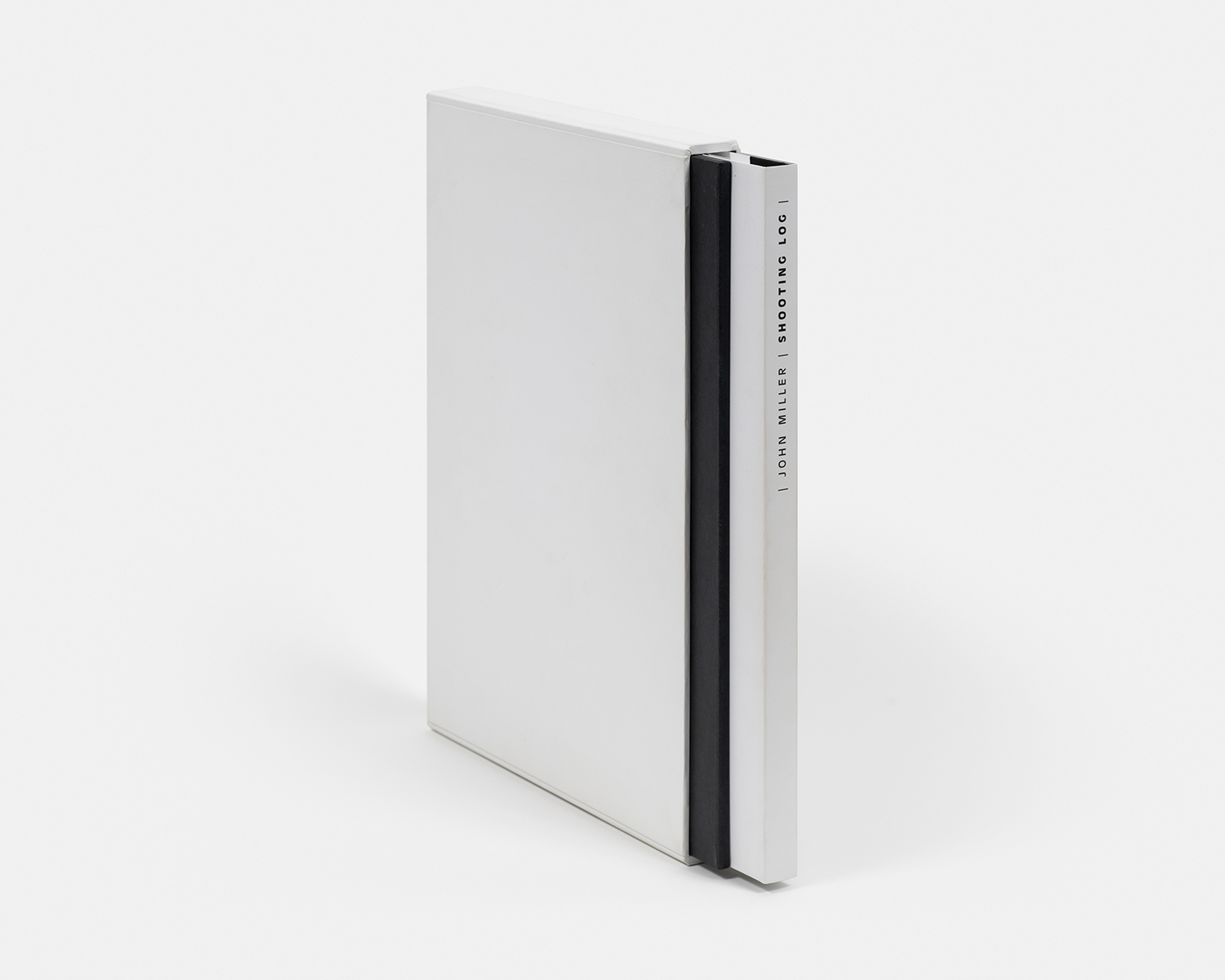
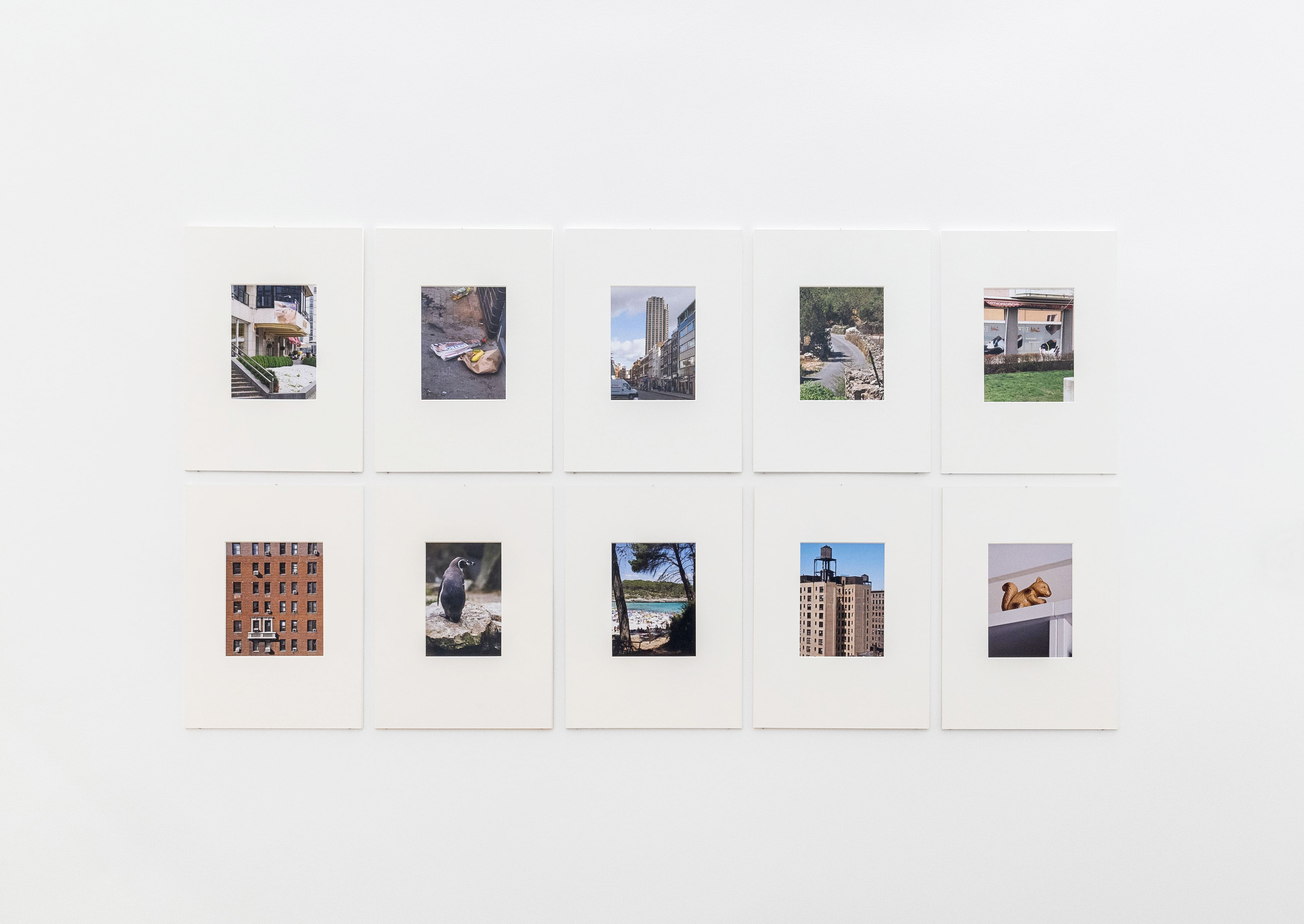
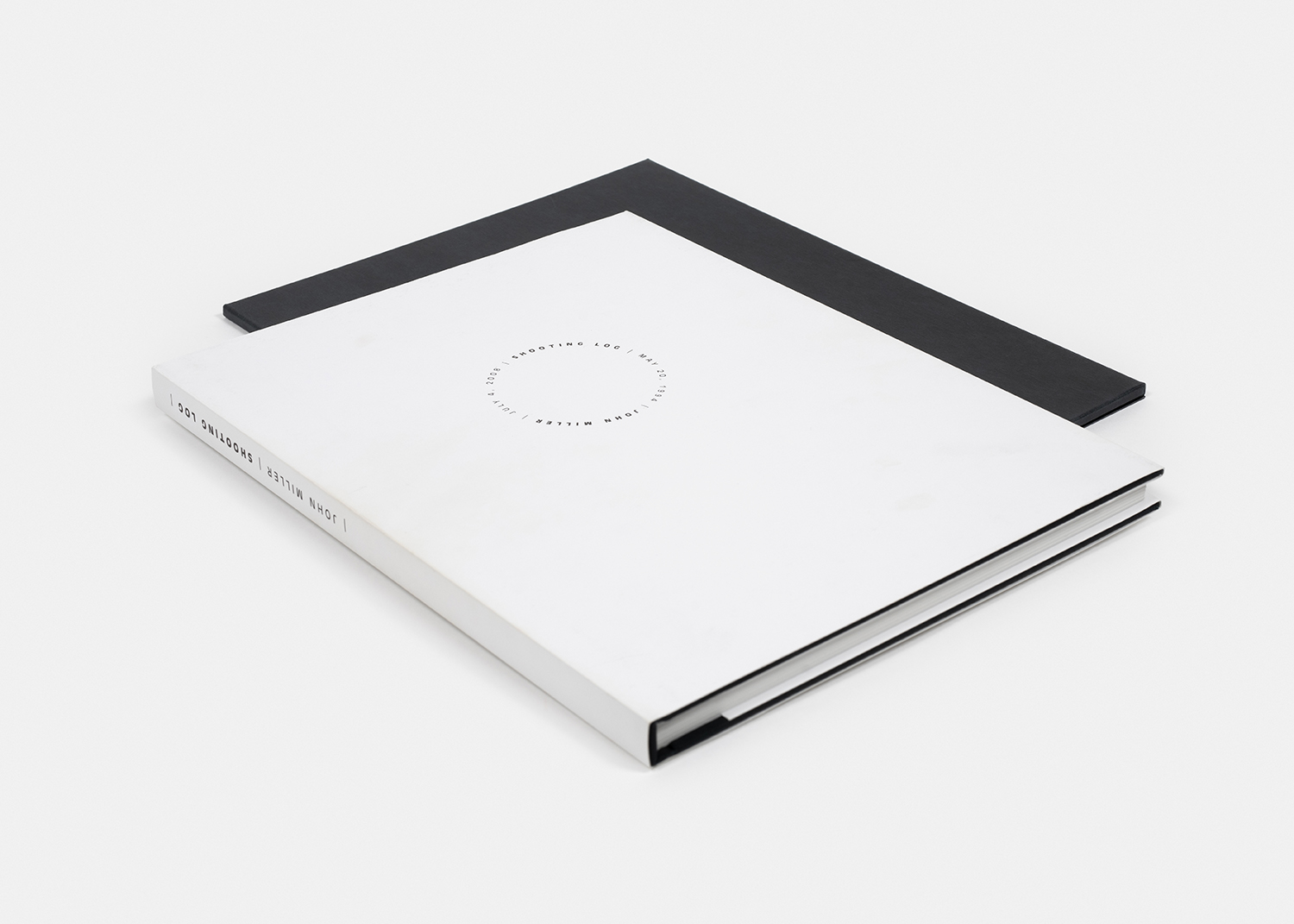
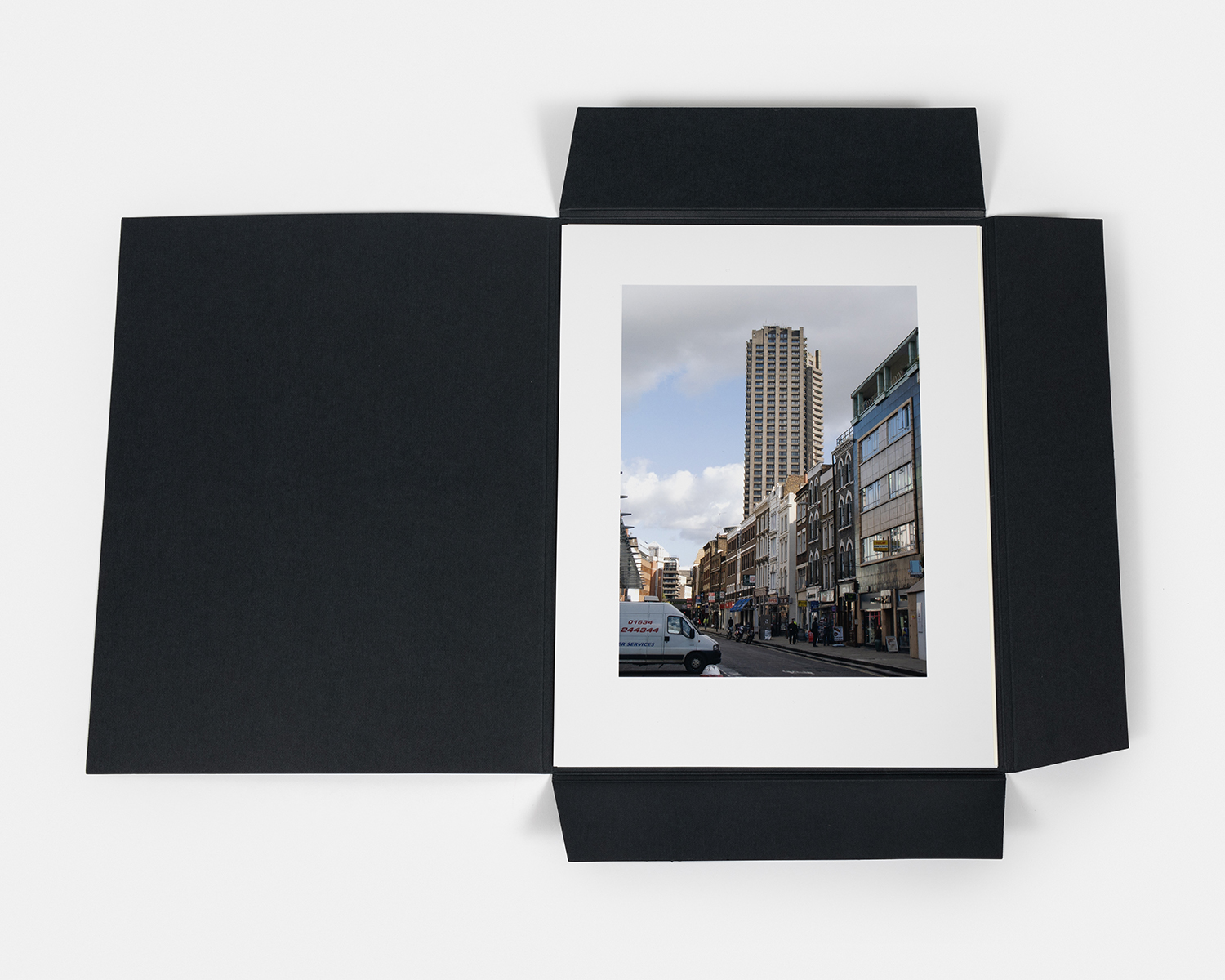
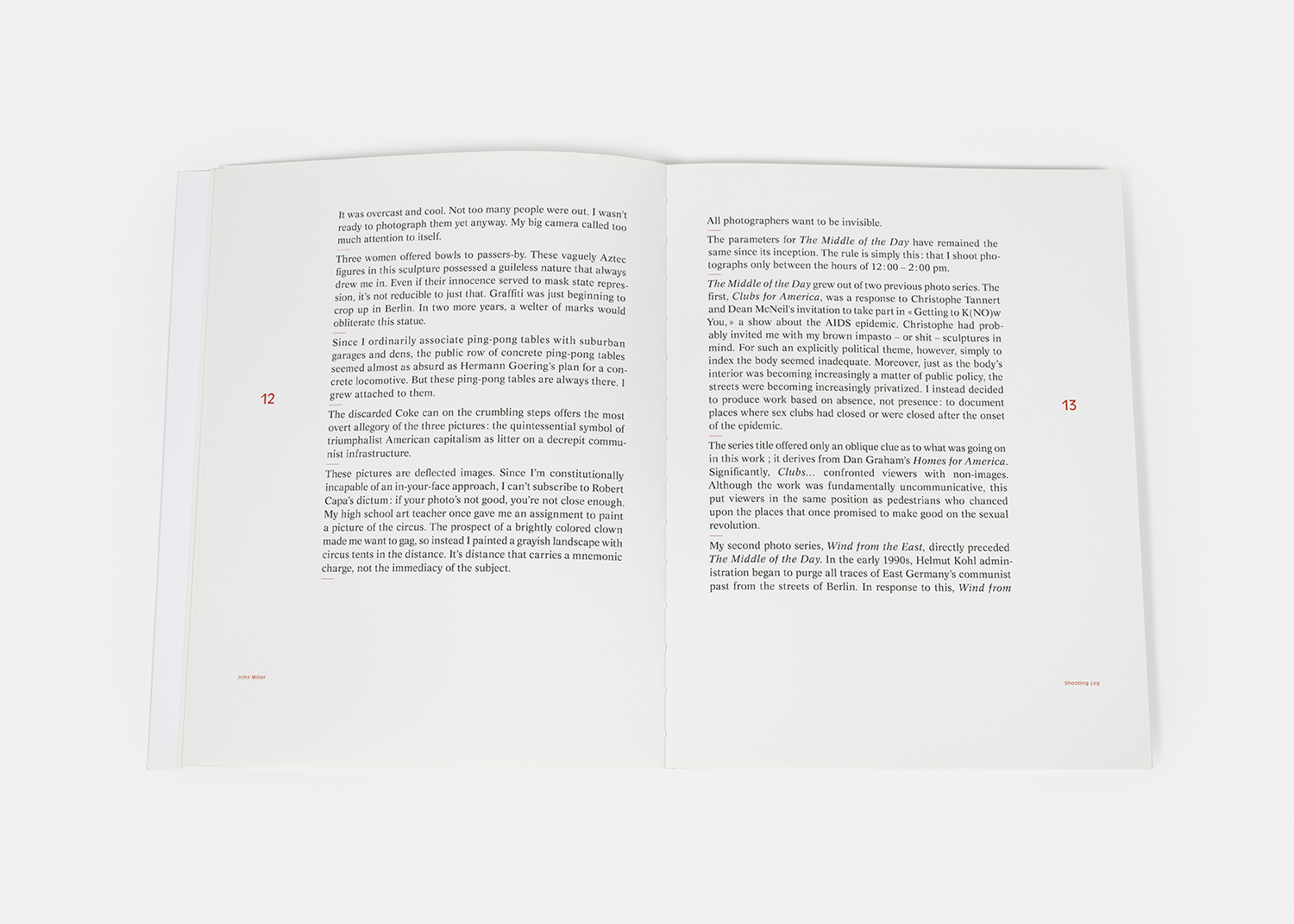
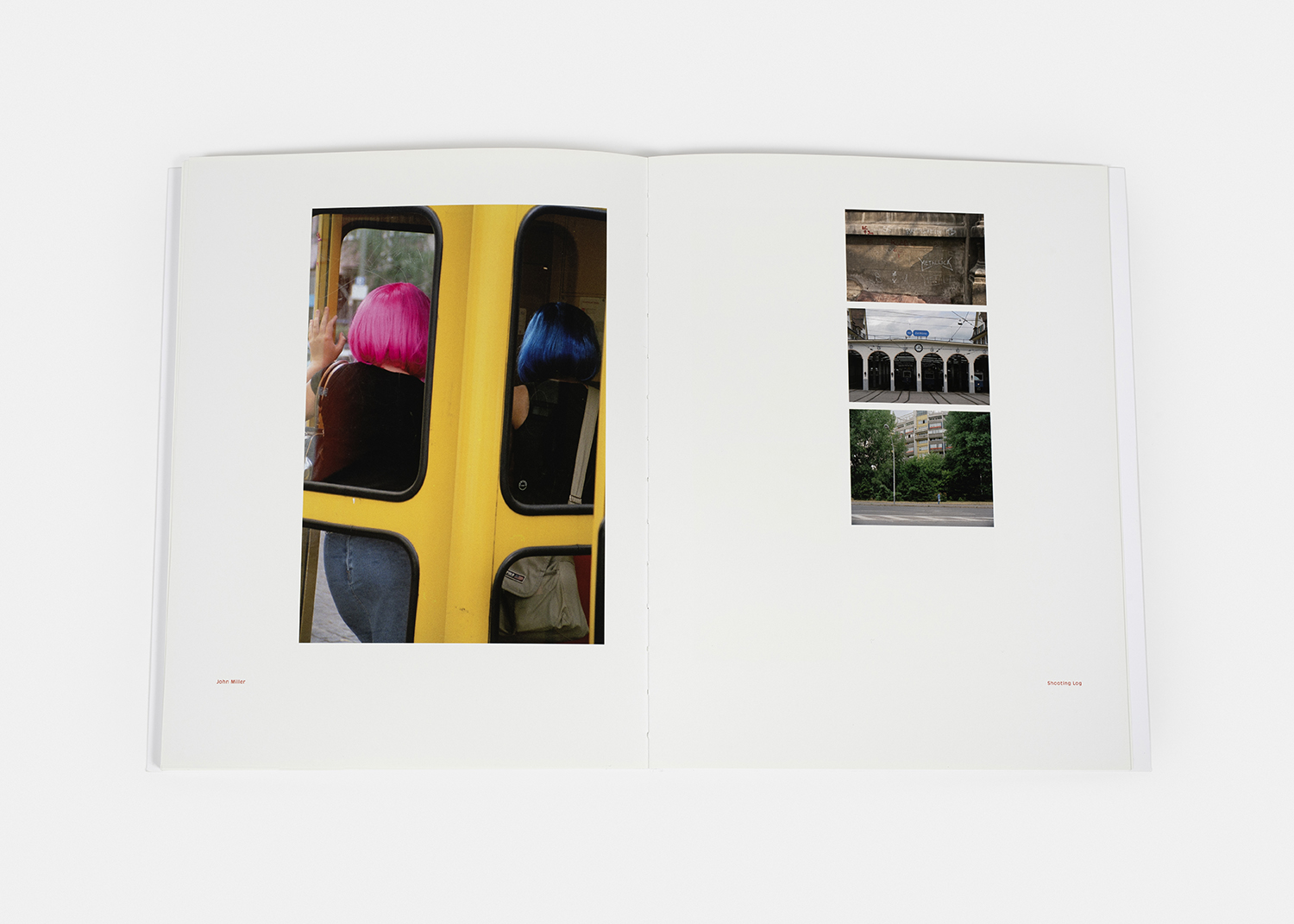
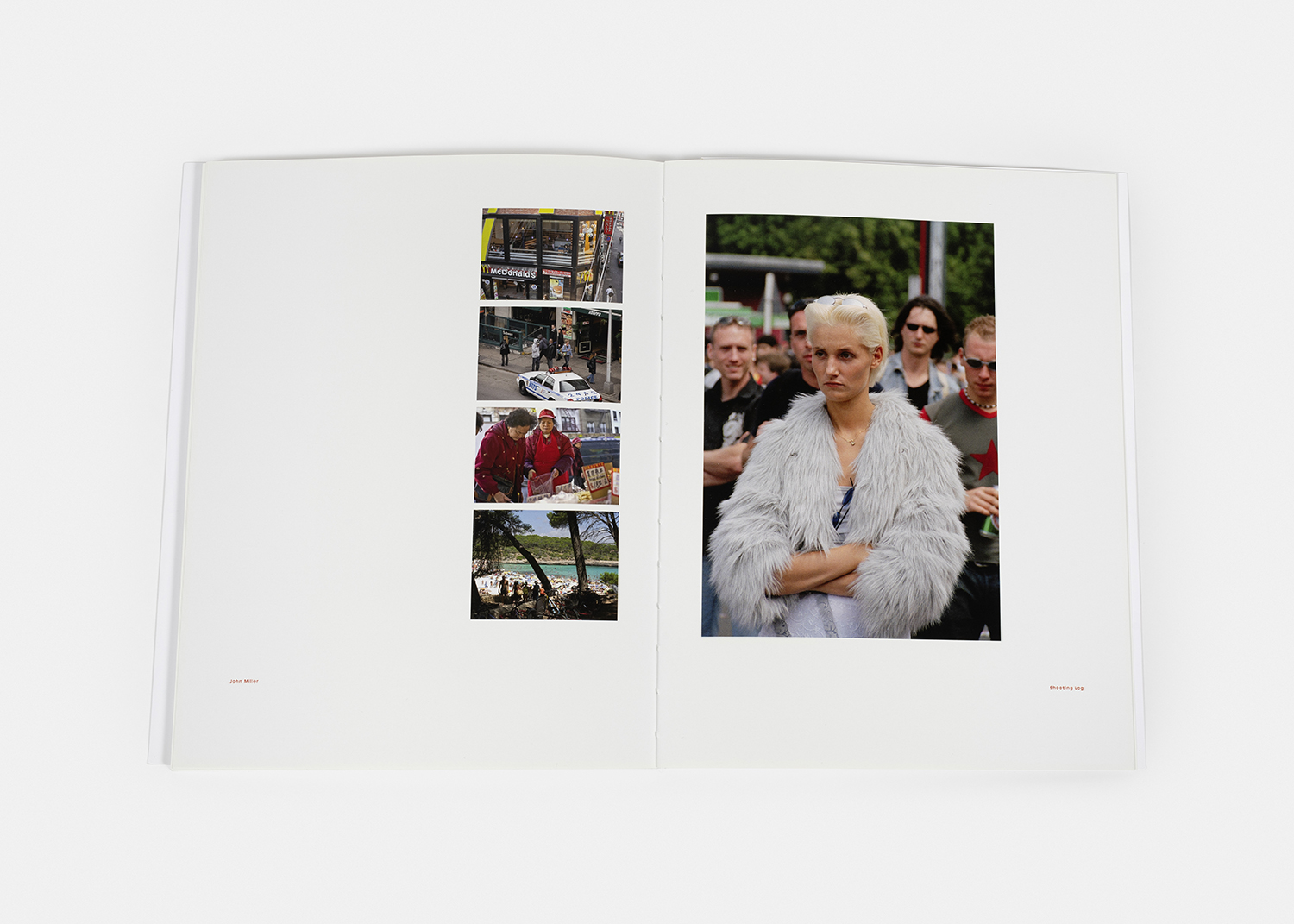
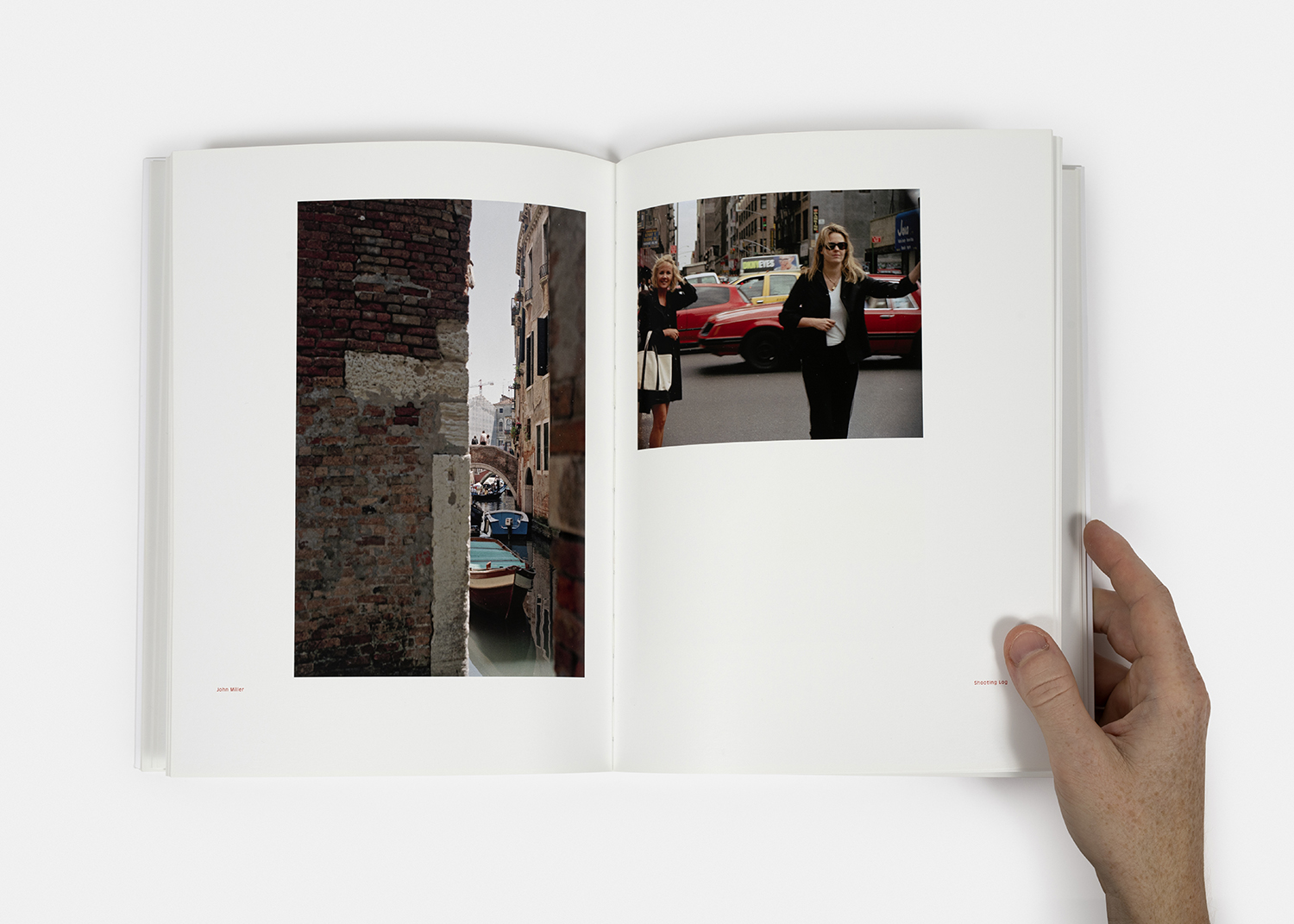
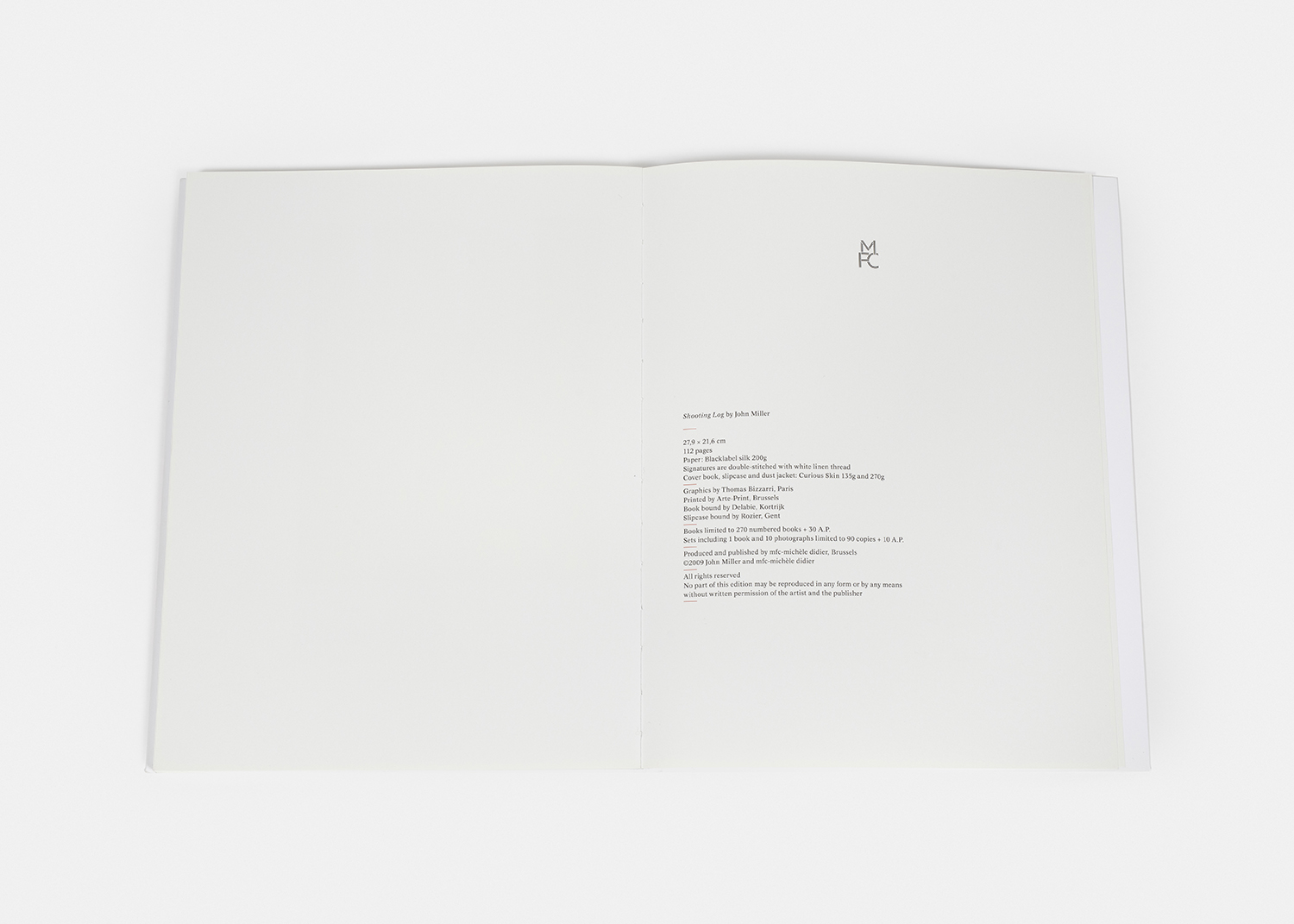
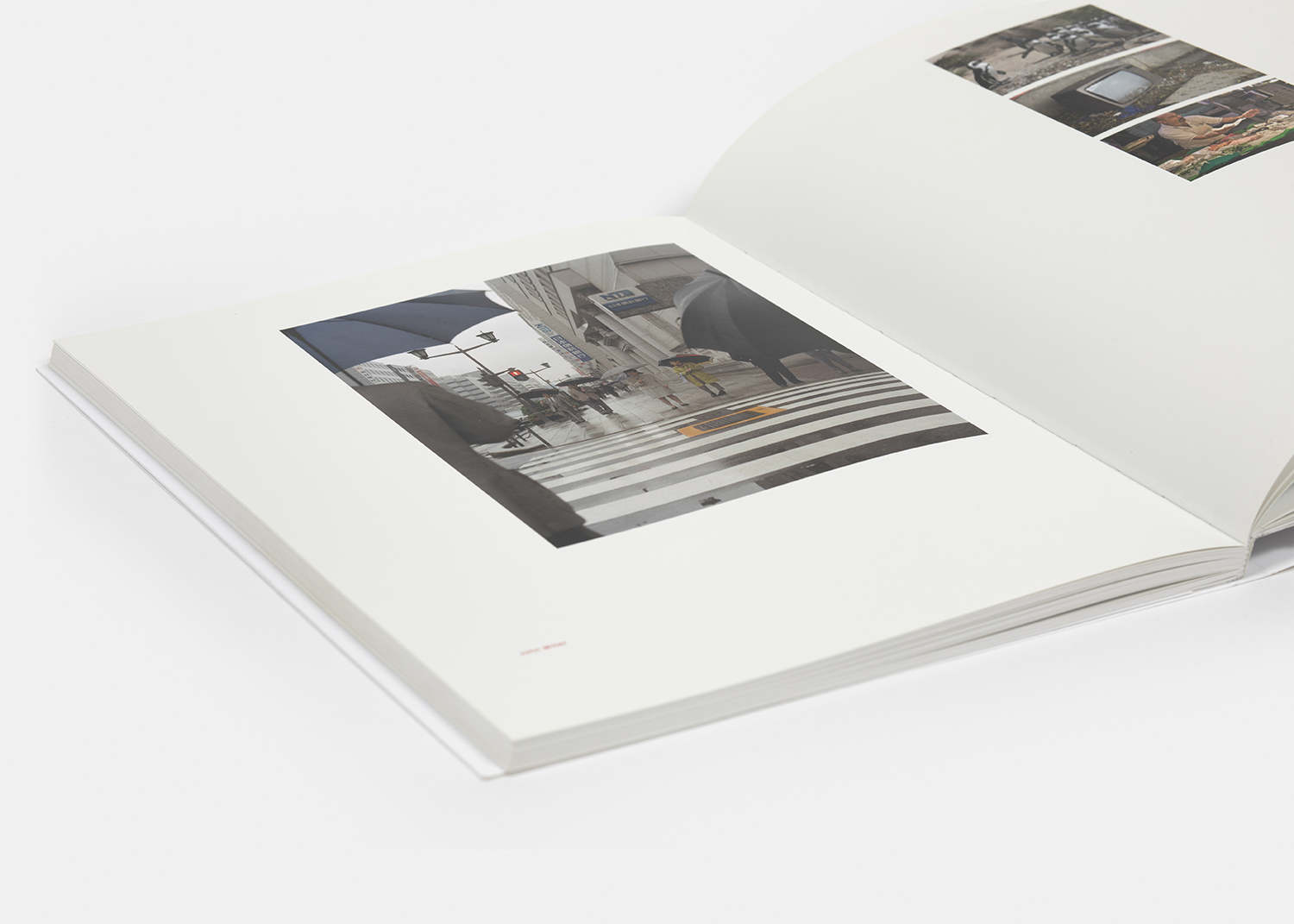
John Miller Shooting Log (set), 2009
Spécifications
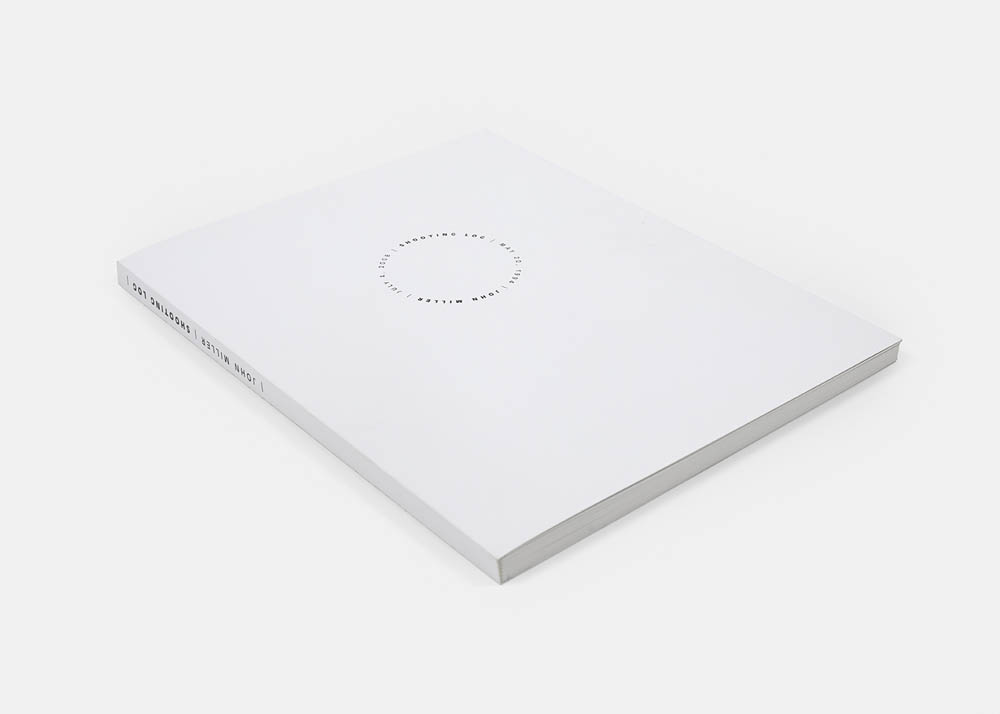
1 book and 10 photographs inserted in a slipcase
Cardboard slipcase, 11.73 x 8.85 x 1.14 in
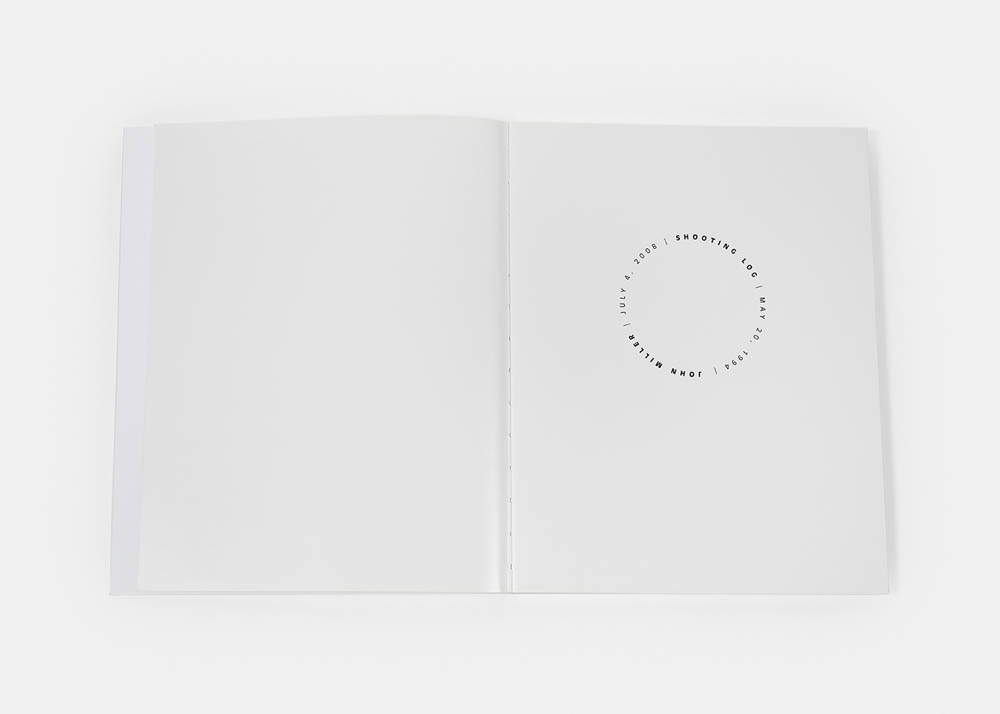
Book, 10.98 × 8.50 in, 112 pages
Printed on Blacklabel silk 200g
Signatures are double-stitched with linen thread.
Cover, slipcase and jacket printed on Curious Touch Wet 120g and 250g
Graphic design by Thomas Bizzarri
Printed by Arte-Print
Bound by Delabie
Slipcase by Rozier
Ten colour photographs
Production
Edition of 90 copies and 10 artist's proofs
Certificate numbered and signed by the artist
Produced and published by mfc-michèle didier in 2009
©2009 John Miller and mfc-michèle didier
NB: All rights reserved. No part of this edition may be reproduced in any form or by any means without written permission of the artist and the publisher.
John Miller often takes pictures between noon and two o'clock, no matter where he is. Started in 1994 and still in progress, his work entitled The Middle of the Day brings together hundreds of pictures.
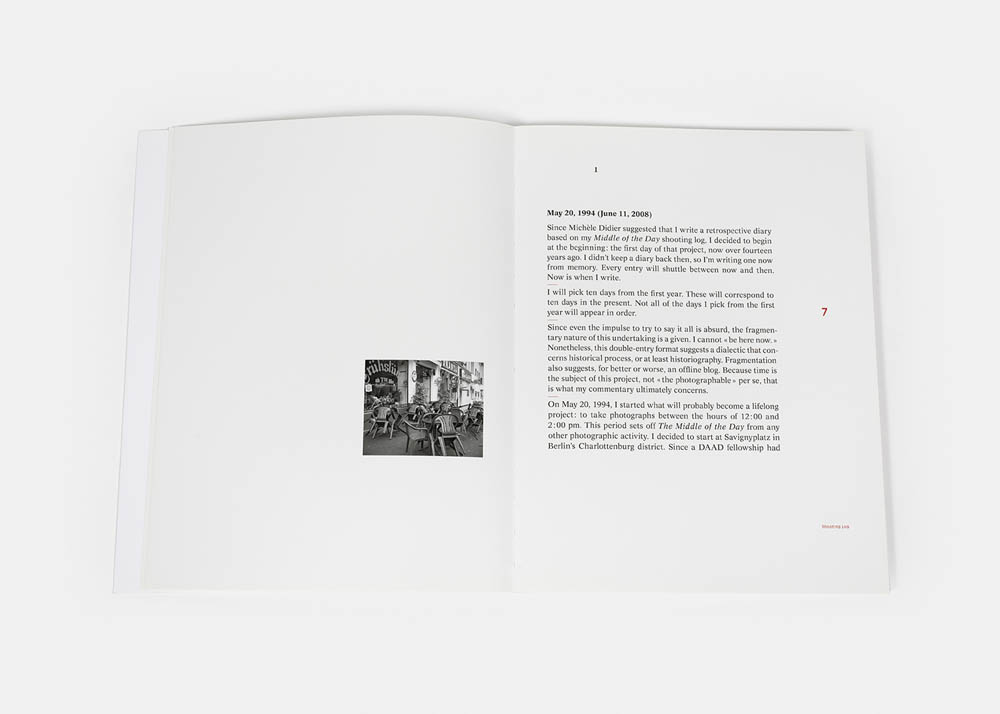
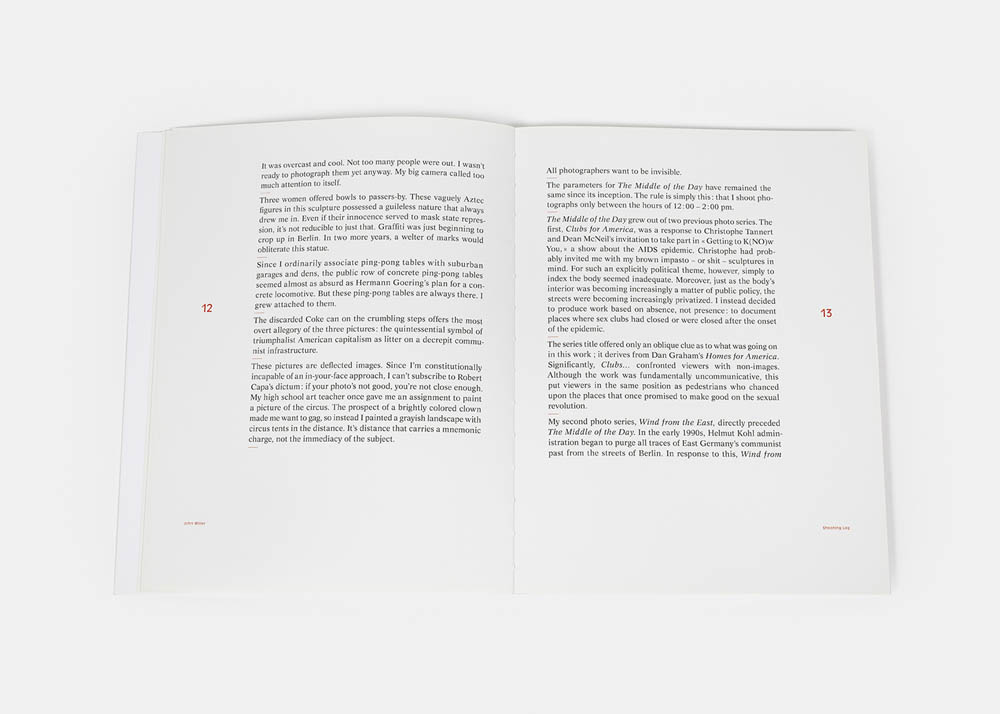
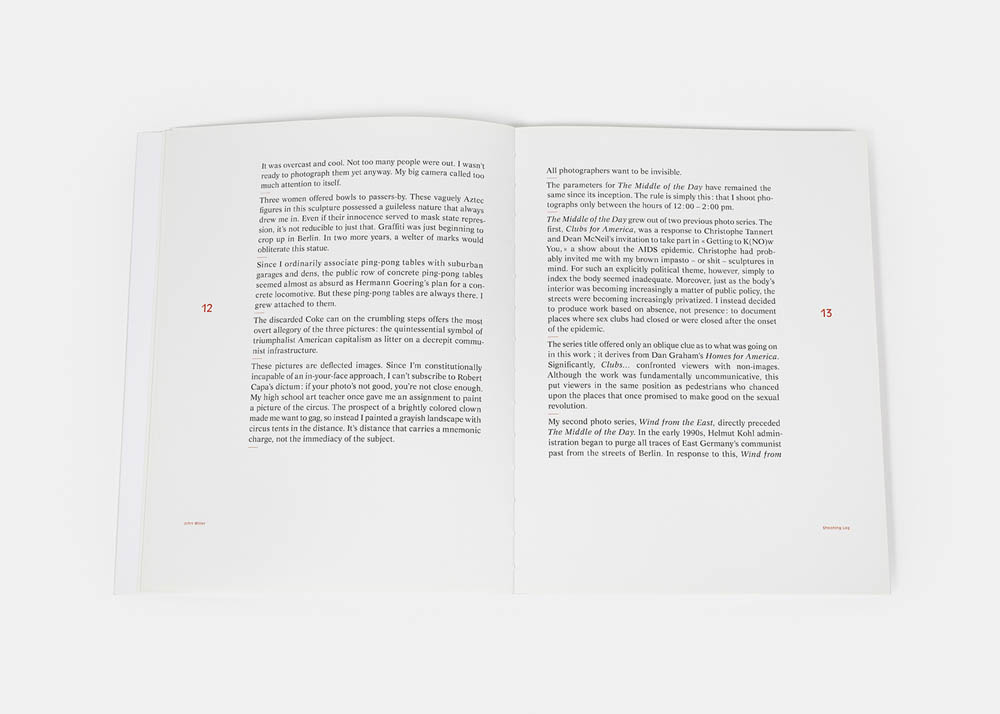
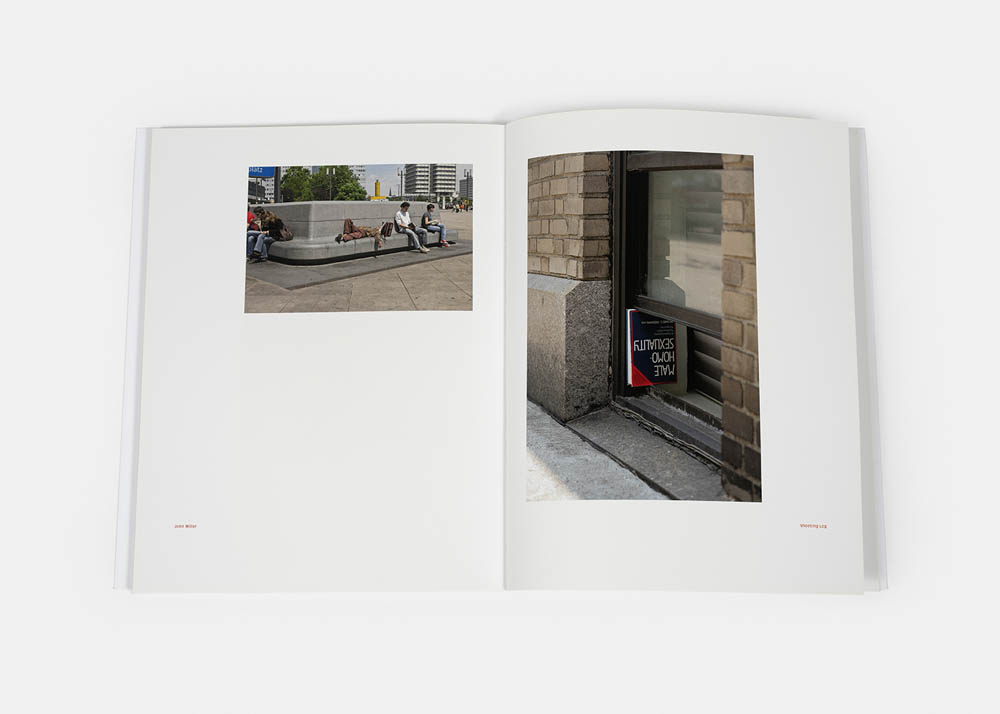
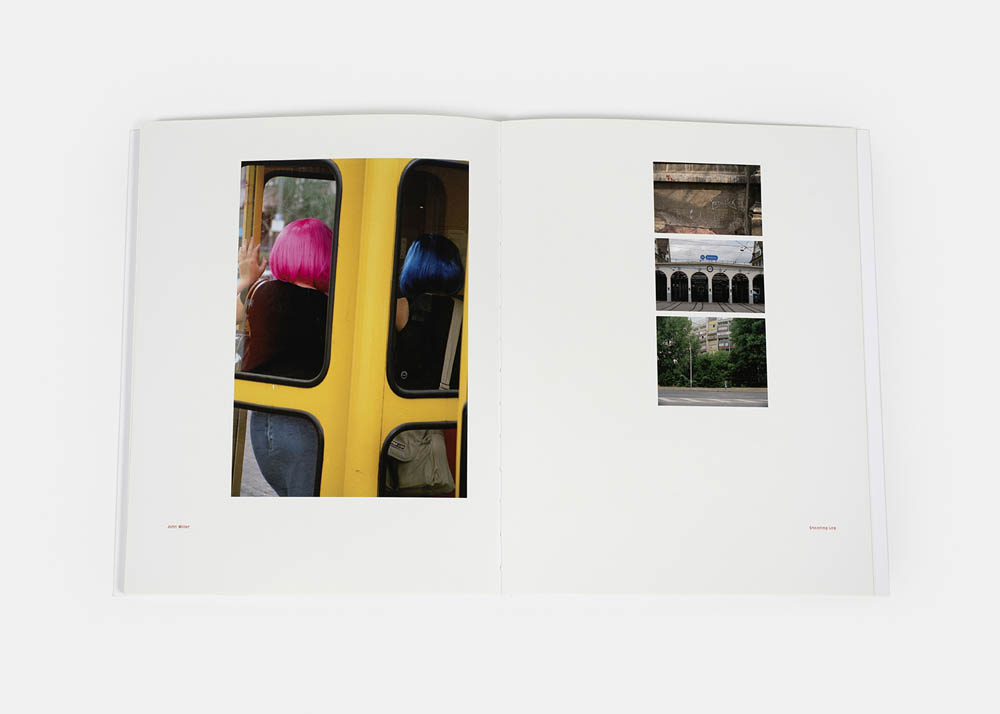
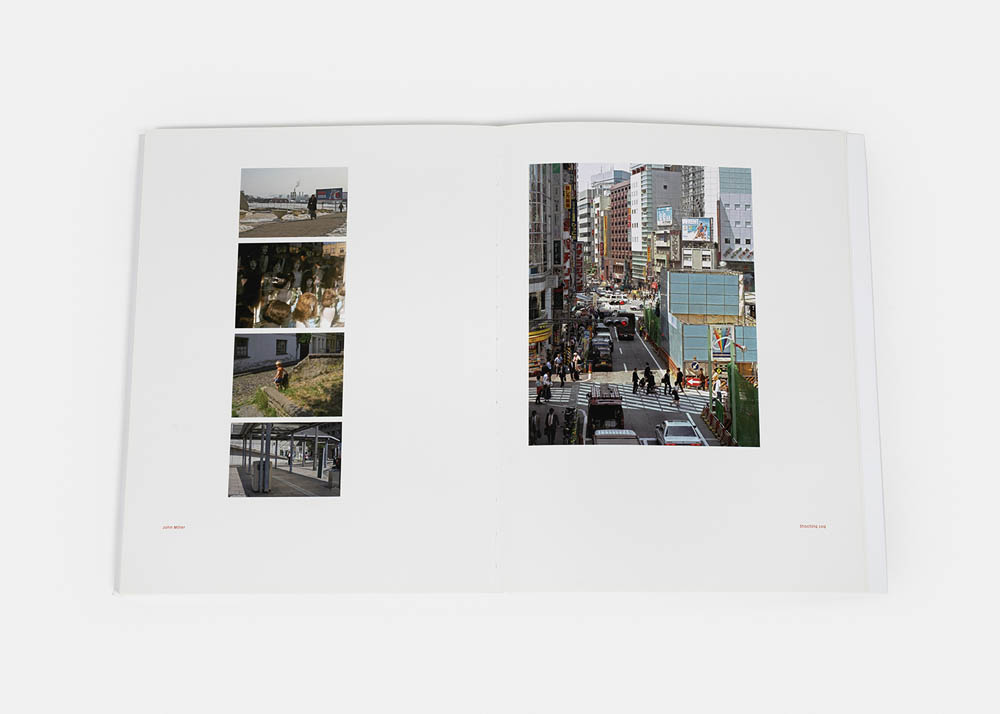
The publication of Shooting Log, written by John Miller, provides a retrospective diary of The Middle of the Day. The artist revisits his work through ten pictures all taken in 1994 and drawn from his vast corpus, including his very first picture. Shooting Log is divided into ten chapters each written on a specific day and each recalling a picture taken fourteen years earlier. Other photographs selected by the artist from The Middle of the Day are added to the commented ones. Shooting Log is limited to 270 numbered copies and to 30 artist's proofs. The edition combining the book and 10 previously unpublished photographs consists of a set limited to 90 numbered and signed copies and 10 artist's proofs.
The story of Shooting Log starts in the present, examining a picture taken in the past. Agreement between the past and present tenses of the photograph activates memories of the circumstances of the shooting and sometimes recovers those associated with what was actually photographed. Does the picture (re)awaken the memories? Or is it today's perception that (re-)reads the image and enhances it with a new story? It was when John Miller looked at a black and white picture of chairs leaning against a table that he remembered that they were green, as if photograph and memory were each other's support. Conversely, the image of an unpretentious coca-cola can crushed on a step sparks off, years after the fact, his skepticism about the so-called triumph of capitalism over defeated communism…
The Middle of the Day series at the heart of Shooting Log is also a diary in the strictest sense of the word since it accumulates documents, in this case photographs, which provide a day to day account. The journal is kept for the purpose of remembering past events, things seen, thoughts and emotions evoked. In Shooting Log, John Miller matches the coming and going between two superimposed “journals” with introspective comments on the photographic act.
John Miller's photographic act can be described in a very prosaic way: the artist accomplished it during lunch break! Although we may not know how or why, we can at least tell when John Miller conceived The Middle of the Day: between noon and two o'clock, at lunch time. The pictures in The Middle of the Day are vacation shots. These two hours of rest are vacation time as opposed to work time and they are vacation in the sense of vacuity. Besides, what do people who are subjected to work schedules do during their time off, during their vacations? They take pictures. It is amusing to note that the artist, who does not depend on time being divided into work and leisure, has specifically chosen this timeframe to devote himself to the practice of photography, itself emblematic of vacations.
On the other hand, it is impossible to define the subject of The Middle of the Day. A brick wall; passersby kidding around; a bridge over a highway; a tree; ducks in a cage; a kneeling woman petting a carp in the water; gaudy punks; a pink grapefruit cut in two and set on a plate: the real subject, the “between noon and two” remains irreparably invisible. Even when a clock appears showing the time, the viewer may suspect that it is broken. The Middle of the Day provides no proof but it demands belief.
The photographic genre is itself dismantled. A picture of two red apples sitting on a table looks like a still life yet these are essentially two red apples at noontime. If all photographic representation can indeed be subjected to the same genre classification as painting, to which genre does The Middle of the Day belong? There is no answer and there is no name for it since the real subject is unfit to be captured by a photographic film. If we know that a picture was taken at 1.30p.m., we have been given a coordinate, but no subject. What makes the relationship with time visible? Nothing. The pictures of The Middle of the Day have a non-documentary imprint quality. They are, at the most, a recension of lost moments, moments that have slipped away from the cause of effectiveness and meaning.
Can this work at least be understood as a depiction of daily life? Not in the immediate sense, because it is less a depiction than an allegorical practice, a visionary art, even a “magical art.” In addition, it corrupts historical sense. What is shown is a moment in the day and not a given day. As if there were no past, no history. Roland Barthes' famous “ça-a-été” which assimilates photography with the “living image of a dead thing”, is translated here by a “ça-a-été,” “ça-est,” and “ça-sera-toujours.” There has always been a “middle of the day” from the beginning of time.
Photography is a mass leisure activity. The artist reports on the human condition not so much by representing it but rather by appropriating this activity. We should remember that photography “fell” into the public domain very quickly. The French State purchased the invention from Nicéphore Niepce and Jacques Daguerre for a life annuity and offered it as a gift to humanity, free of rights. In Shooting Log John Miller makes a wish: to take the picture “everyone would take”. However, fulfilling this wish is impossible, unless it is the quest itself which leads him to take these specific shots. John Miller aims wide, from a distance. He is wedded to the movement of the wandering eye, to the eye that finds what it wasn't looking for. His search for the commonplace is a search for things we wouldn't normally have looked at. He finds the areas of cleavage between photographic subjects. He gives us the images between the images with an eye both detached and omniscient which has recorded everything haphazardly and has accumulated an inexhaustible deck of cards: “images of the world” shuffled and randomly dealt.
It is the subject itself which marks the distance between camera and photographer and not the contrary, as if the main purpose of John Miller's work was to rid himself of his own point of view. It may be that when the photographer is able to “de-position” himself, and thereby to reorganize a given space, that the famous Benjaminian “aura”, apparently lost, reappears like this blurred silhouette behind a swing set. The haloed image of his daughter Carmen, then a child, becomes a real subject. Indeed, “space is interwoven with unconsciousness”3 and a few confessions on the topic escape from the text of Shooting Log, such as “Today, I forgot my camera. Why?” Asking the question is already admitting to a lapse. But isn't this lapse, in the line with the photographic act, exactly what makes this act successful?
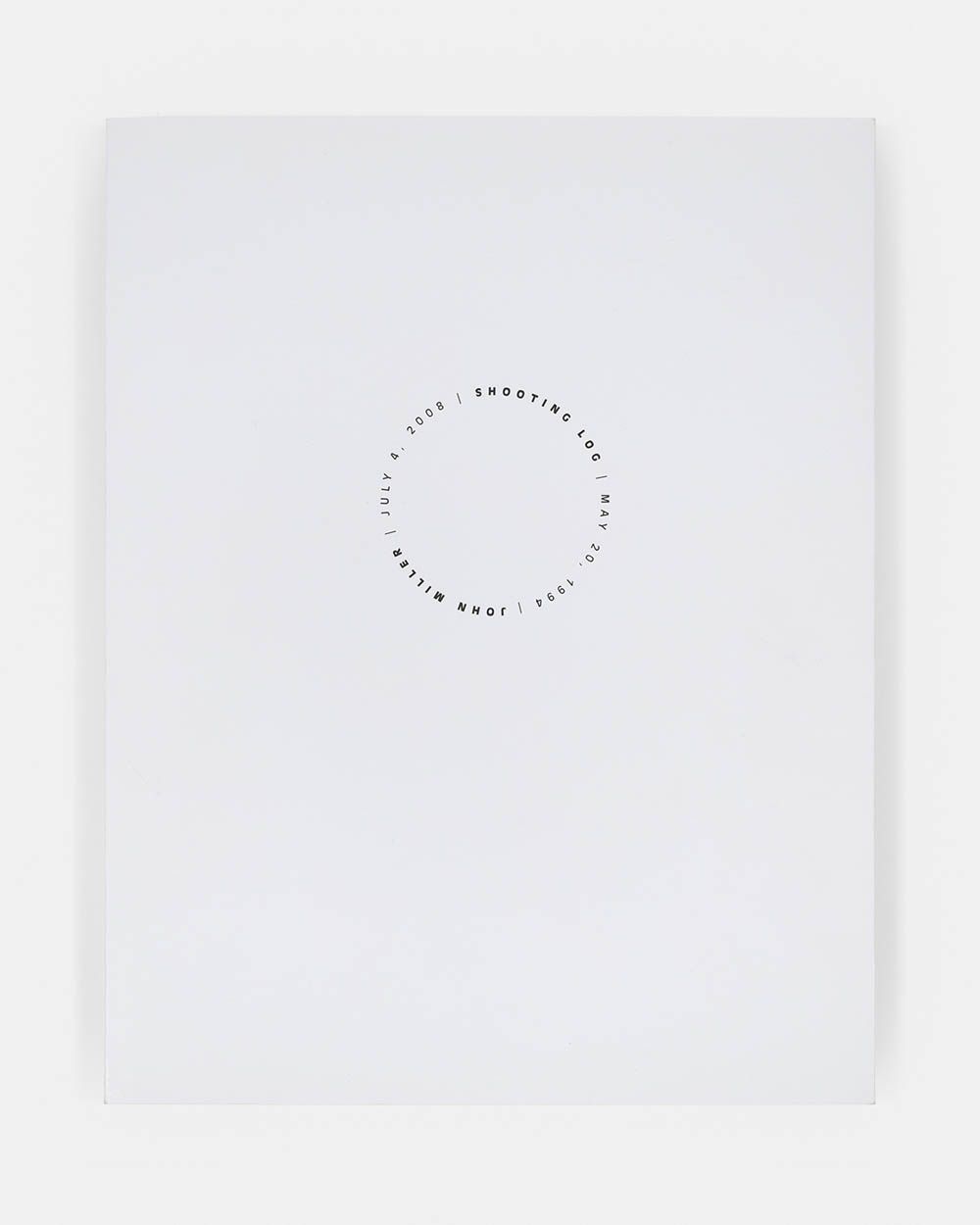
10.63 x 8.27 in ( 27,9 x 21,6 cm )