Saâdane Afif, Fiona Banner, Robert Barry, Guerrilla Girls, On Kawara, Allan McCollum, Annette Messager, Antoni Muntadas, Claude Rutault & Allan McCollum - Art Basel - Art fairmfc-michèle didier | Paris - Brussels -
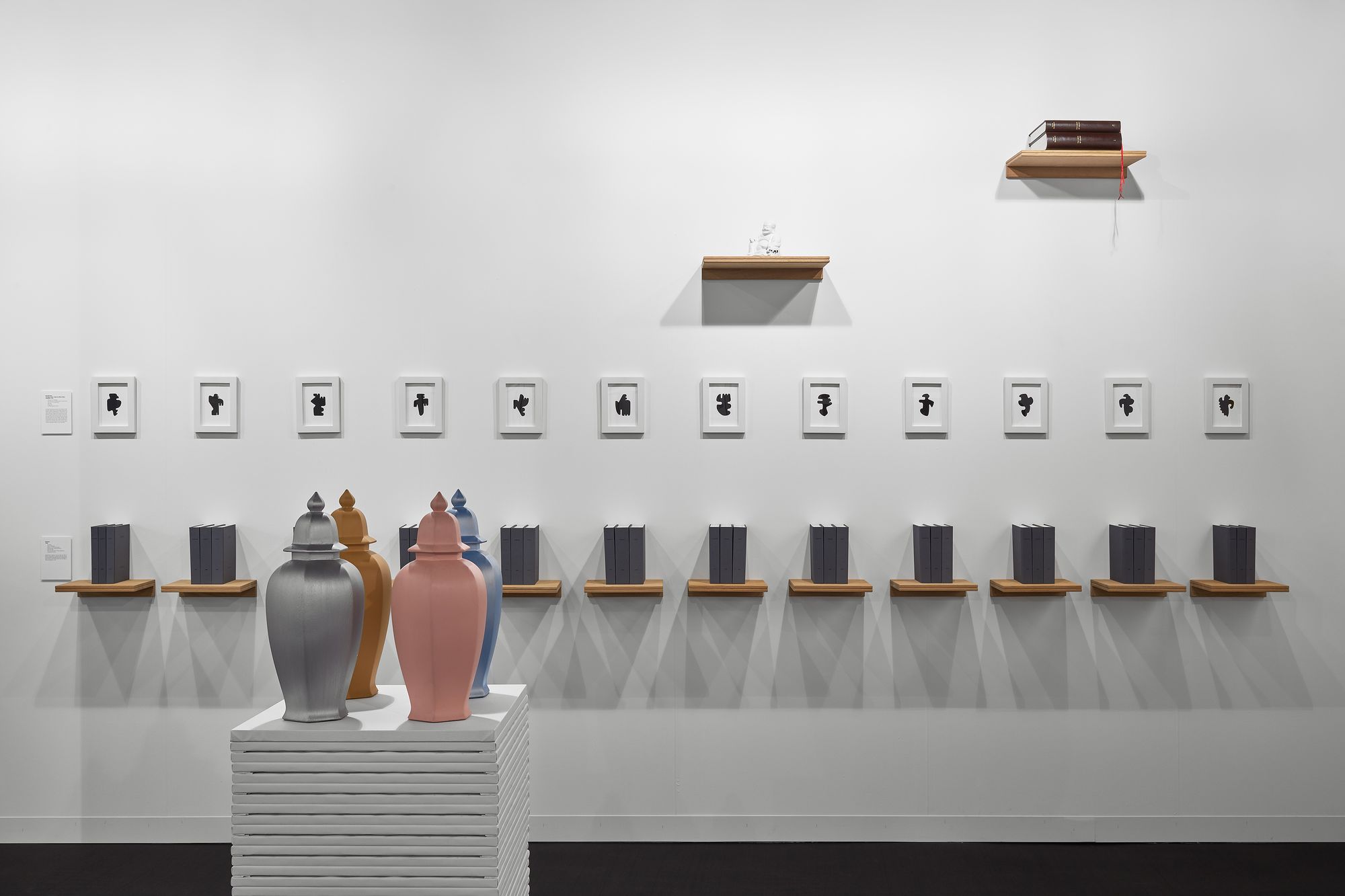
June 15-18, 2017
Basel, Switzerland
Vanitas vanitatum, omnia vanitas
If the theme seems ancient ? it has been found in the Antiquity and became an autonomous genre circa 1620 in the Netherlands before spreading in Europe during the 17th century ? vanities have not vanished from the 20th and 21st century artistic production. Even though Vanity is now characterised by a large variety of expressions, the artistic interest it inspires is not fading.
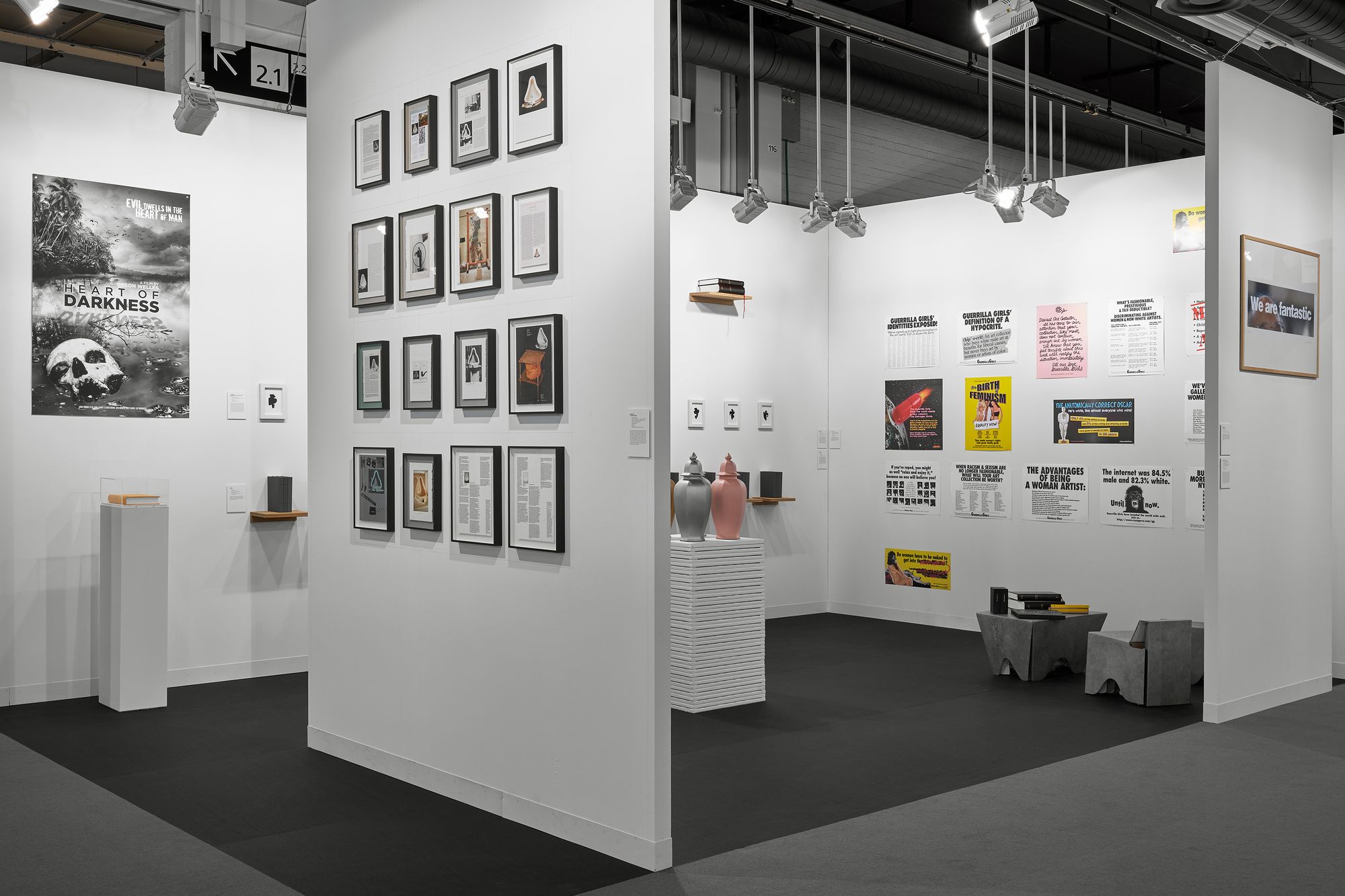
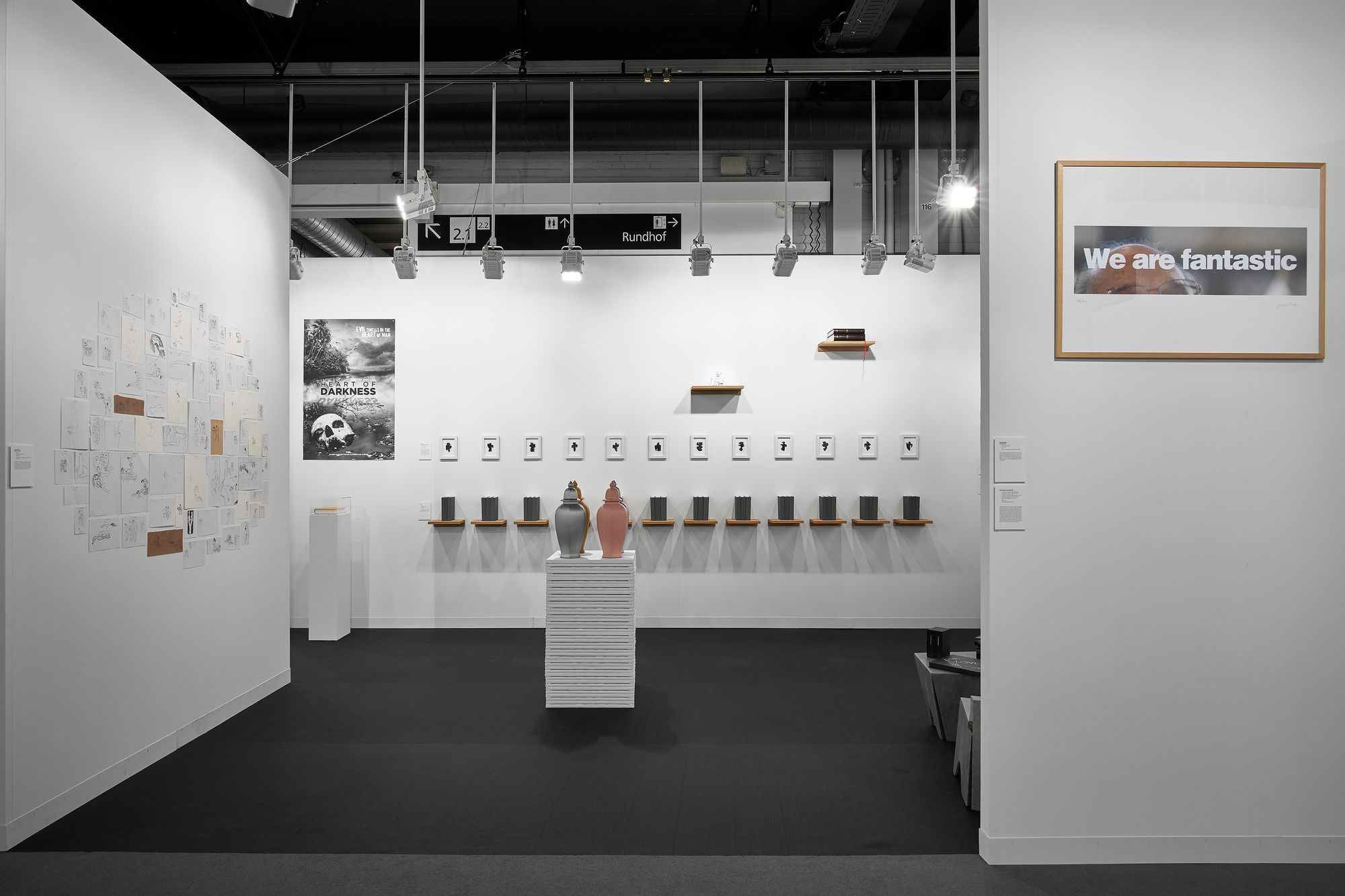
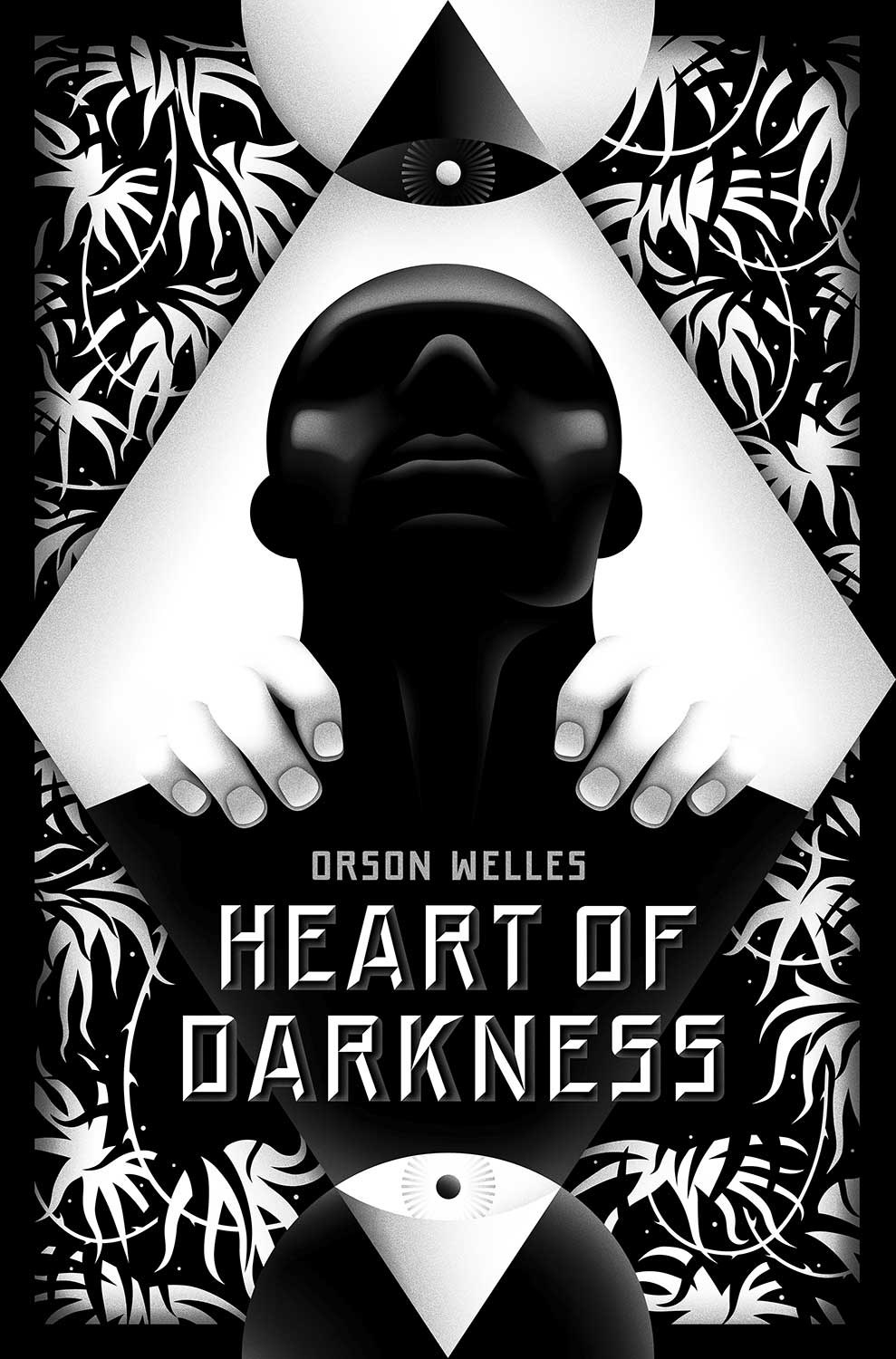
Skull and sill life certainly stay indisputable symbols of Vanity ? in this respect, mfc-michèle didier saves them a prominent place in its booth with the poster Heart of Darkness from Fiona Banner's series The Greatest Film Never Made (Fiona Banner and Name Creative) ? though it is far away from being the only subject of representation for this recurrent theme in Art and Human History.
Since the dawn of time, artists have tried to substantiate not only life and death matter but rather the transition between these two and its inscription in time. In this regard, contemporary artists make no exception.
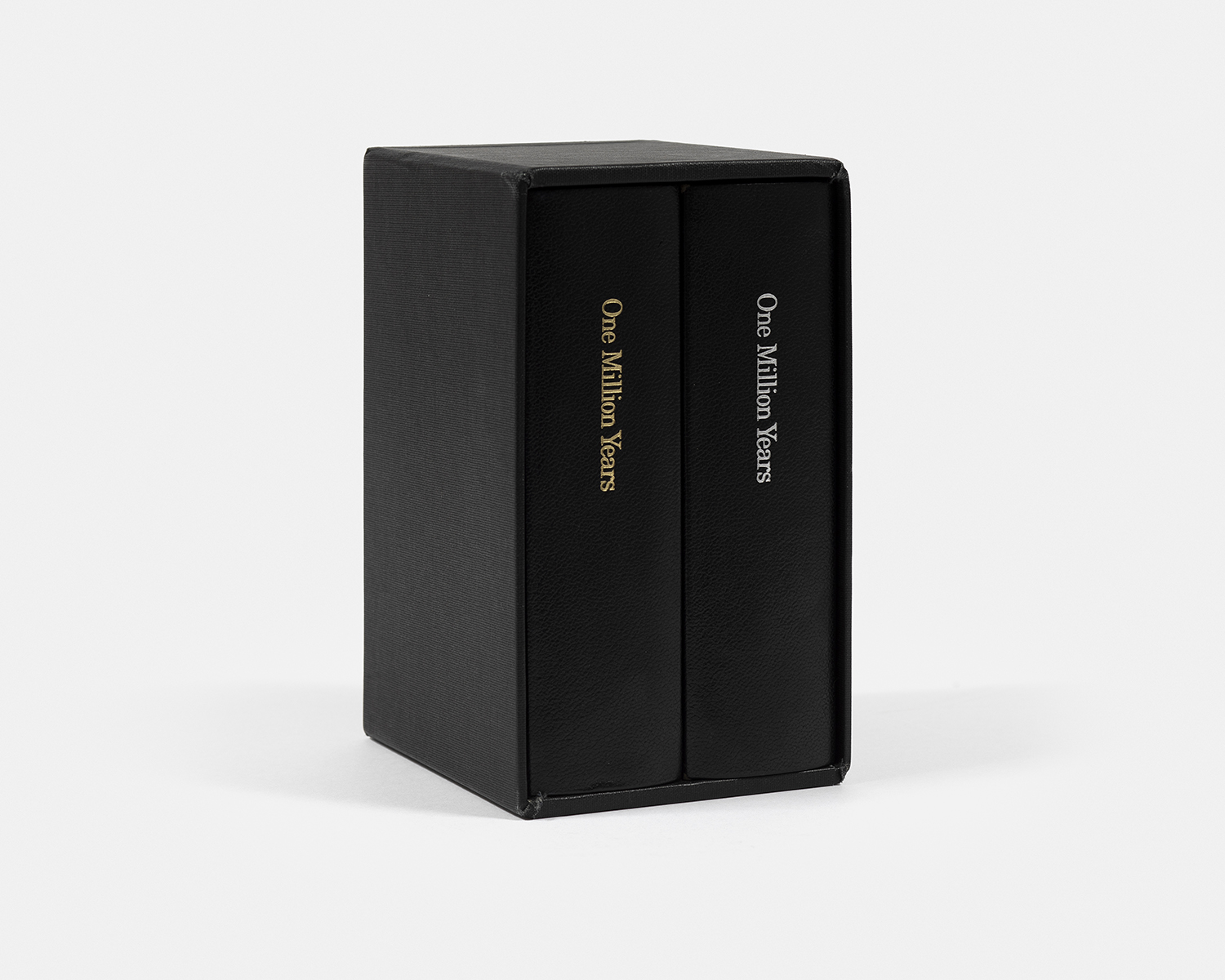
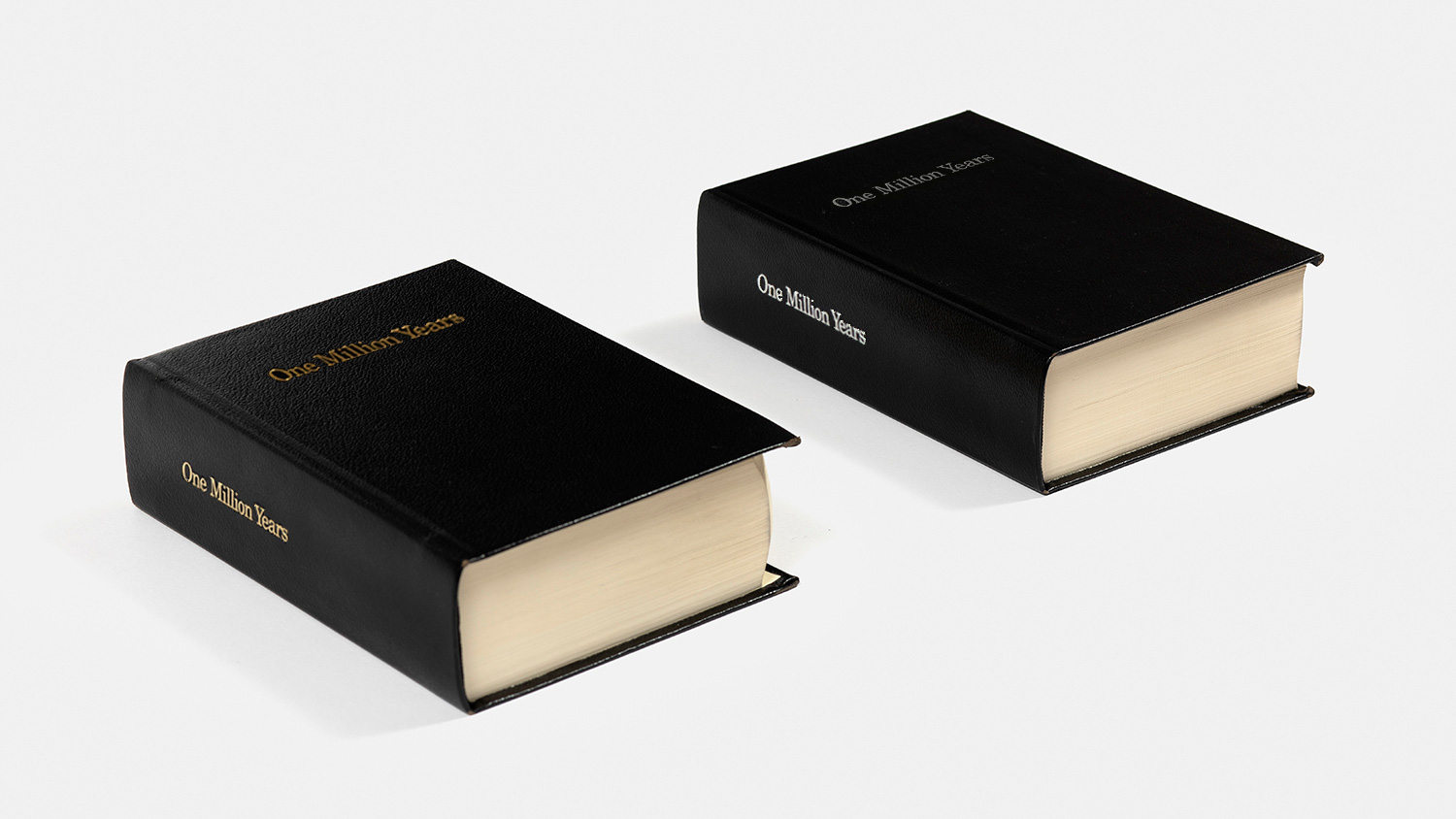
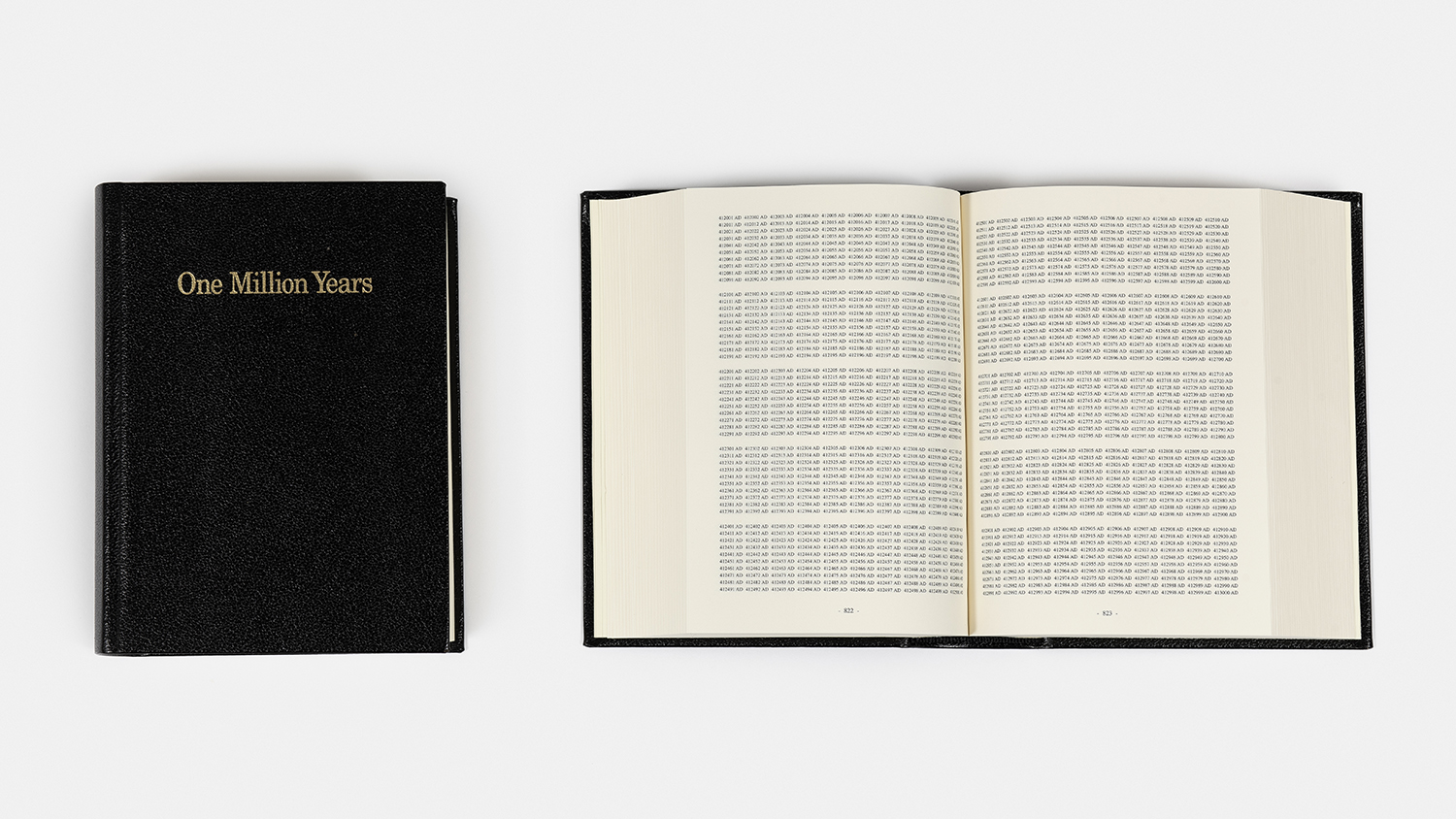
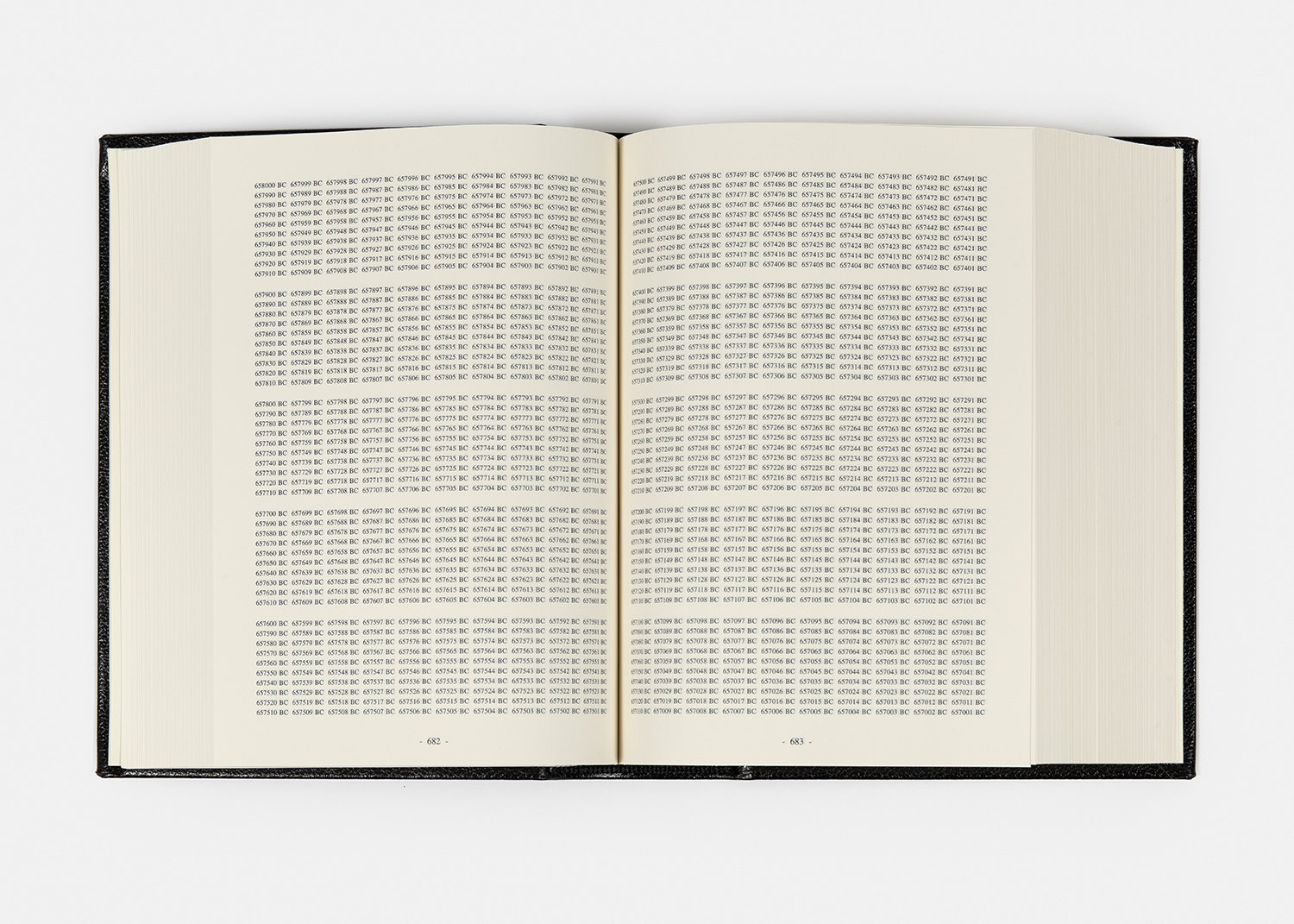
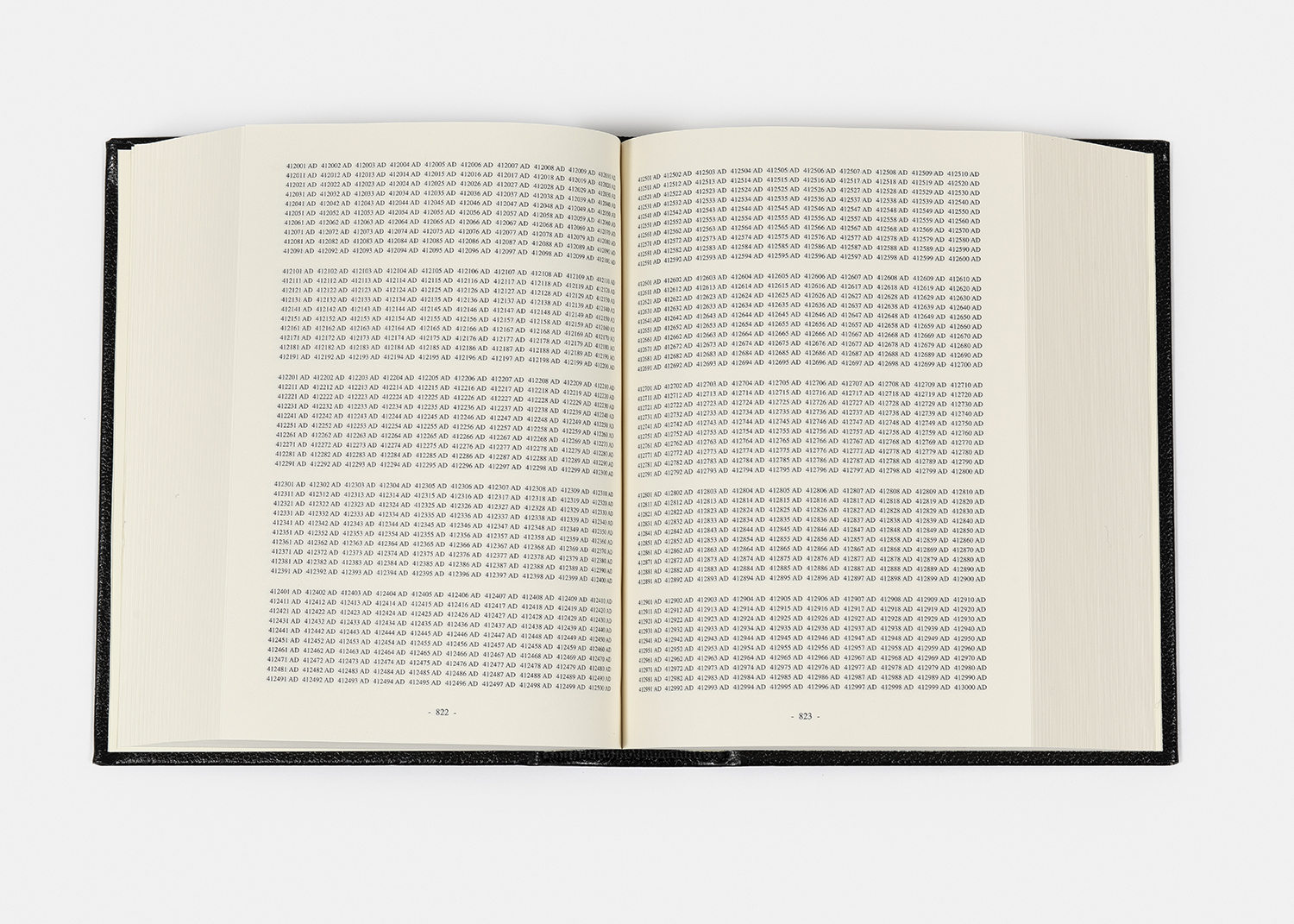
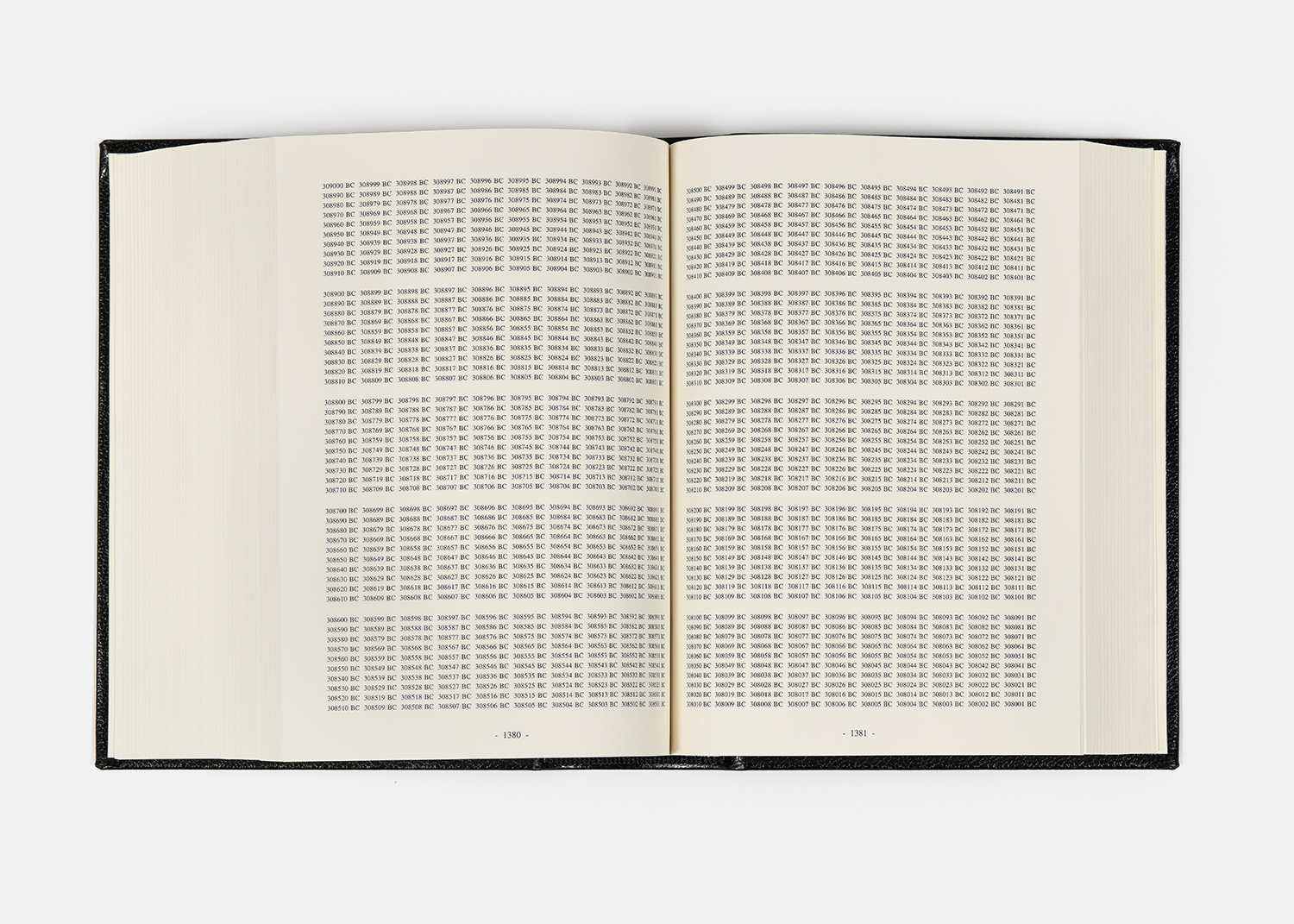
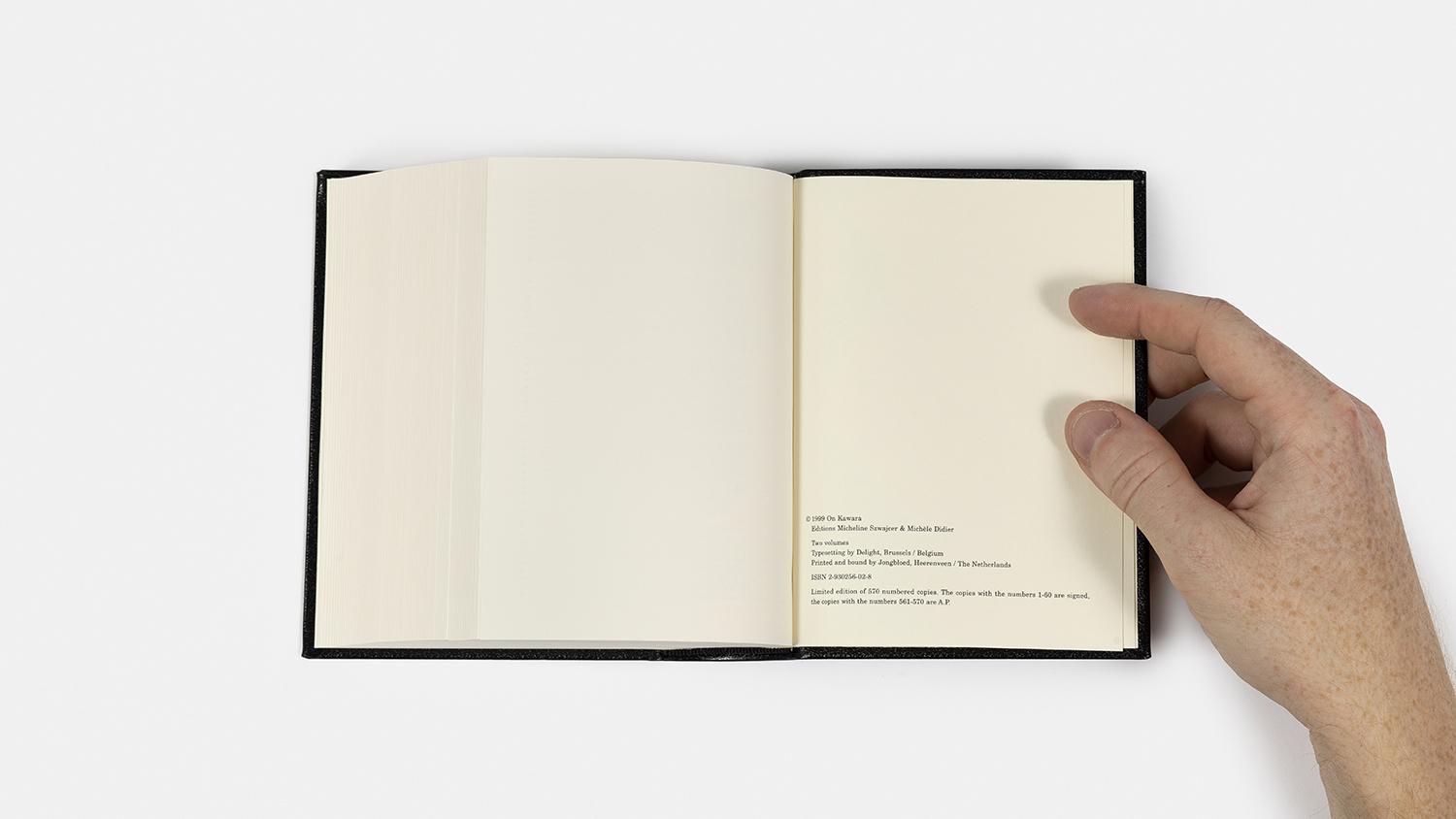
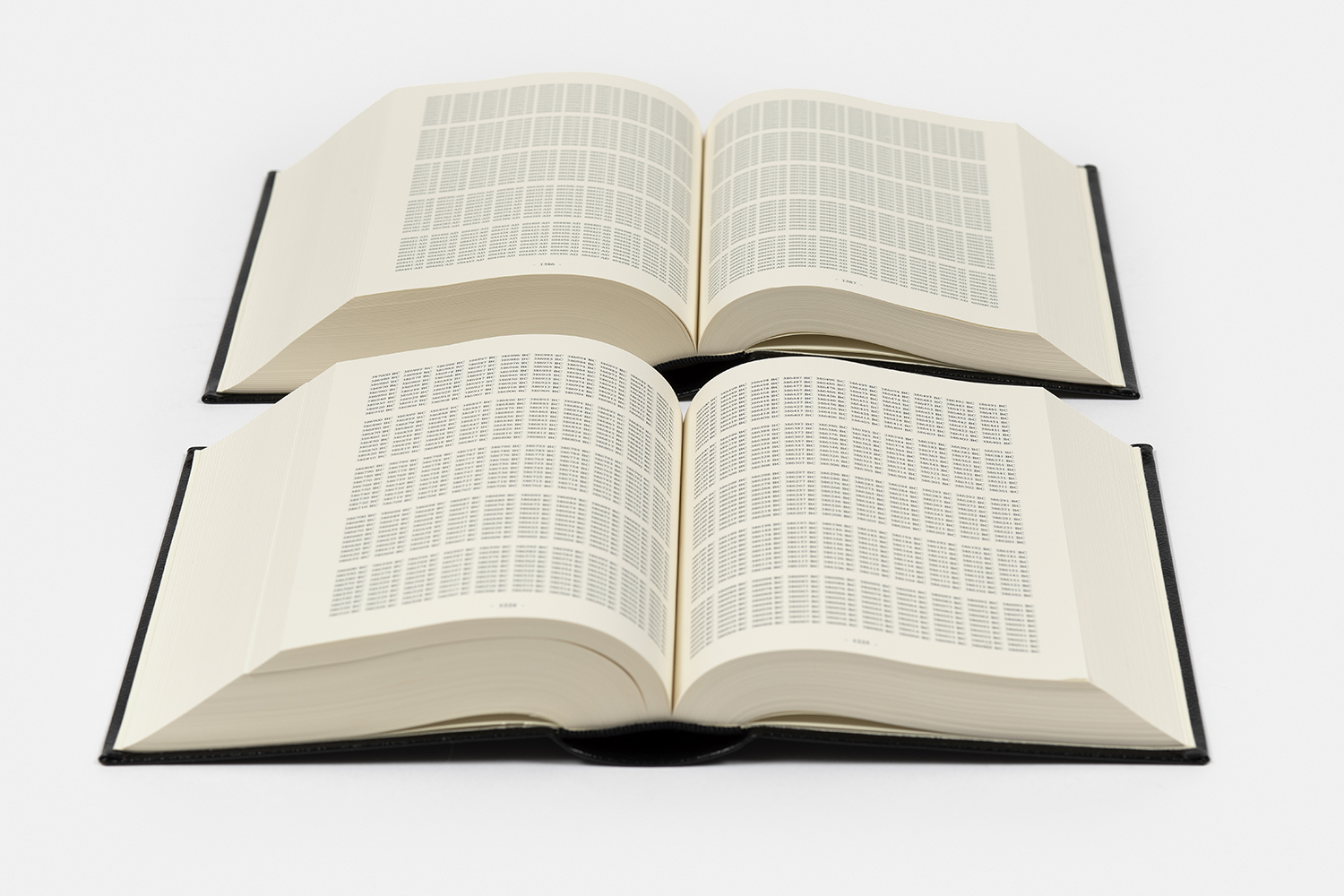
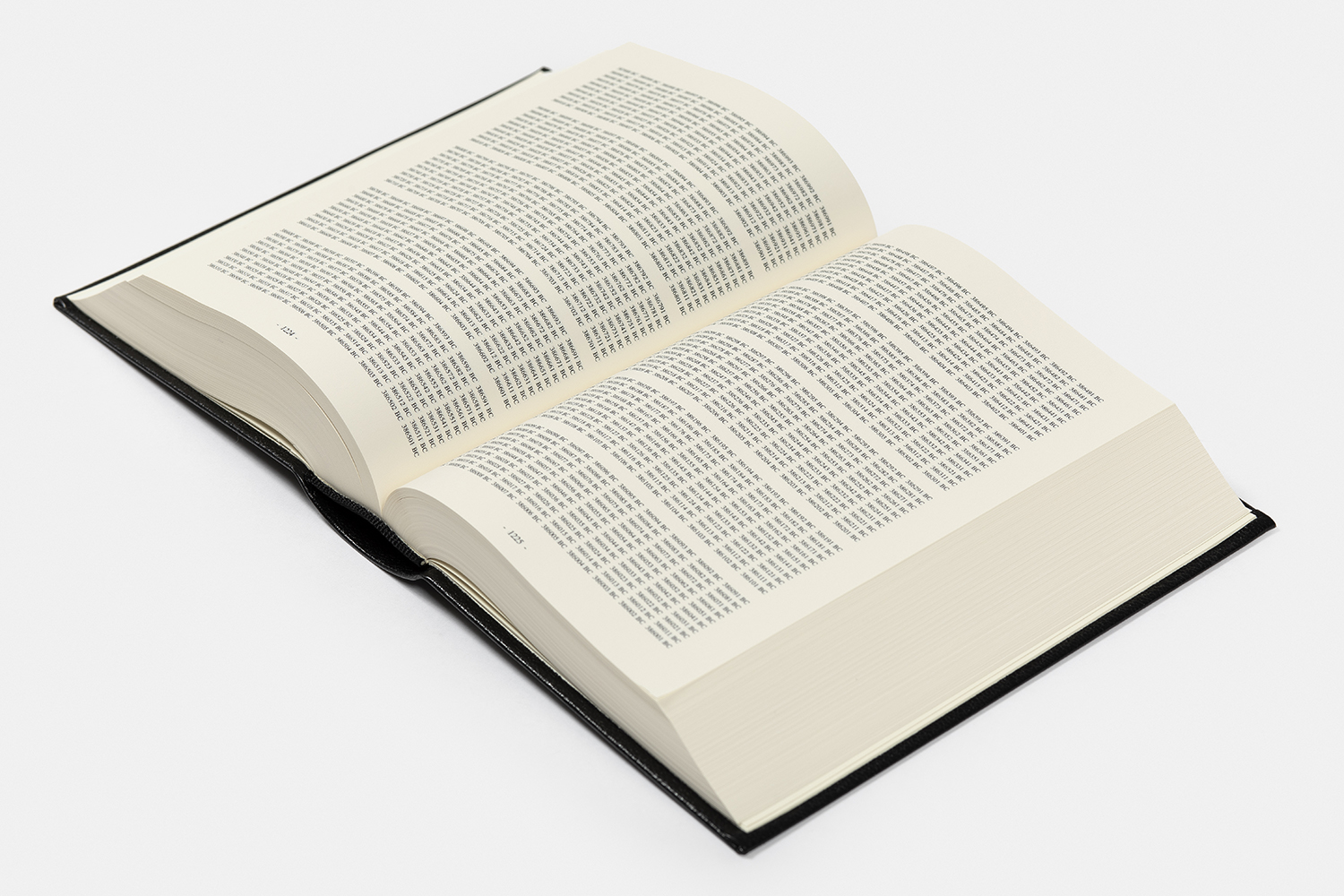
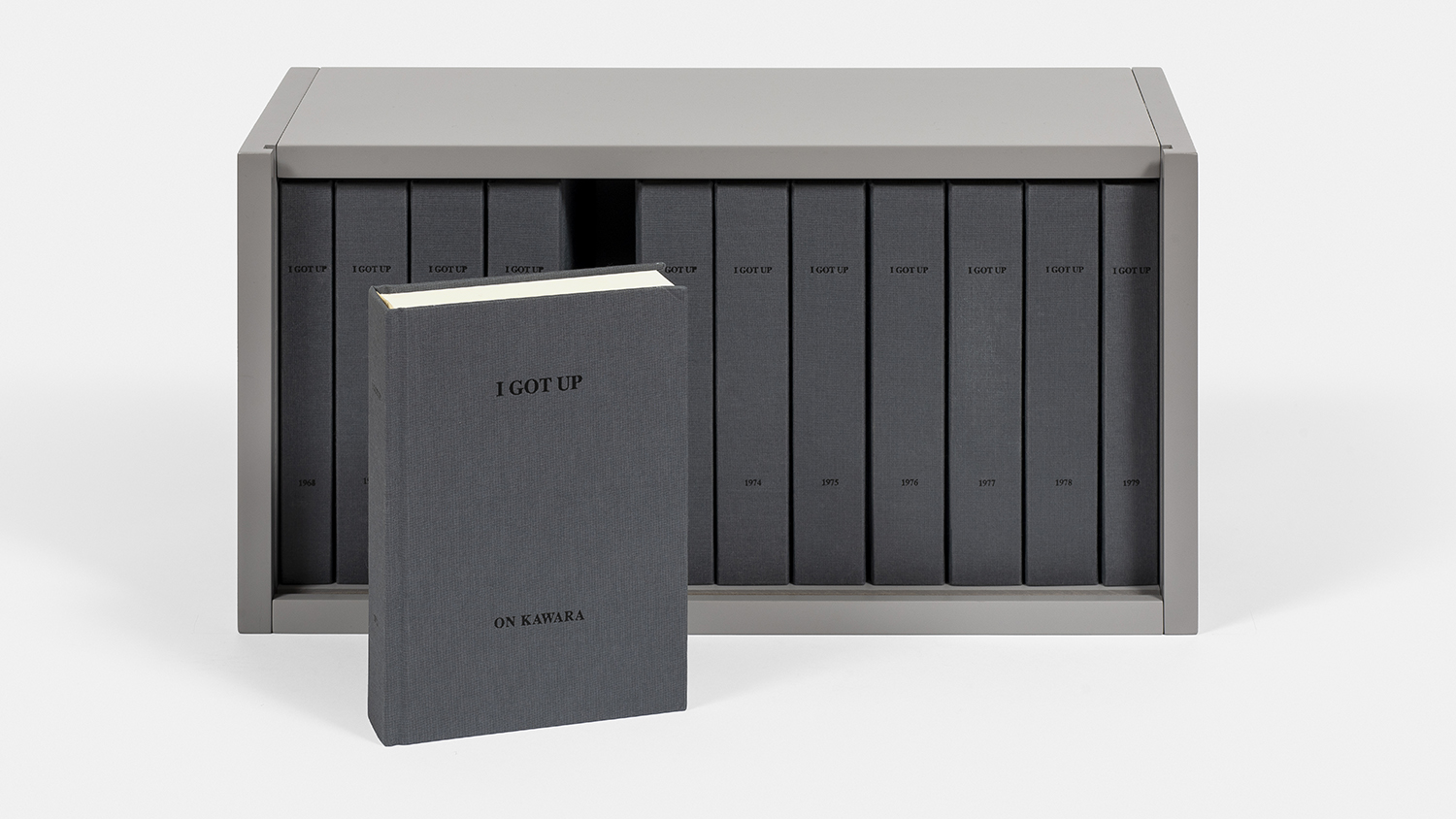
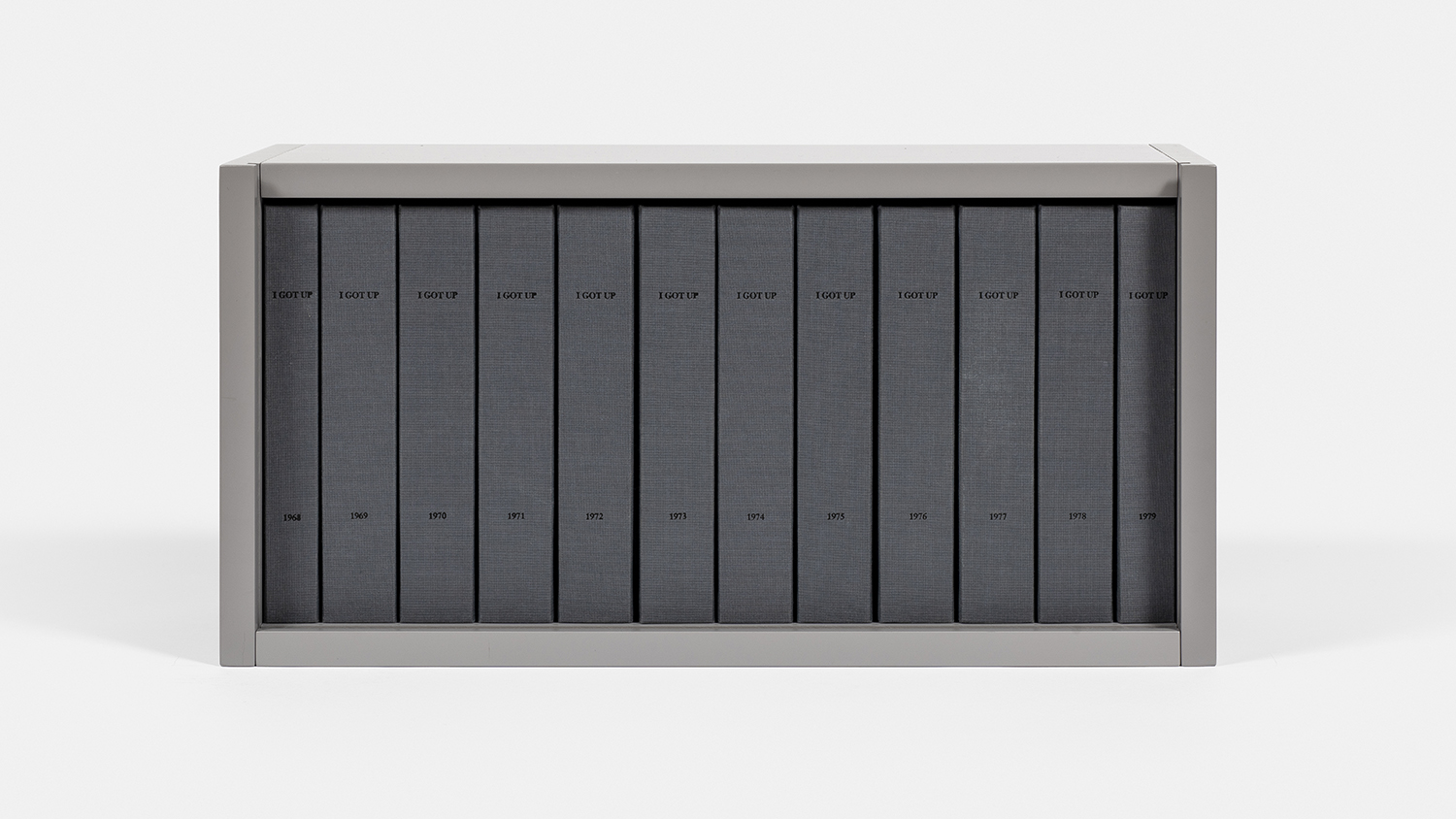
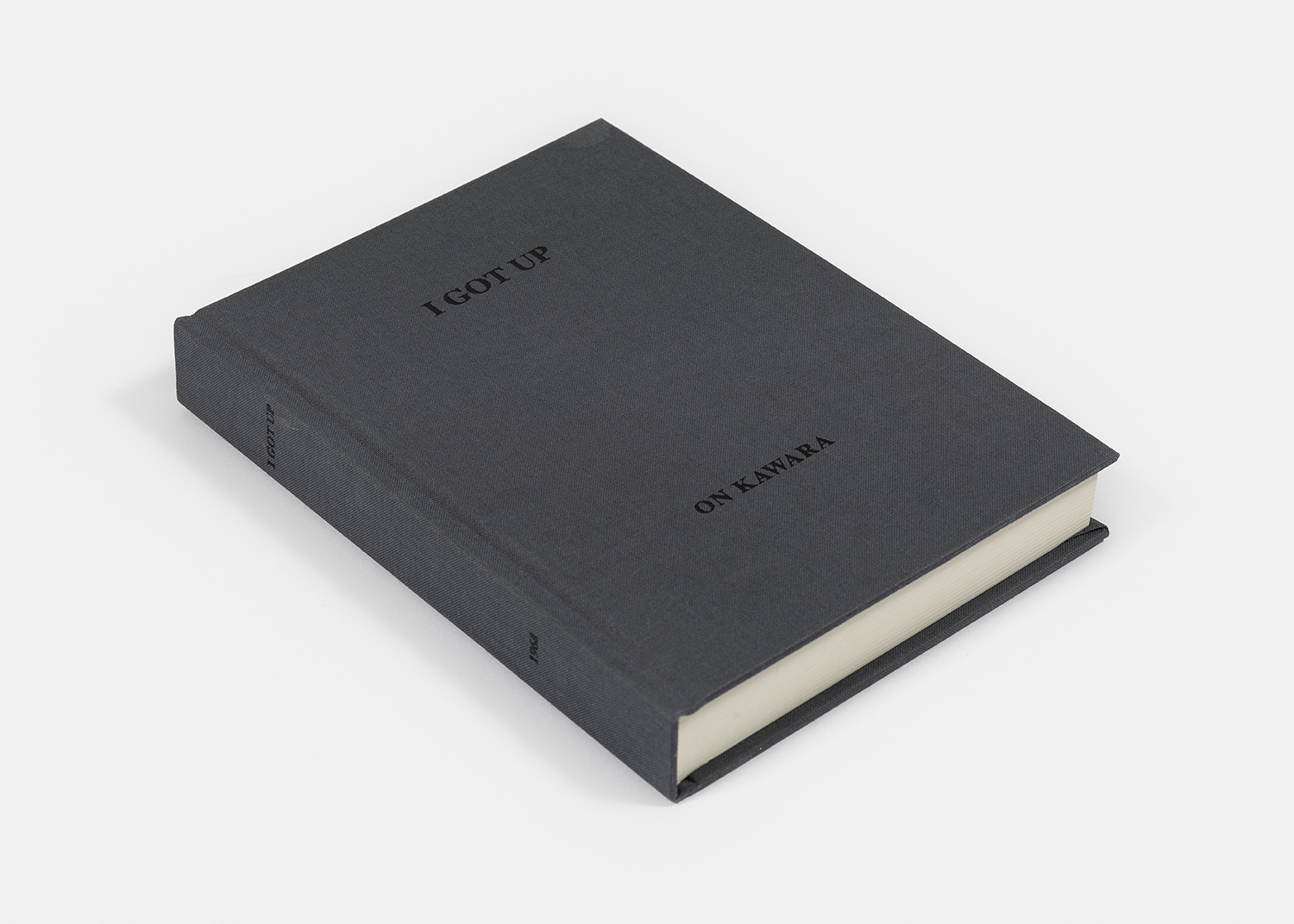
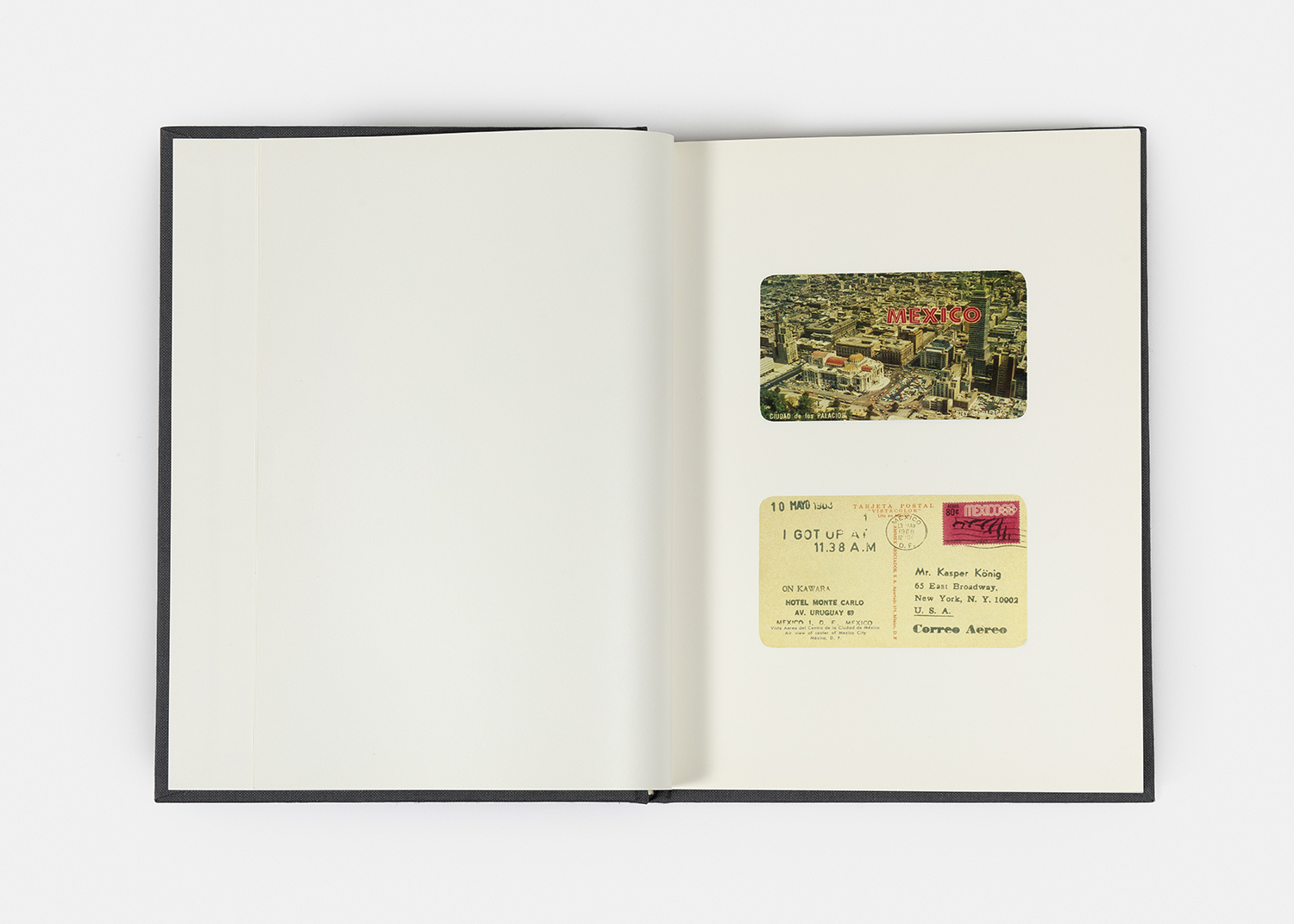
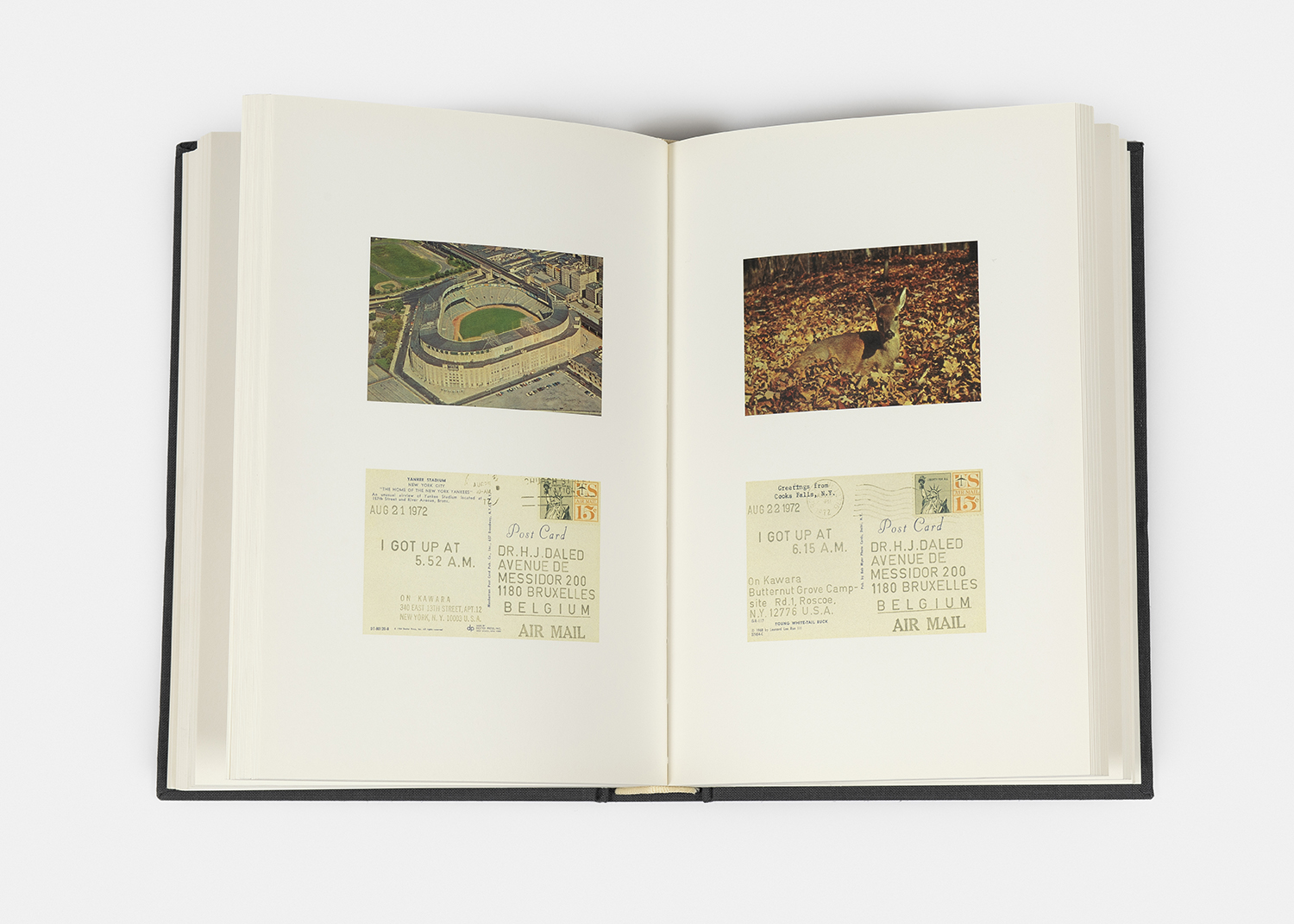
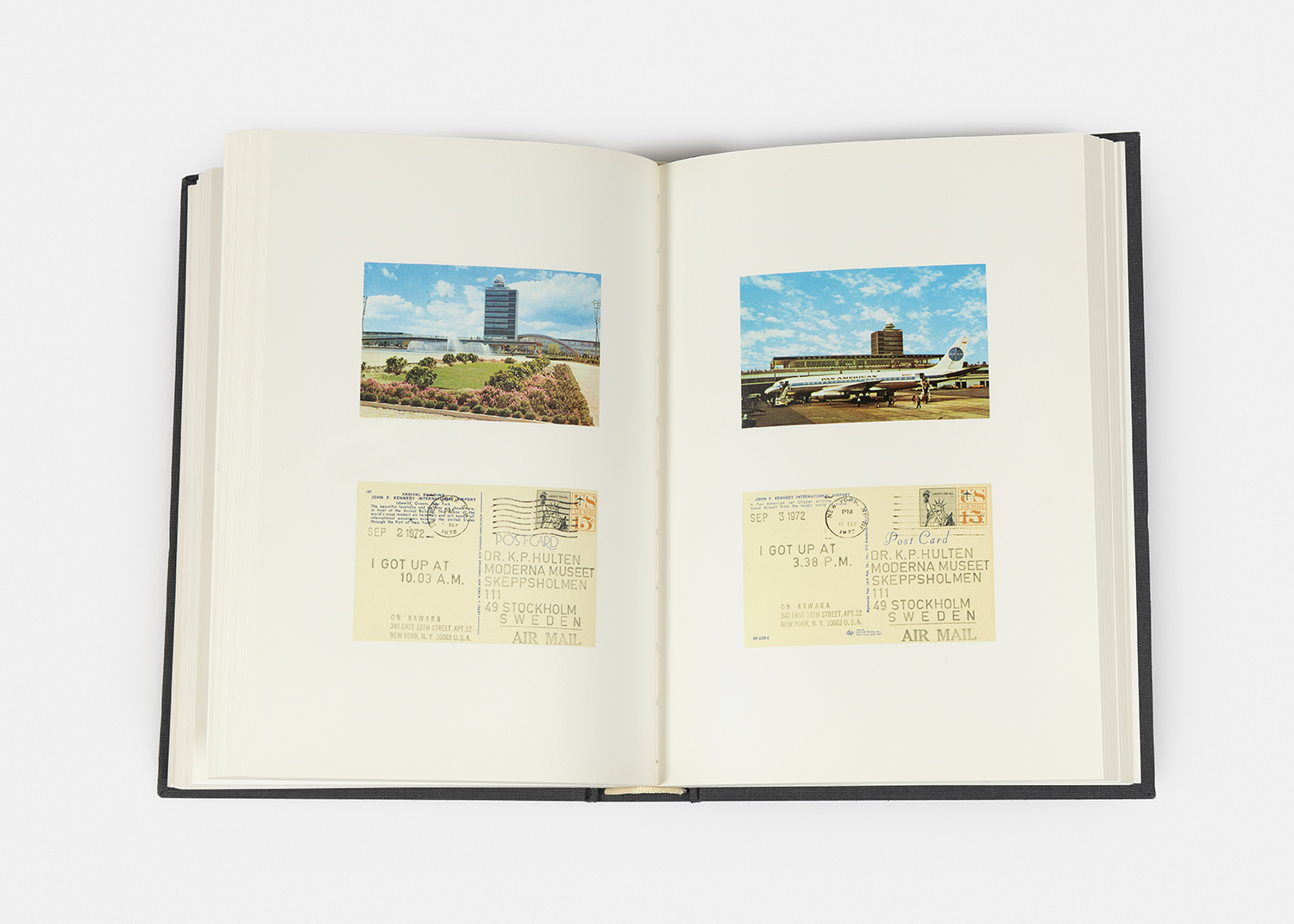
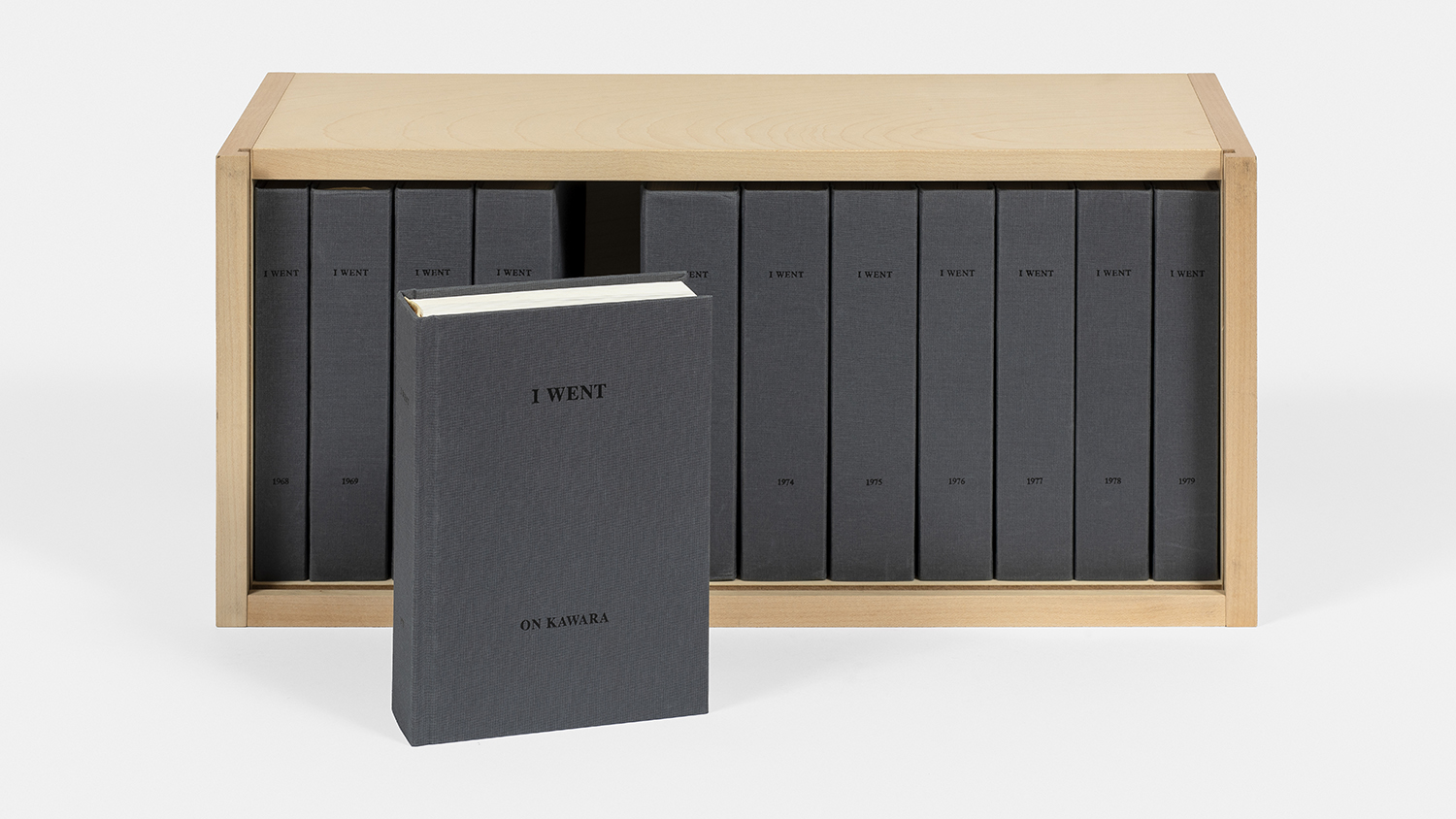
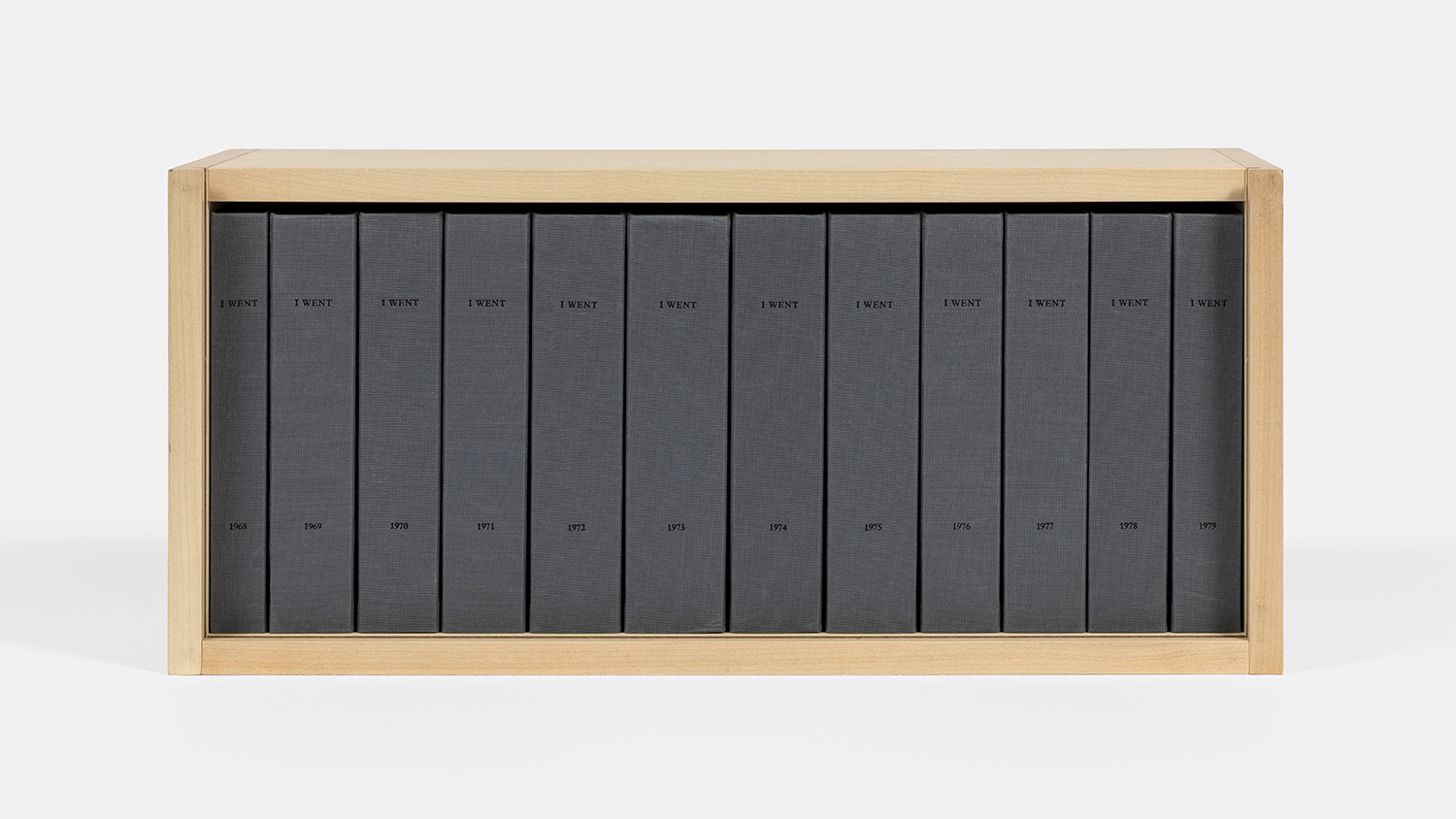
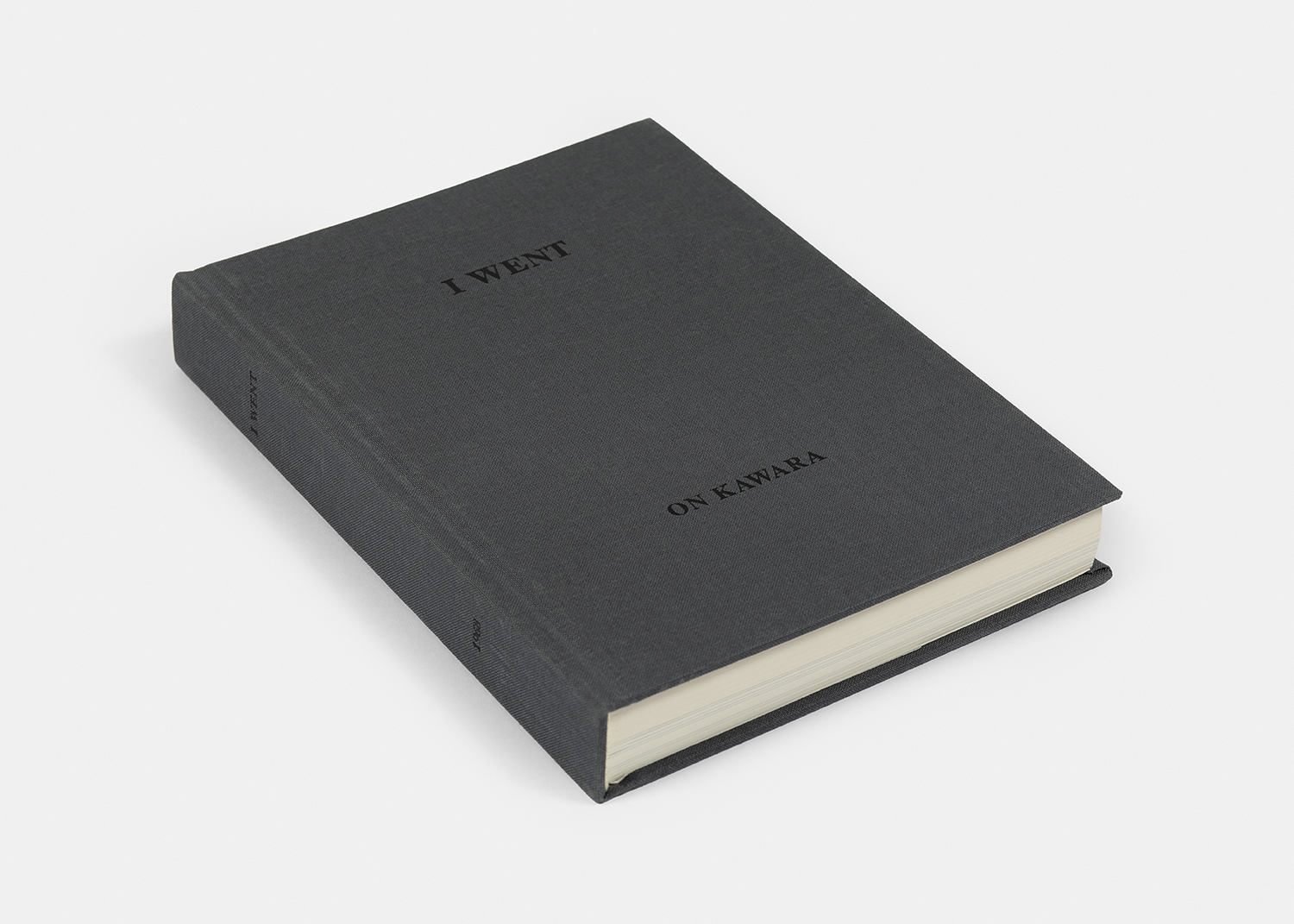
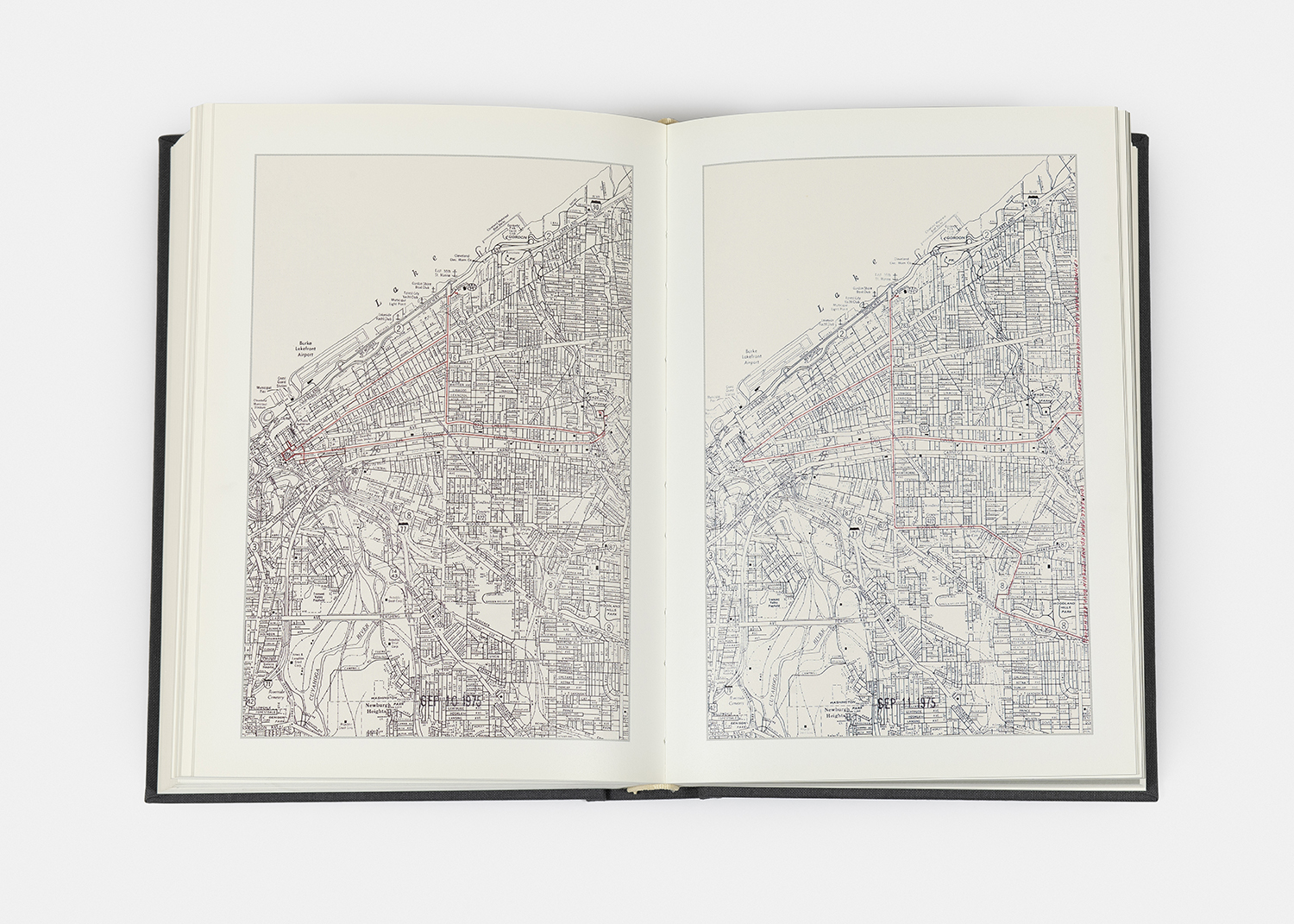
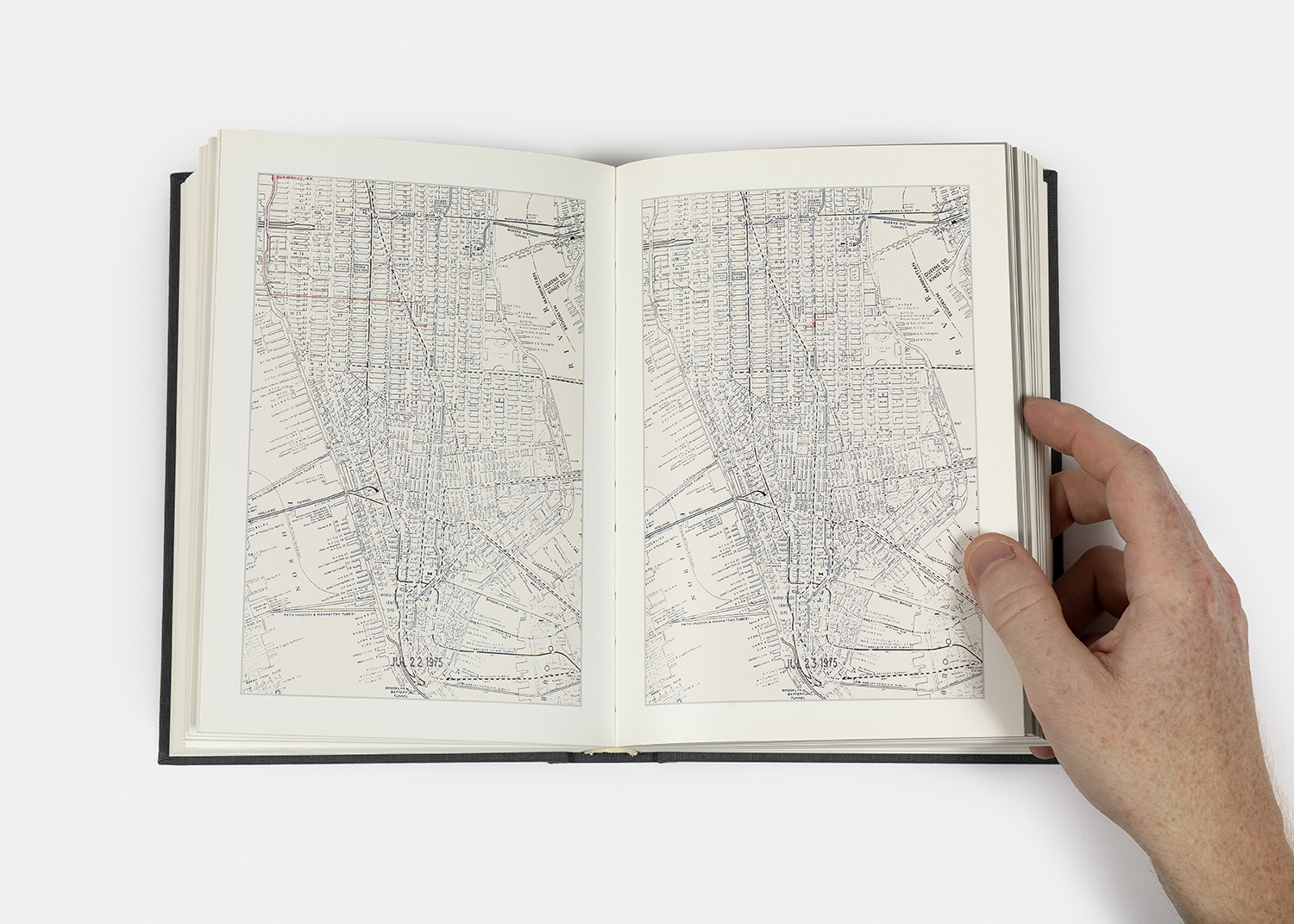
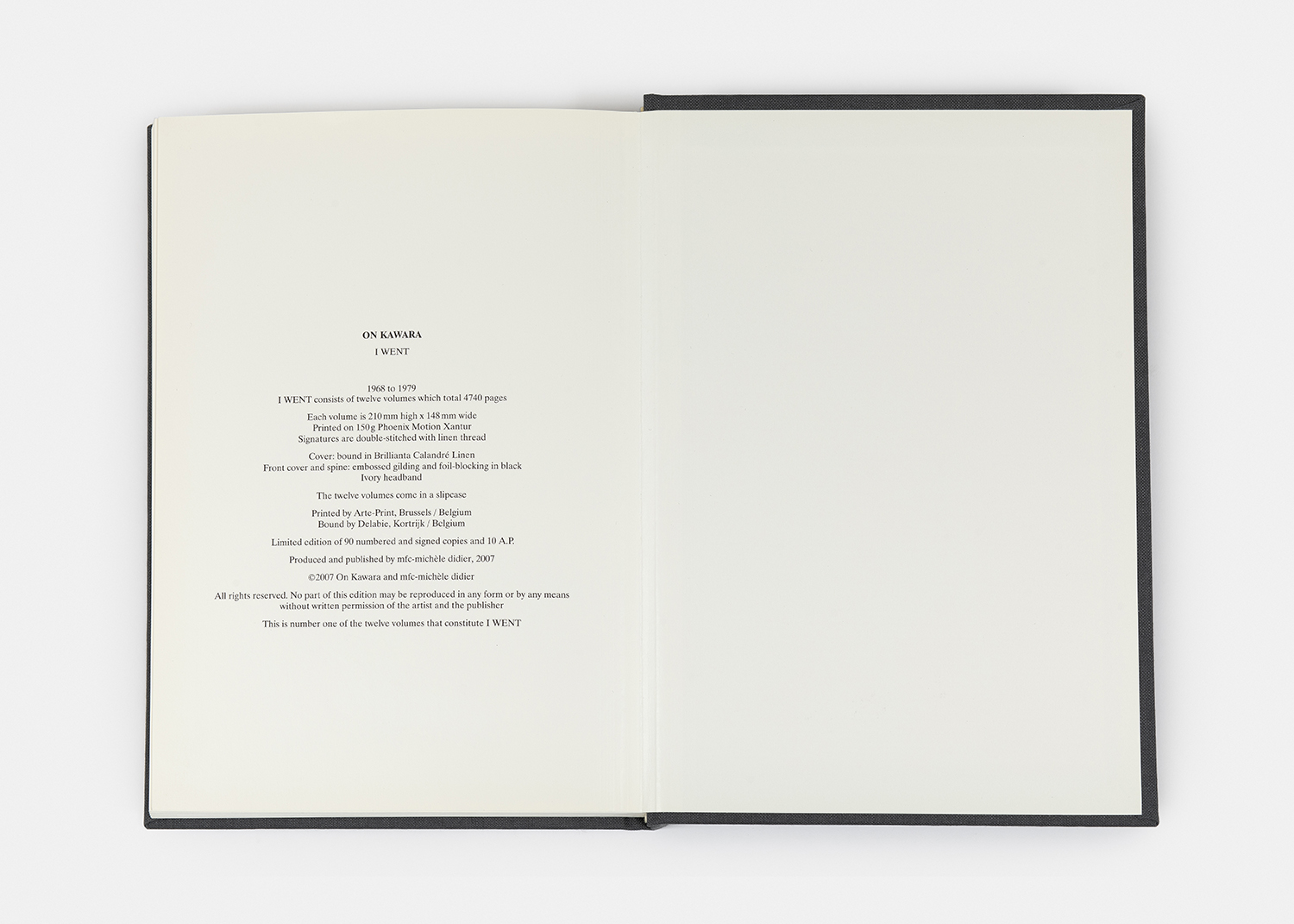
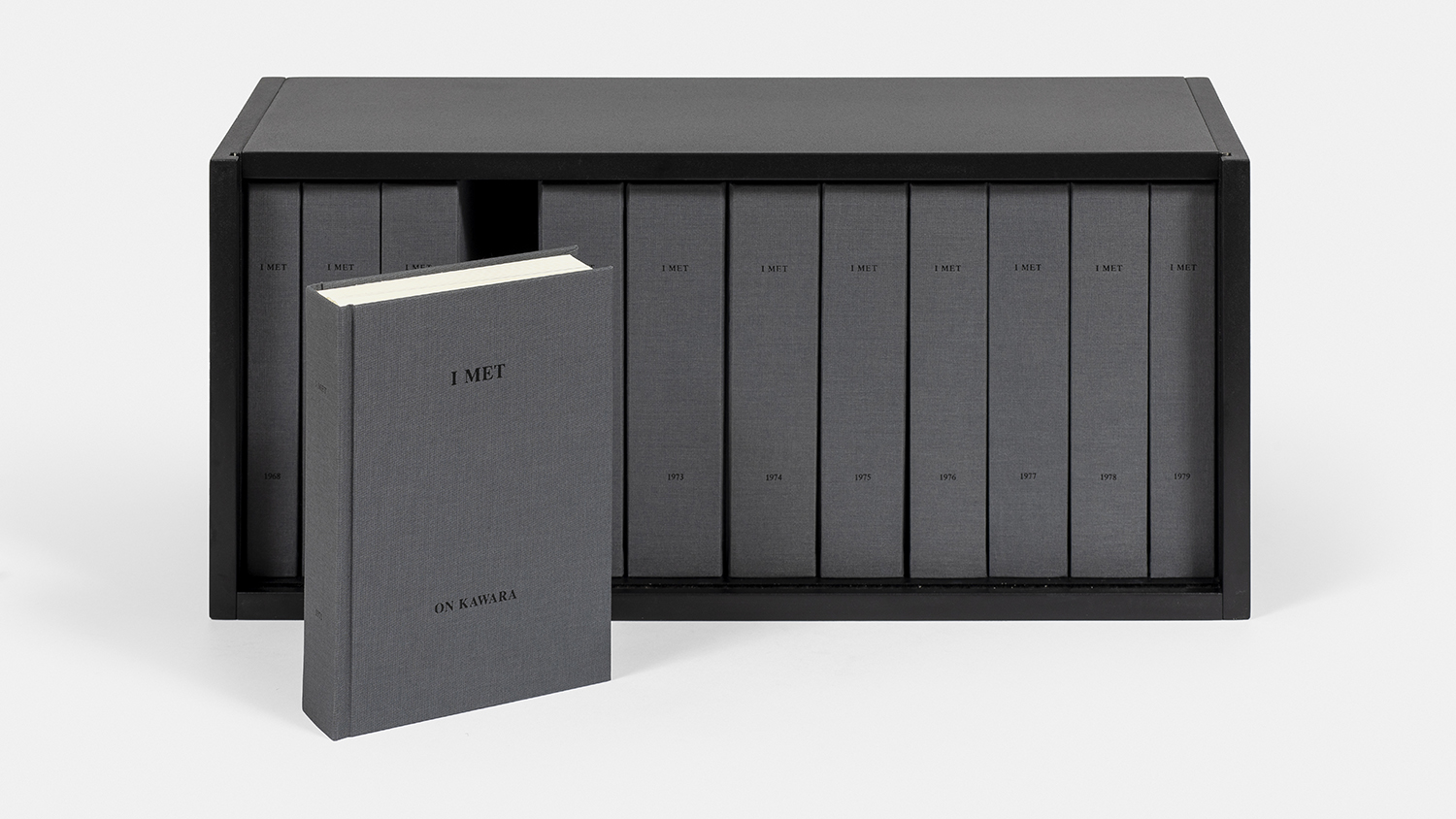
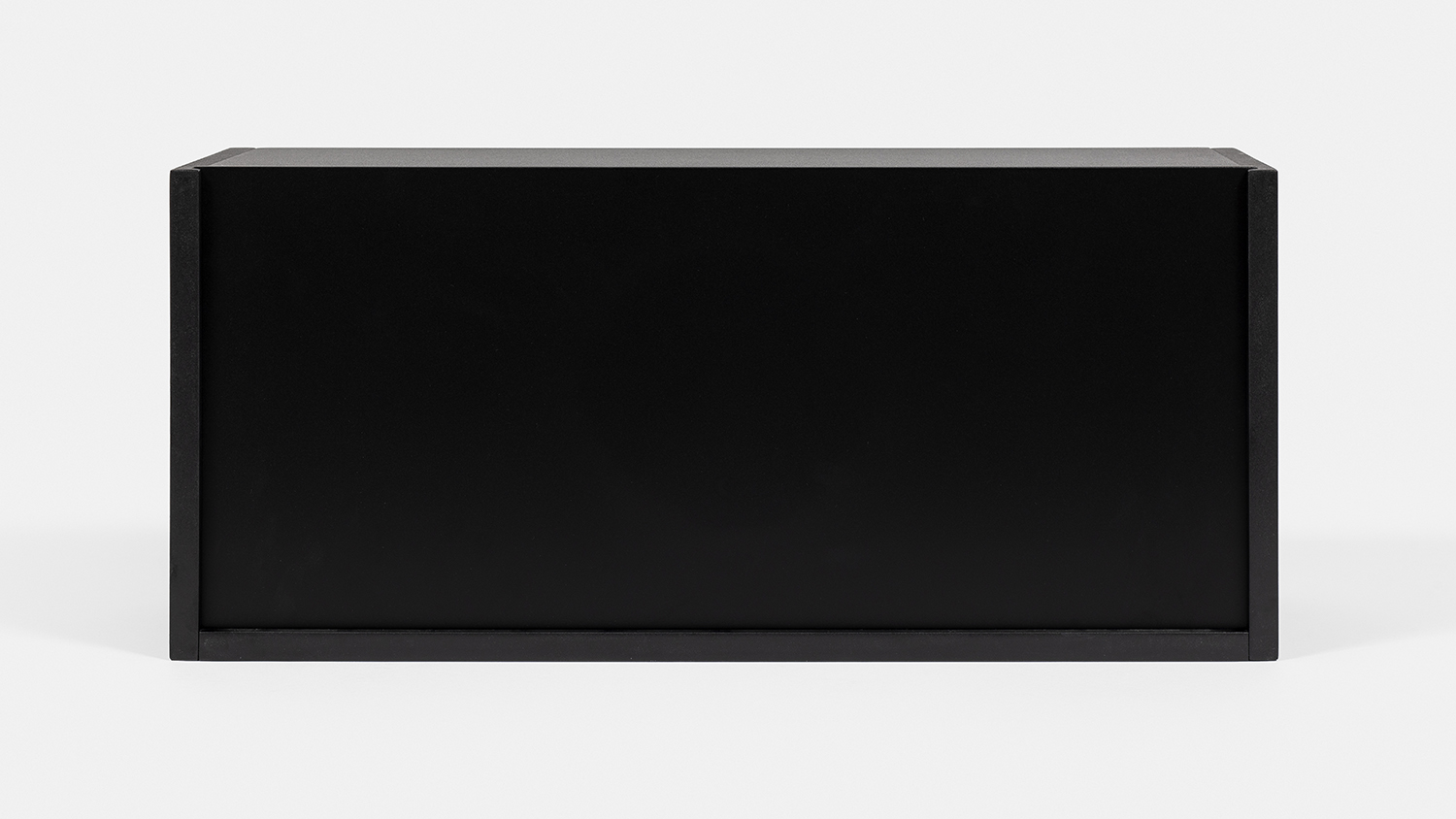
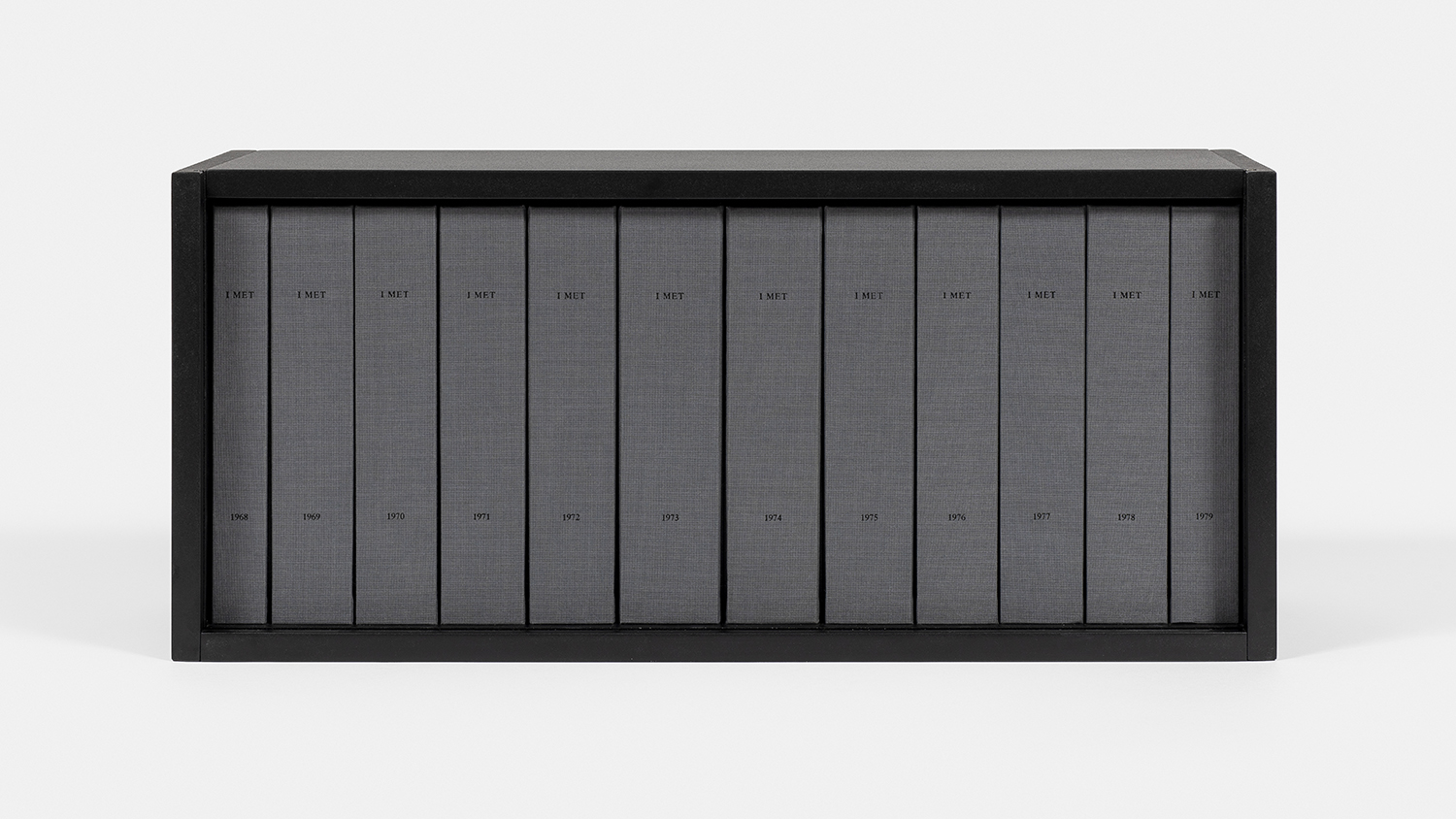
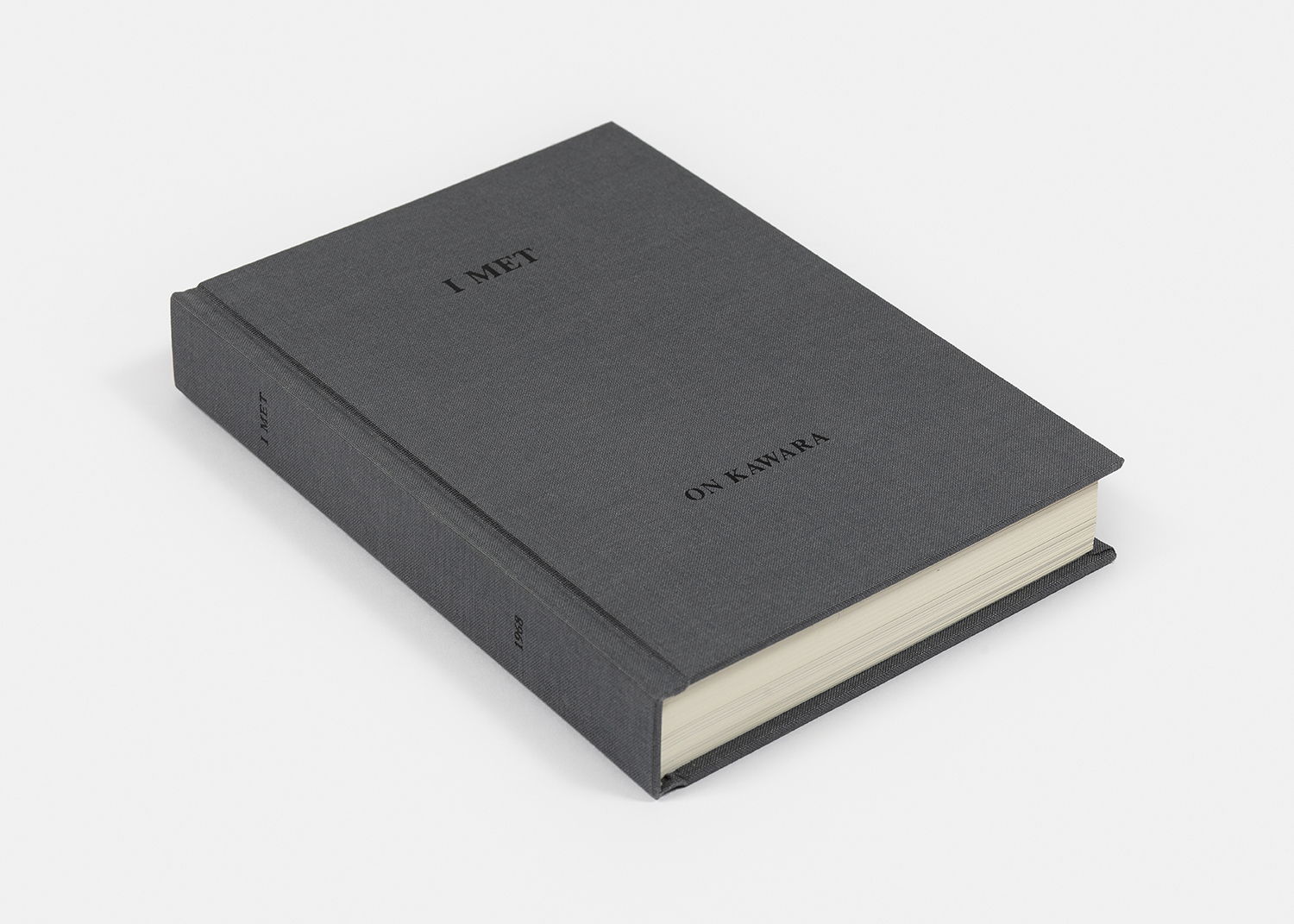
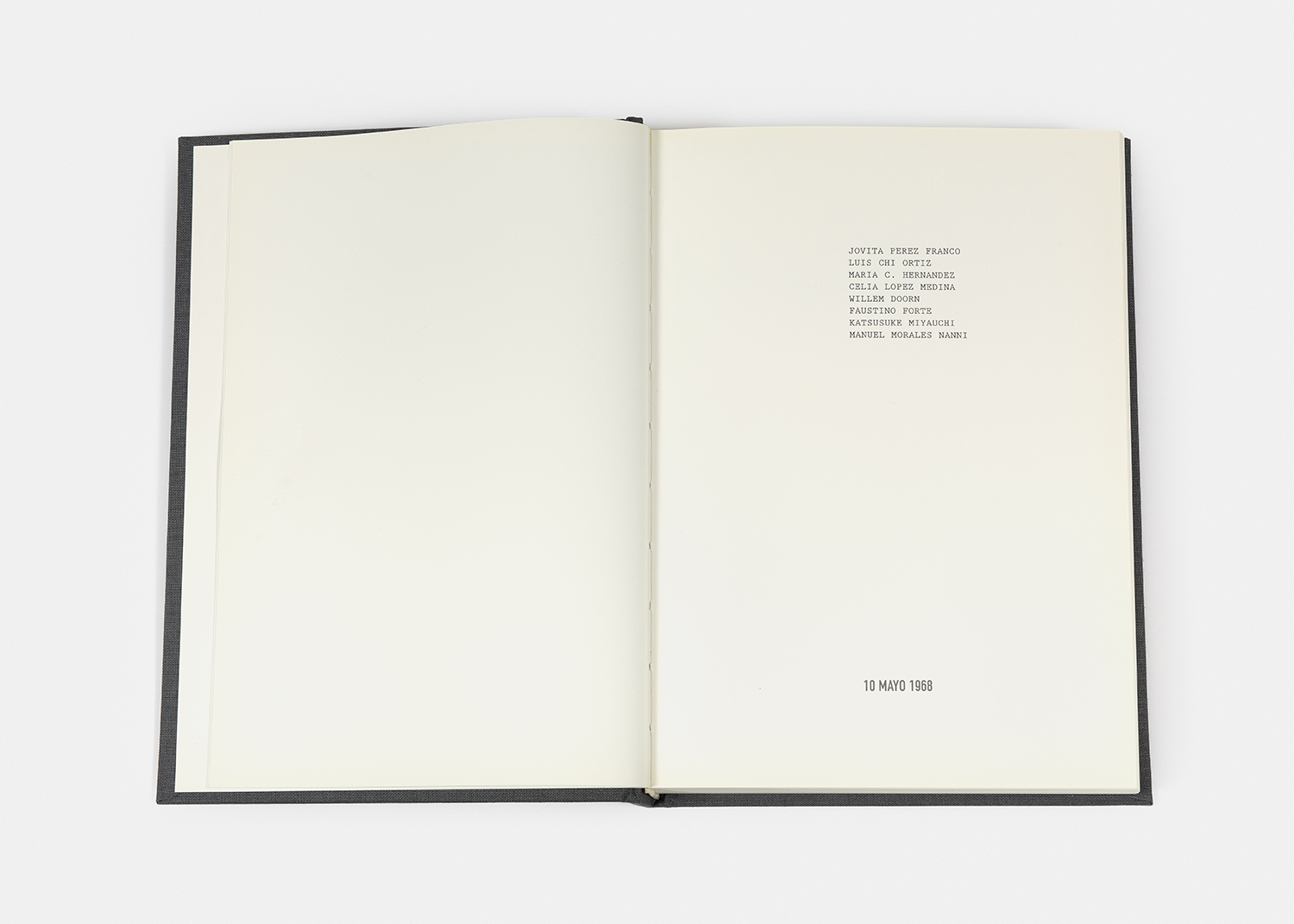
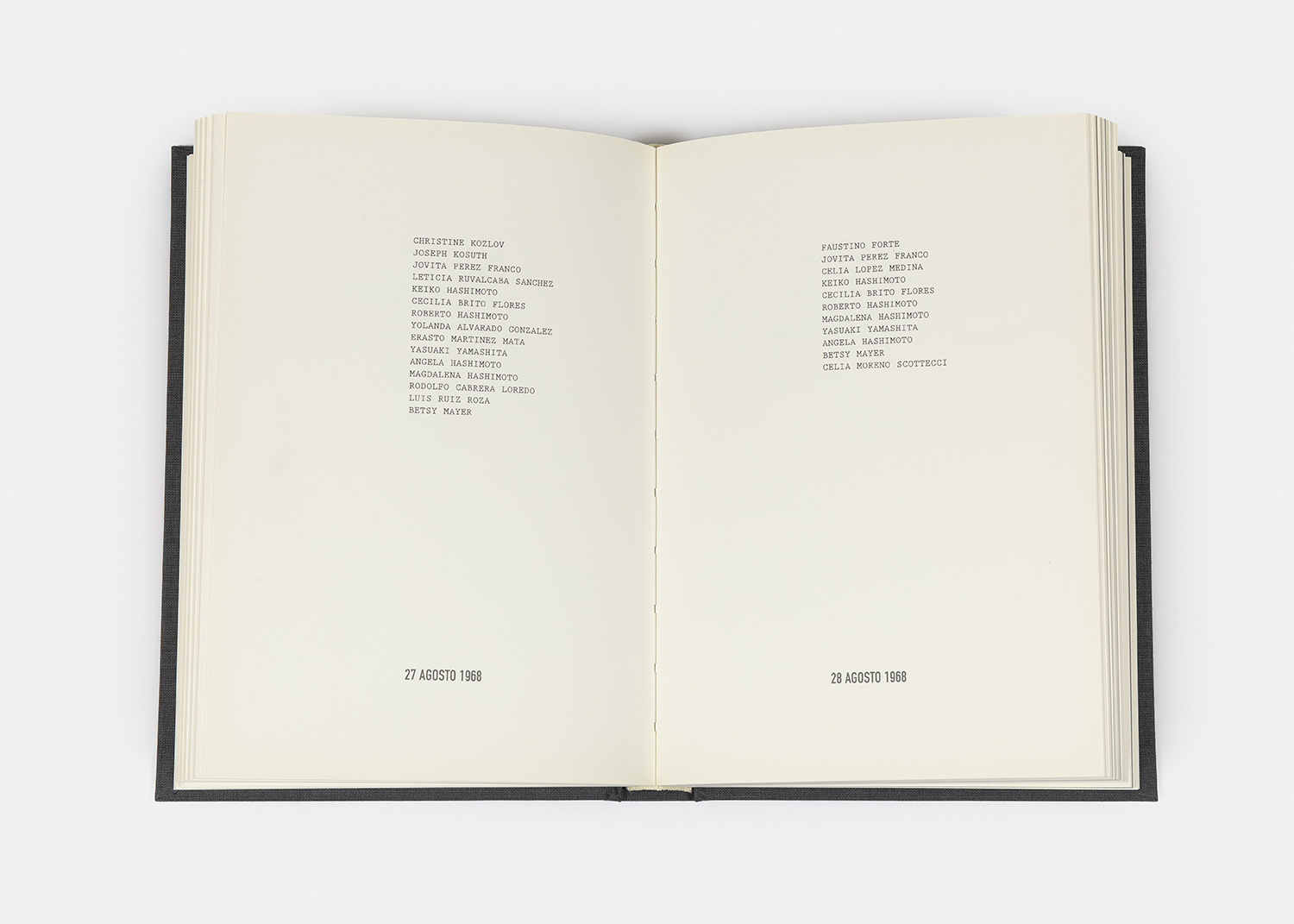
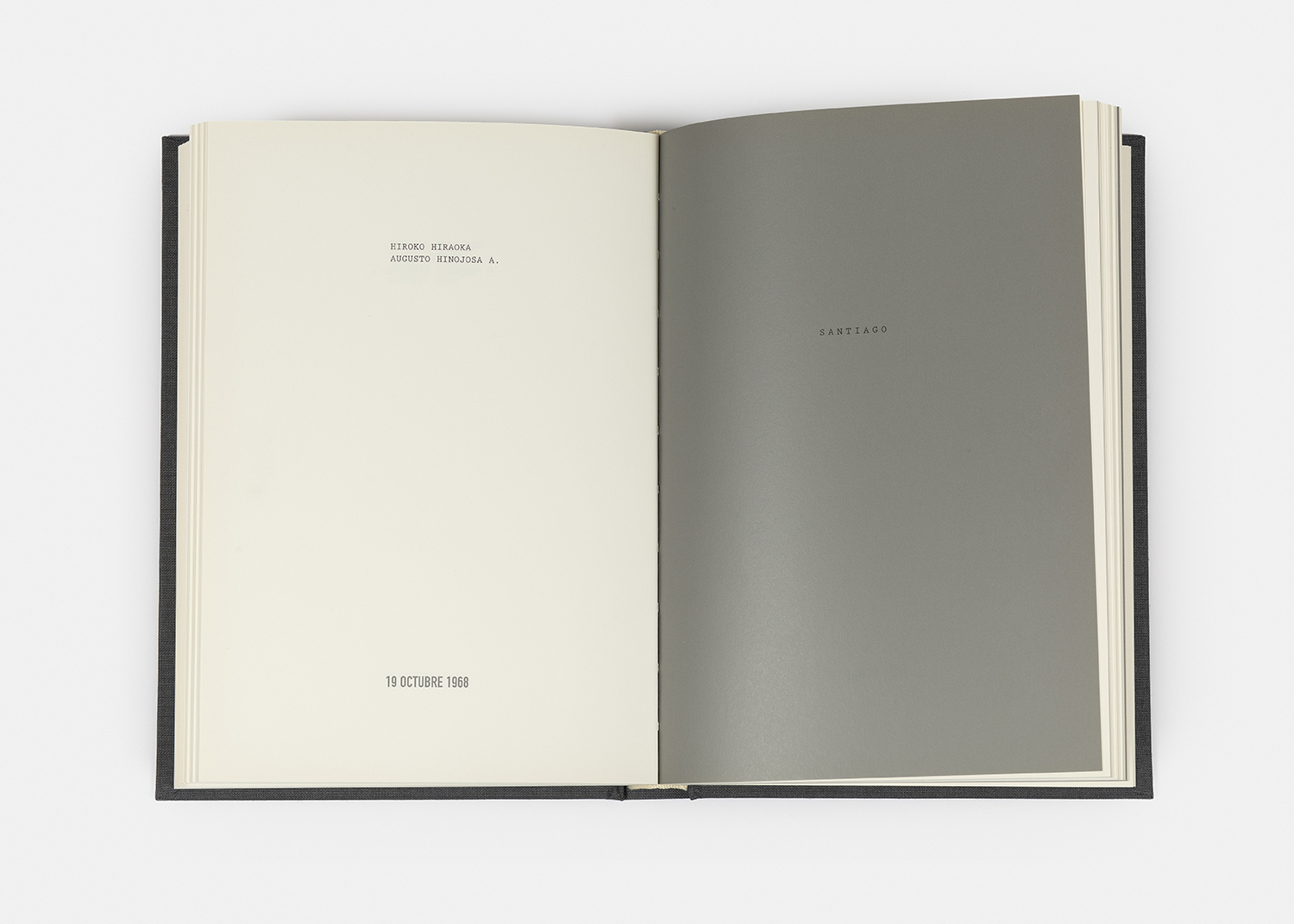
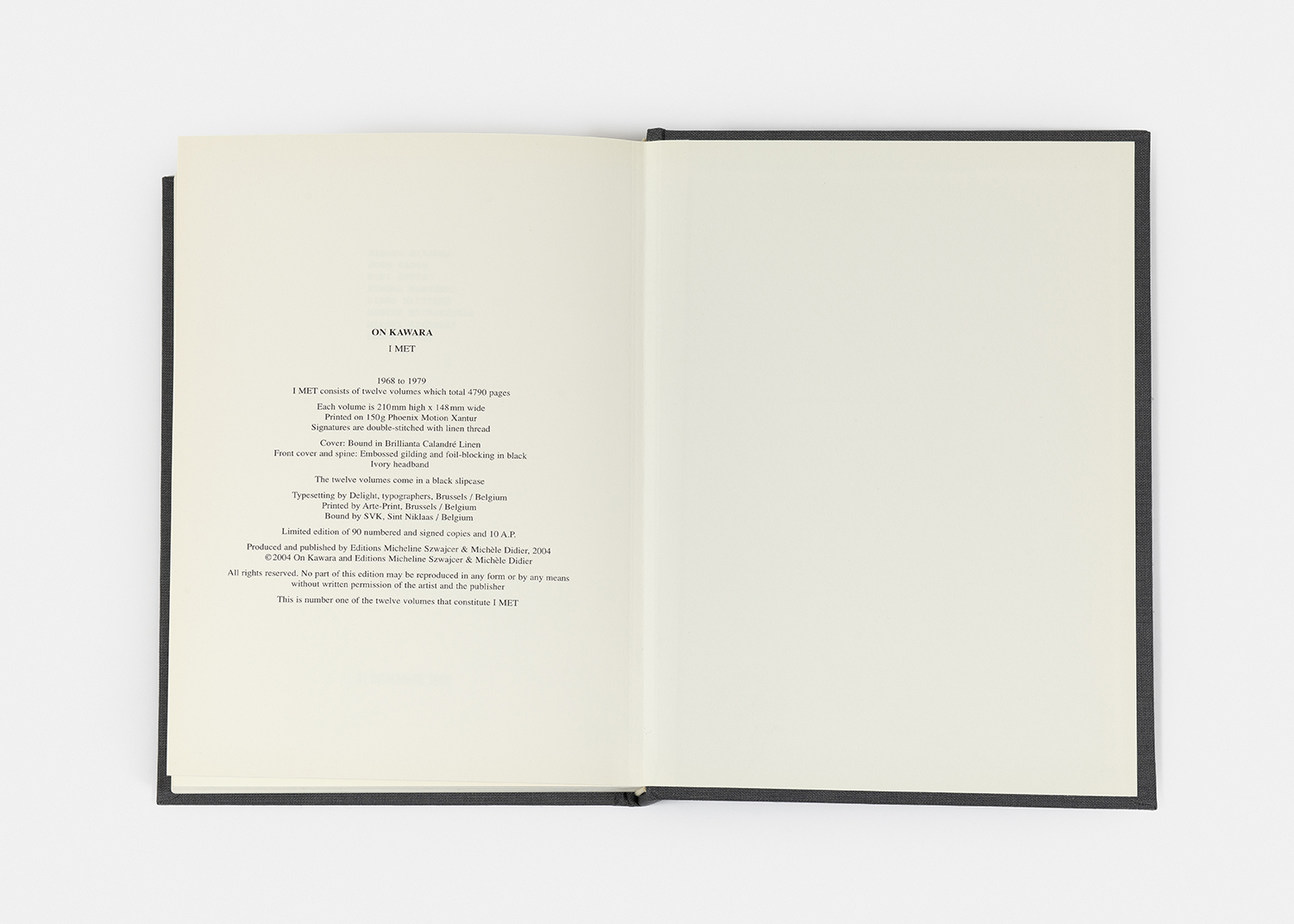
As such, is it not On Kawara's work the most contemporary Vanity ? With the I Got Up, I Went and I Met trilogy ? to which I Read is to be added in 2017 ? the artist pushes his personal archive work towards an extreme point, not only because of the huge amount of information it contains but also for the rigour and discipline he forced himself to obey to. Conscientiously collected, these figures reflect a certain narcissism, particularly displayed by the use of the first person singular. They also are a proper challenge to time, as is evident from the art piece One Million Years which endless litany of numbers sieves years like a hourglass ? another symbolic object of Vanity ? turning them into laborious witnesses of the race of time.
With Mes dessins secrets, Annette Messager allows us to penetrate her most personal life, her private diary-like erotic drawing collection. Starting with the possessive pronoun "?my?", same as On Kawara's use of "?I?", the title suggests the autobiographical nature of these images. Playing with a falsely naive exhibitionism, the artist offers us the contemplation of the illustrated tales of her fantasies and passionate sexual life.
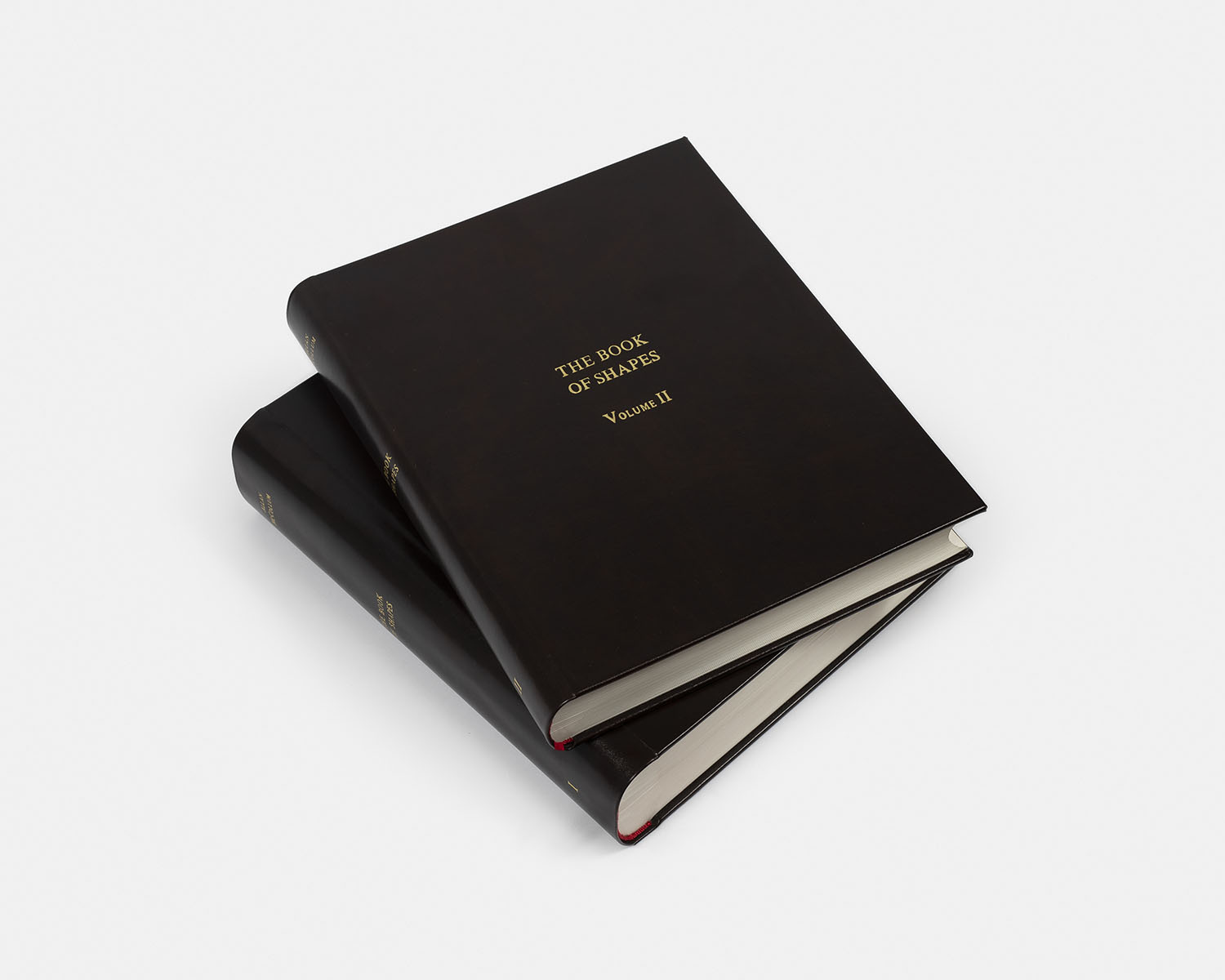
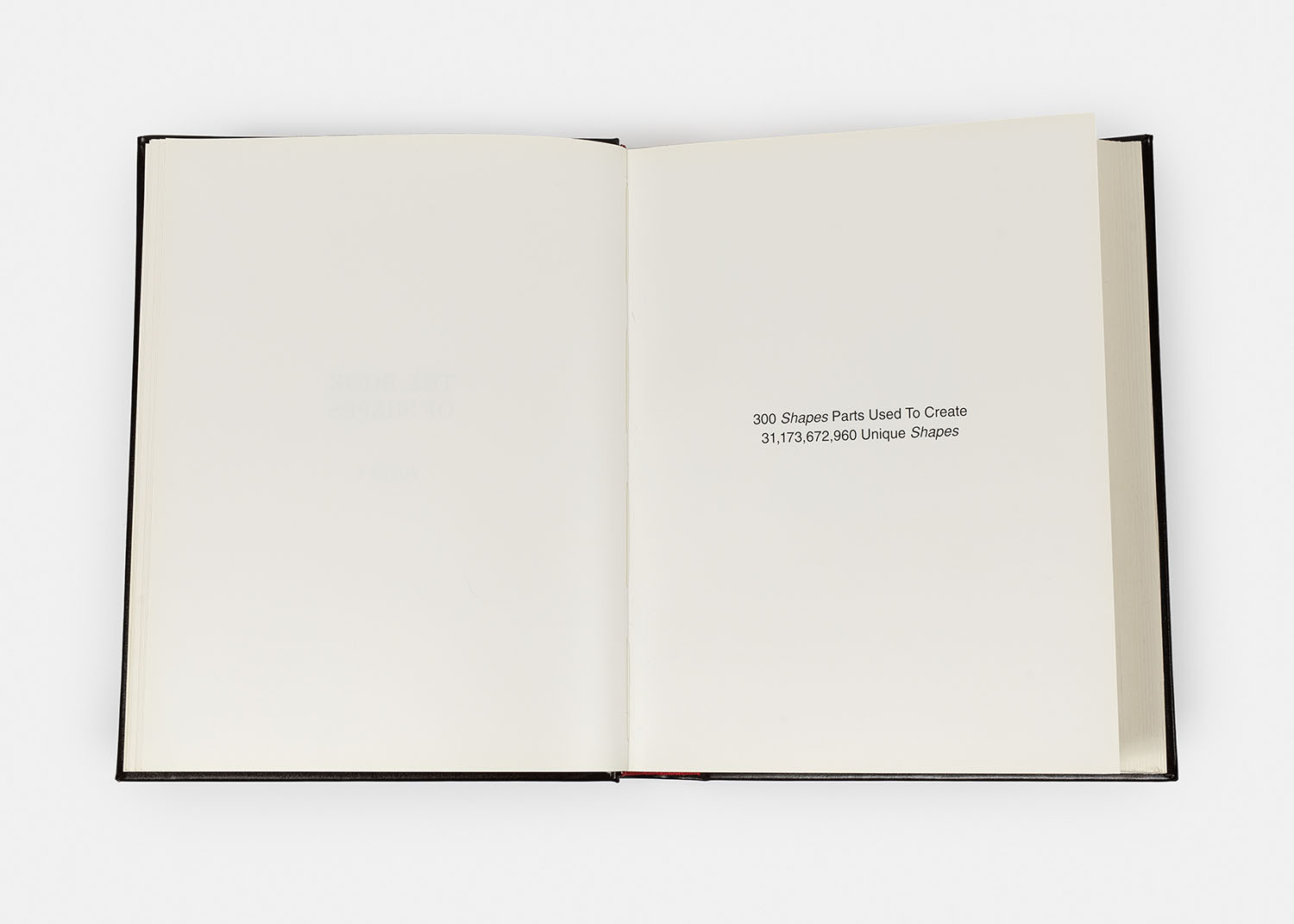
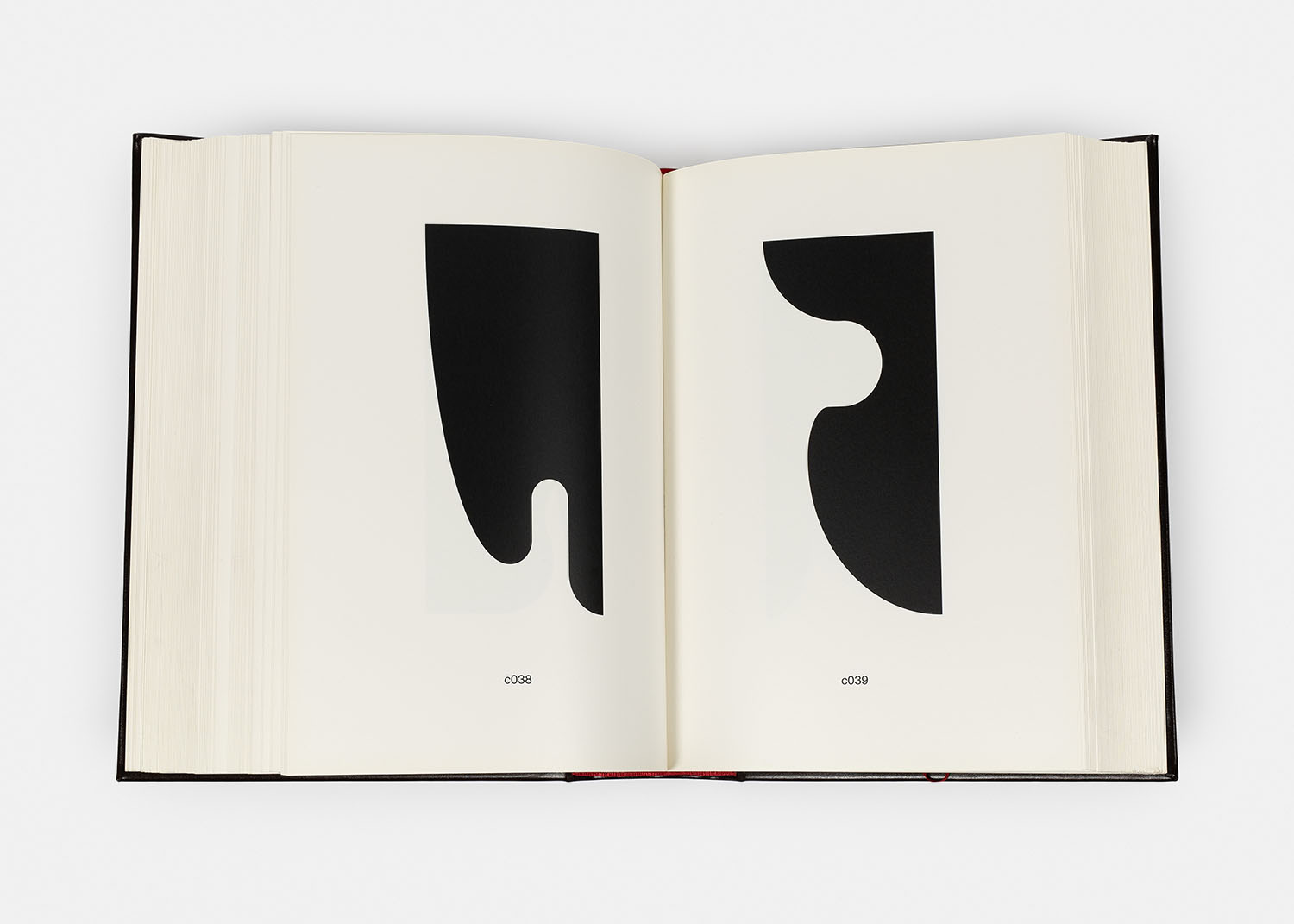
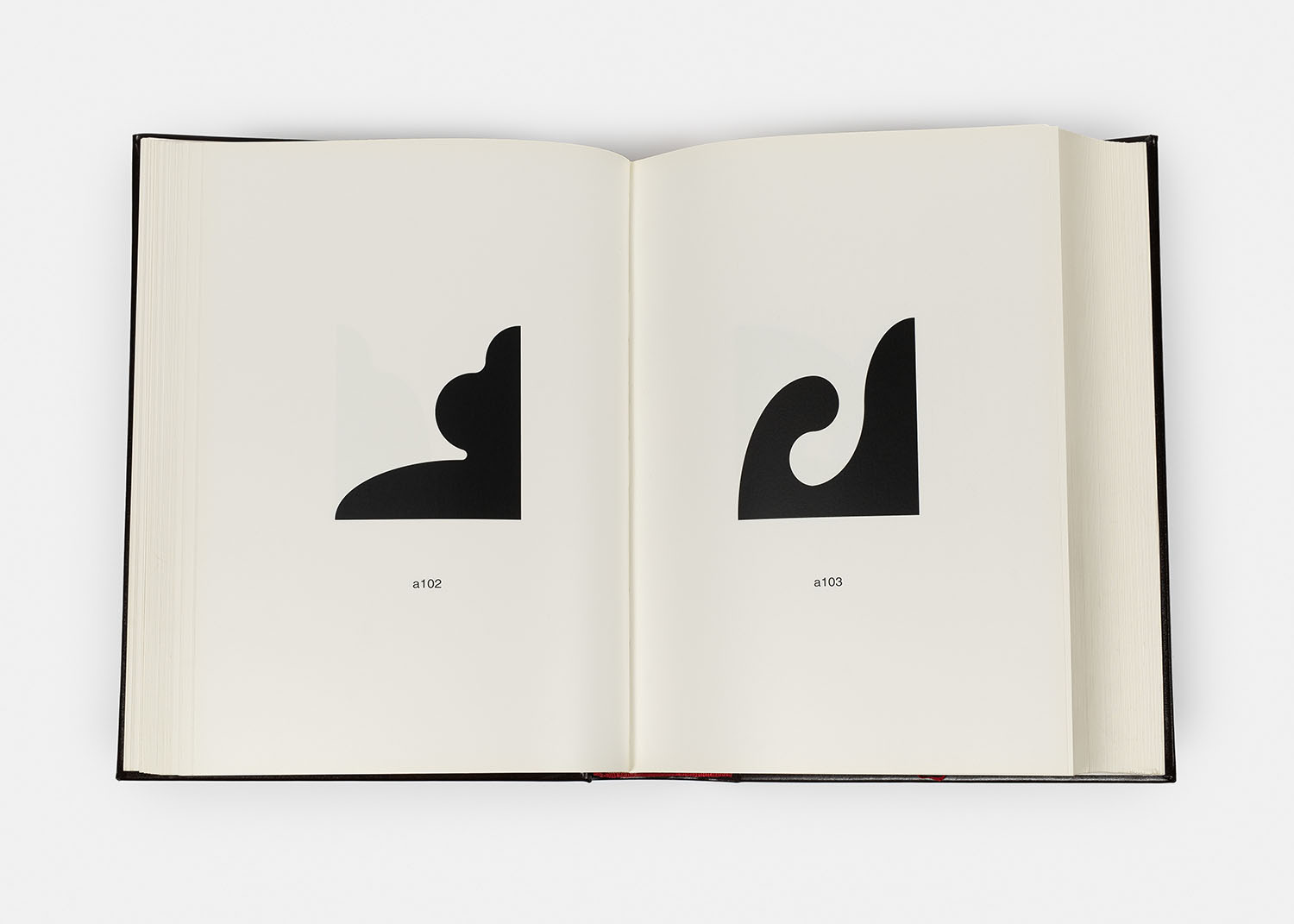
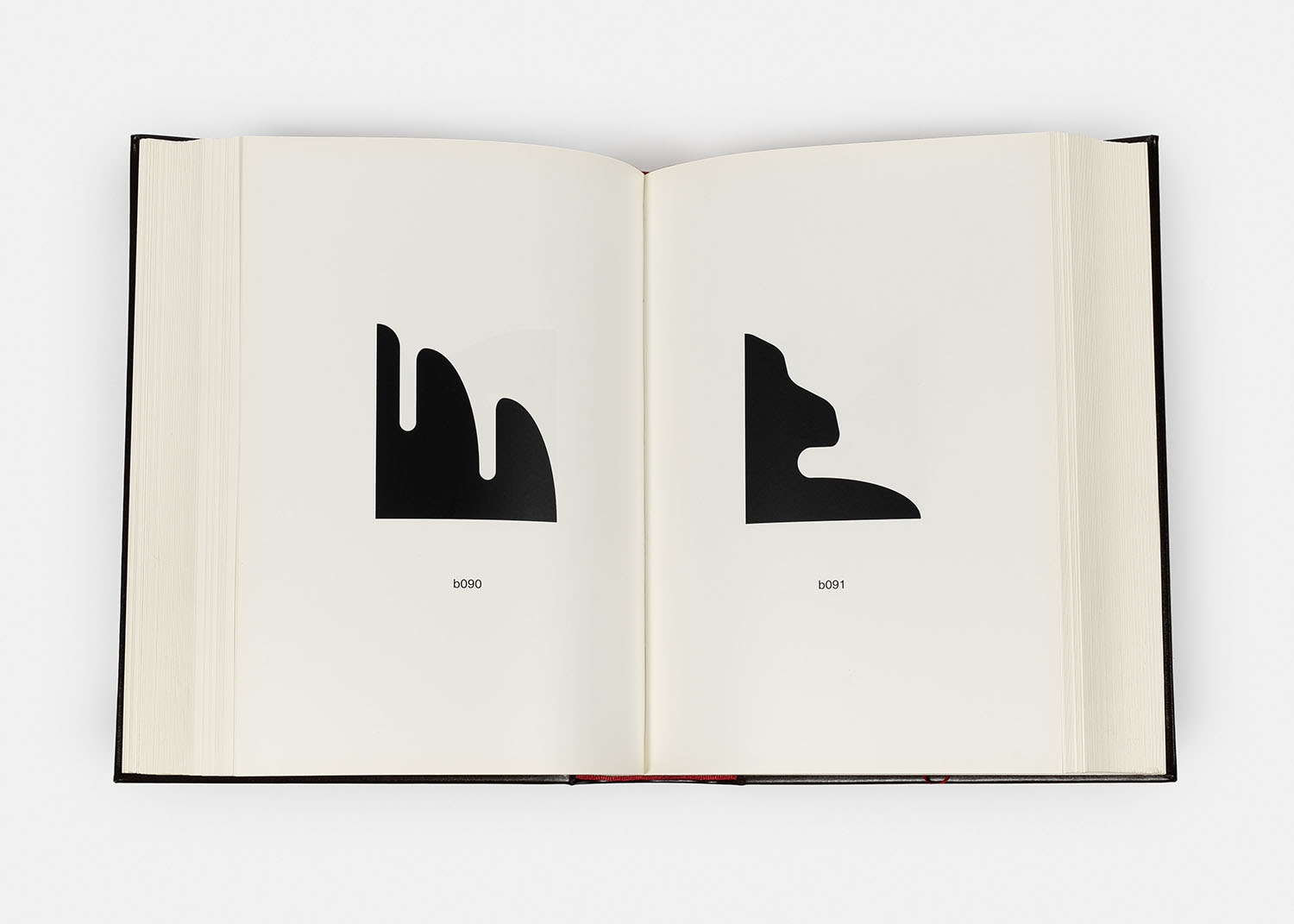
In a very different way, Allan McCollum's The Shapes Project consists of a system generating more than 31 billions different shapes composed from various combinations of 6 standard elements groups. Every shape is intended to one particular individual, each person owning his unique shape as his own genetic map.
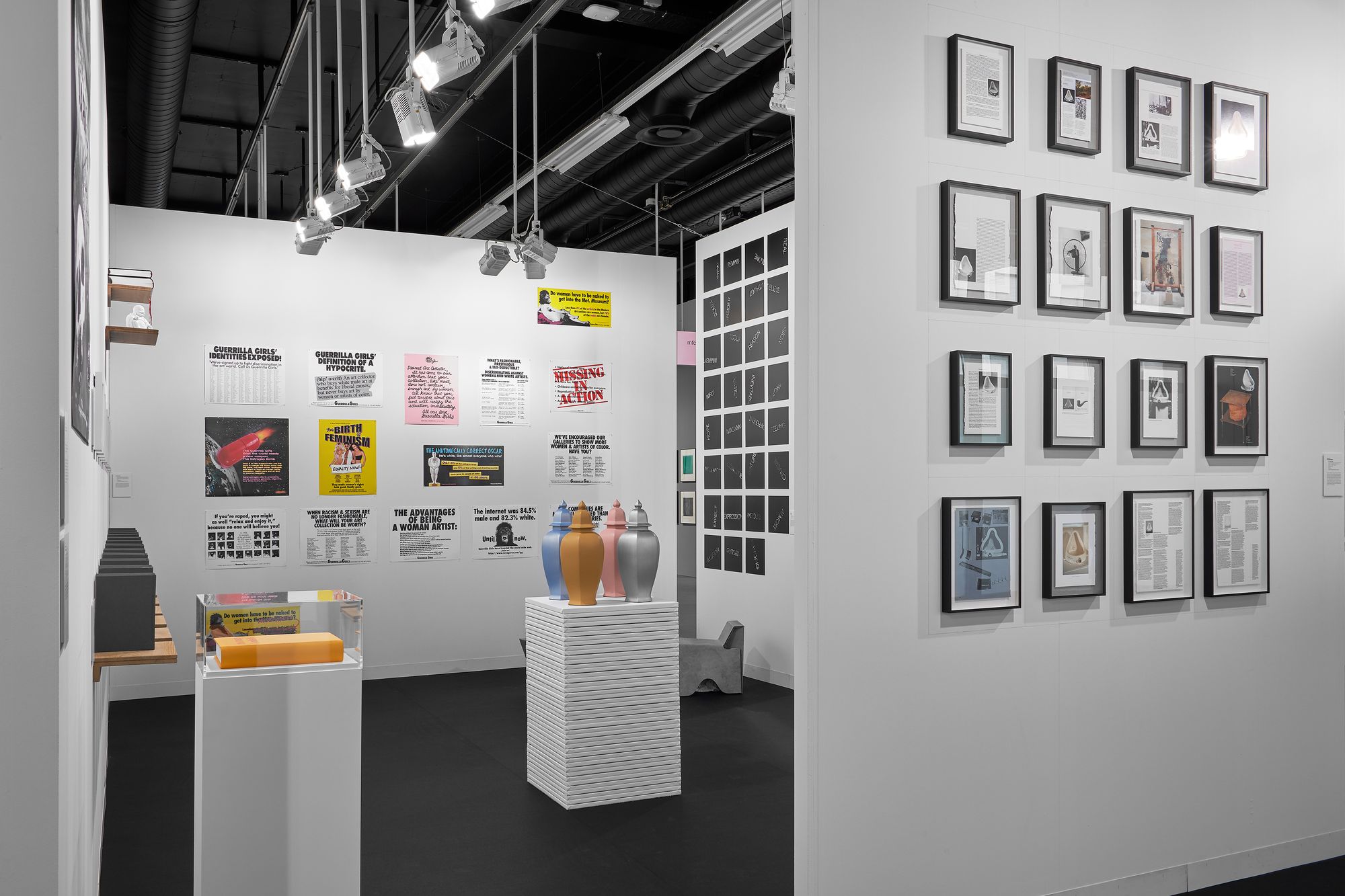
The Fountain Archives is a perfect example of the art world Vanity. First, thanks to Saâdane Afif's interest in a special art piece ? the most famous Fontaine by Marcel Duchamp presented as the first ready-made in Art History ? Then, because of the vertiginous amount and variety of its representations collected by the artist.
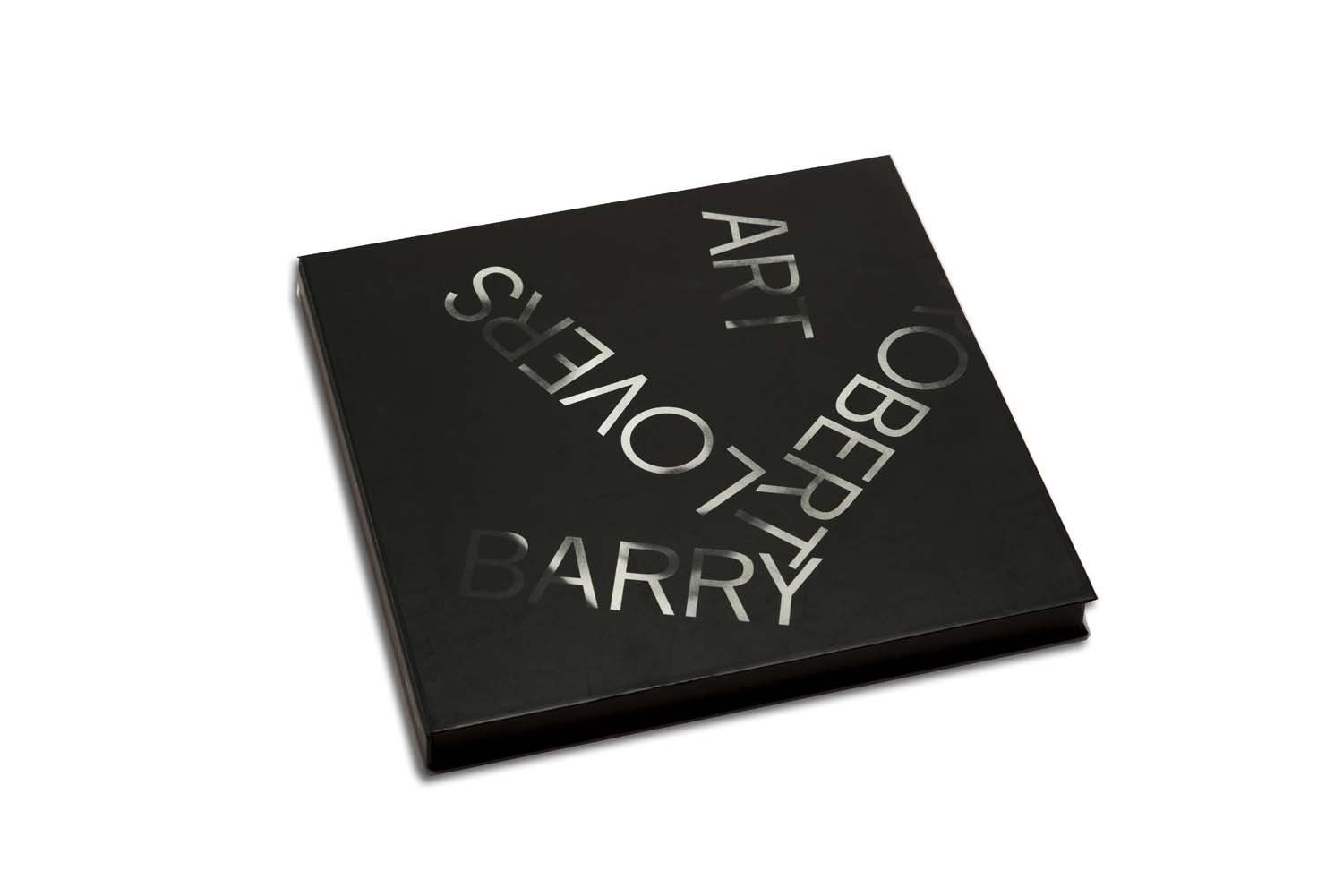
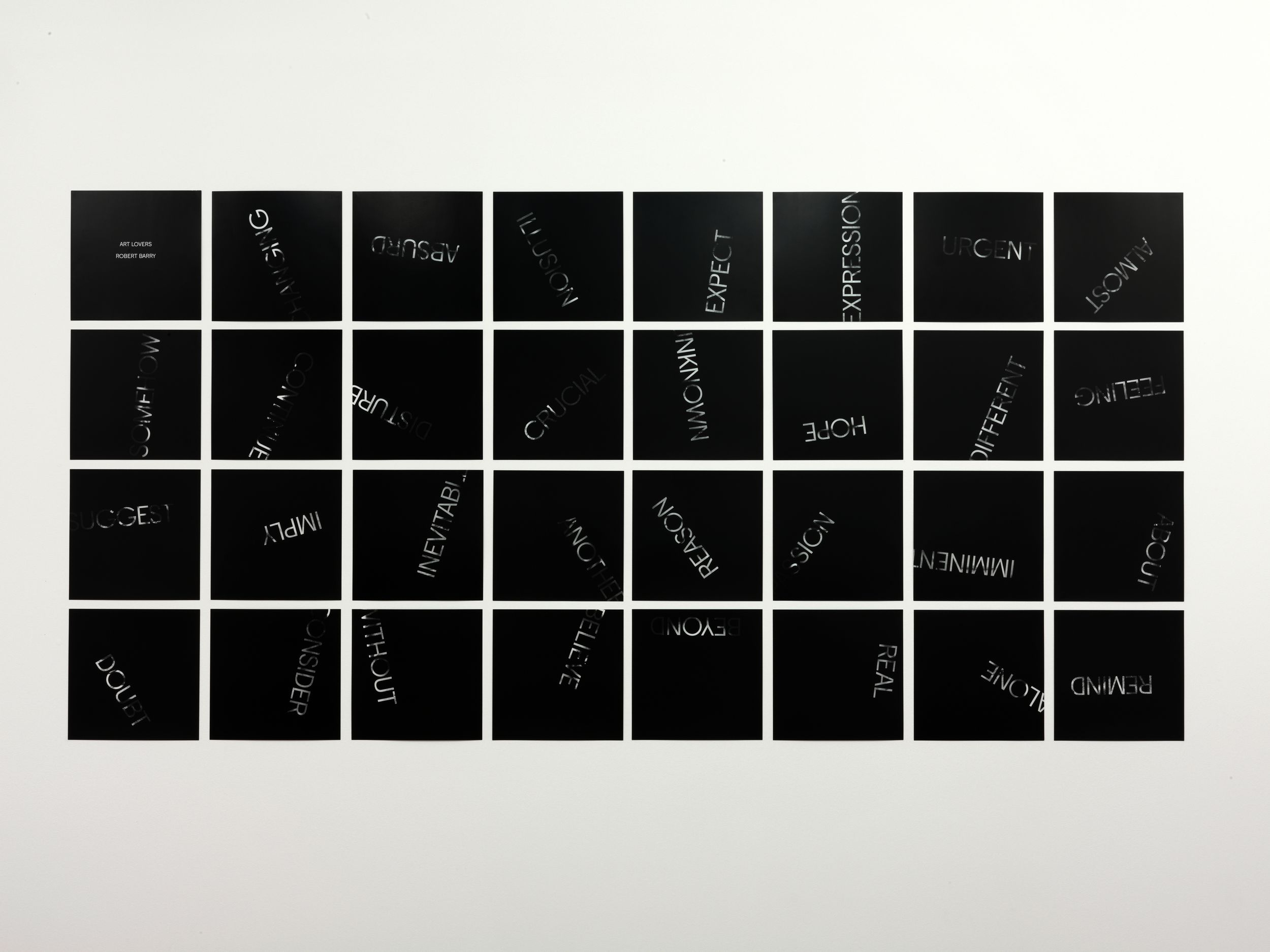
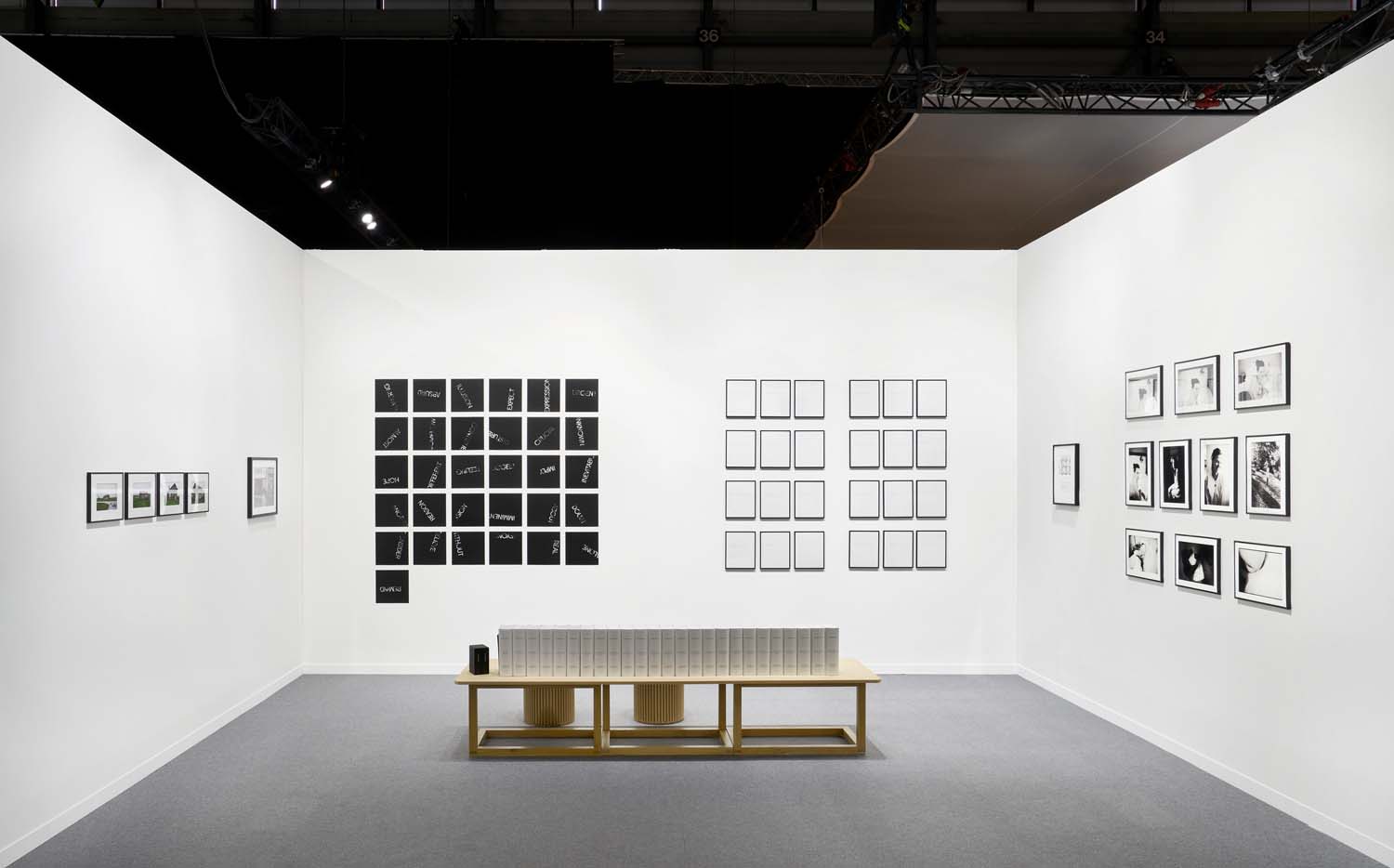
Still in this critical perspective towards the artistic sphere and its protagonists, Robert Barry's work Art Lovers displays 31 photographs of artists, art collectors and amateurs. These portraits implying their model's Vanity are however purposely covered by a flat black ink layer, opened by the shape of a word that uncovers only a glimpse of the photograph below. Masked identities then create an archetype of the various art world actors.
In a more political matter, the group of feminist artists The Guerrilla Girls produces posters displaying texts, printed in a black bold uppercase font, occupying the entire space and taking a critical and ironical look at the limited position allowed to women by the art world and more generally the whole society. The Advantages Of Being A Woman Artist or Bus Companies Are More Enlightened Than NYC Art Galleries, are social Vanities that reflect contemporary discriminations.
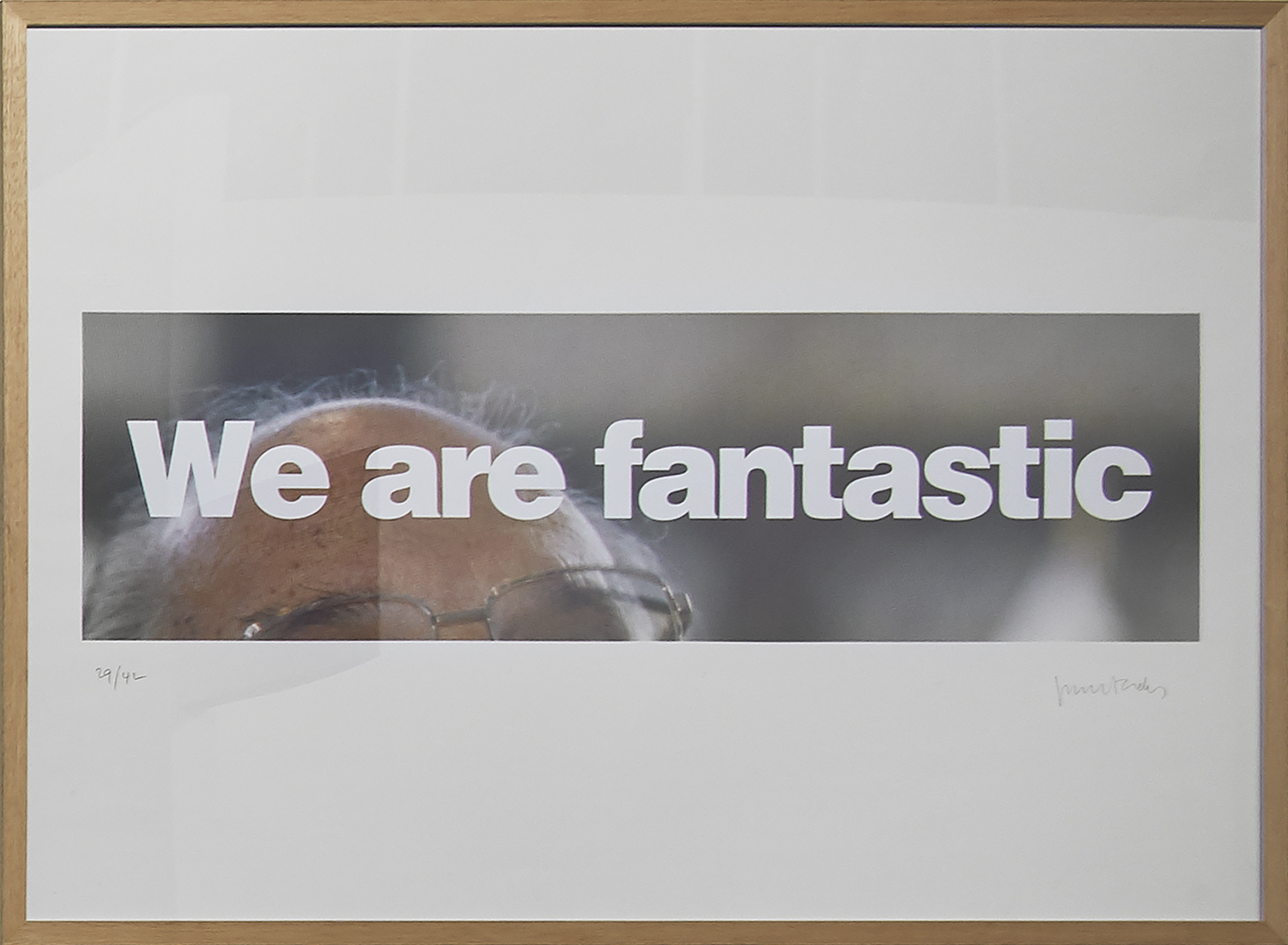
Referring to this particular way of understanding society by the filter of humour and irony, Antoni Muntadas's poster We are Fantastic deals with national expressions and what they imply in terms of identity and representation. The expression, printed in a bold font similar to the one used by The Guerrilla Girls, discusses with the fulfilling background image in a contrasted text/image relation. Uruguay is represented here by the presumptuous statement "?We are Fantastic?", however the background photograph showing the top of an elderly bald man's head is not very flattering. Death is not far away?
Death or at least desappearance. Desappearance of words, forms, images, even of content itself like in the artwork No Image Available published by Fiona Banner's own editorial structure named Vanity Press, which directly refers to self-publishing process. Very common in the 60's and the 70's, self-publishing had promoted the artist book development in times when it was easier for artists to create and edit their books themselves (or amongst them). We keep in mind Ed Rusha's Heavy Industry Publications and Dieter Roth's Forlag.
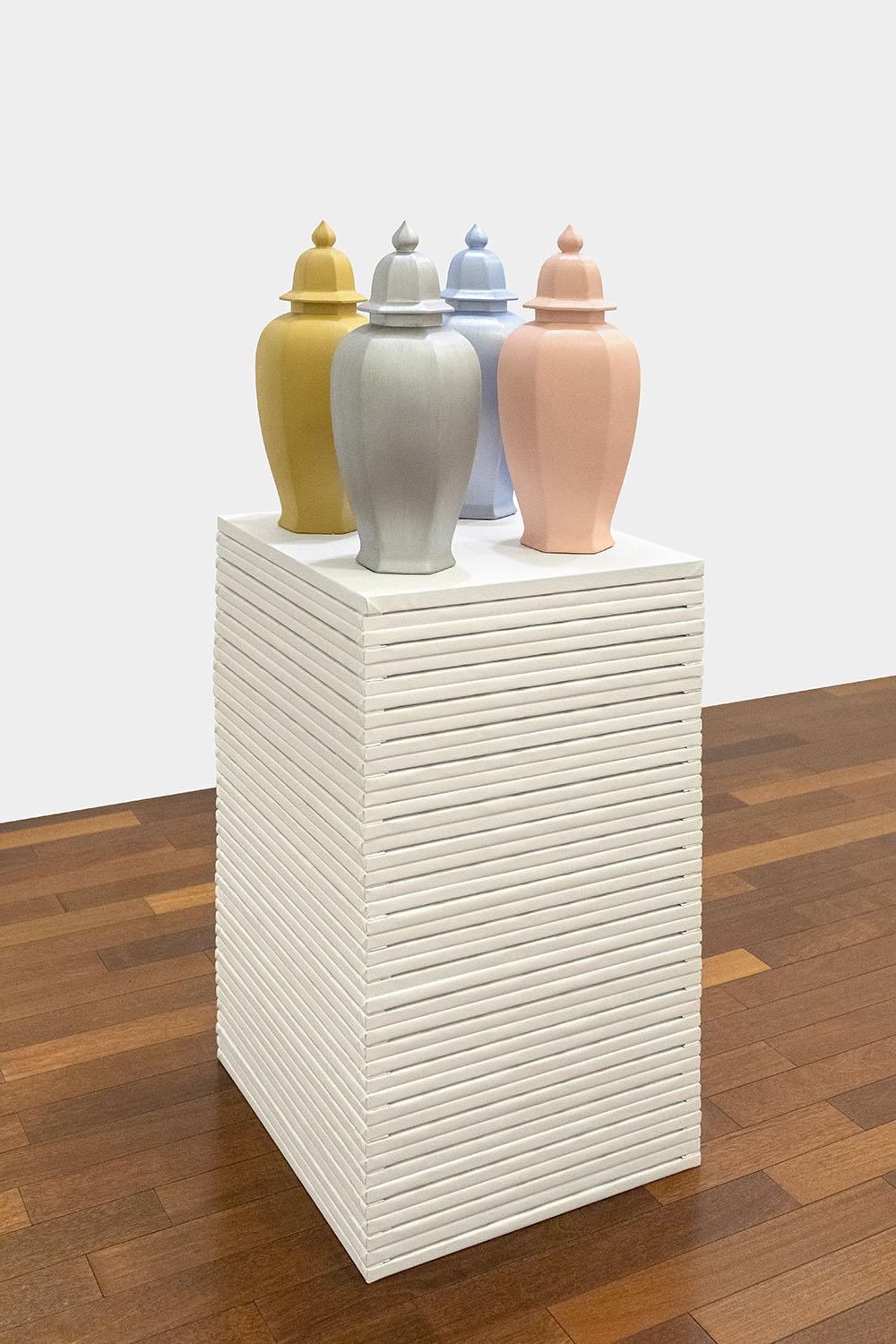
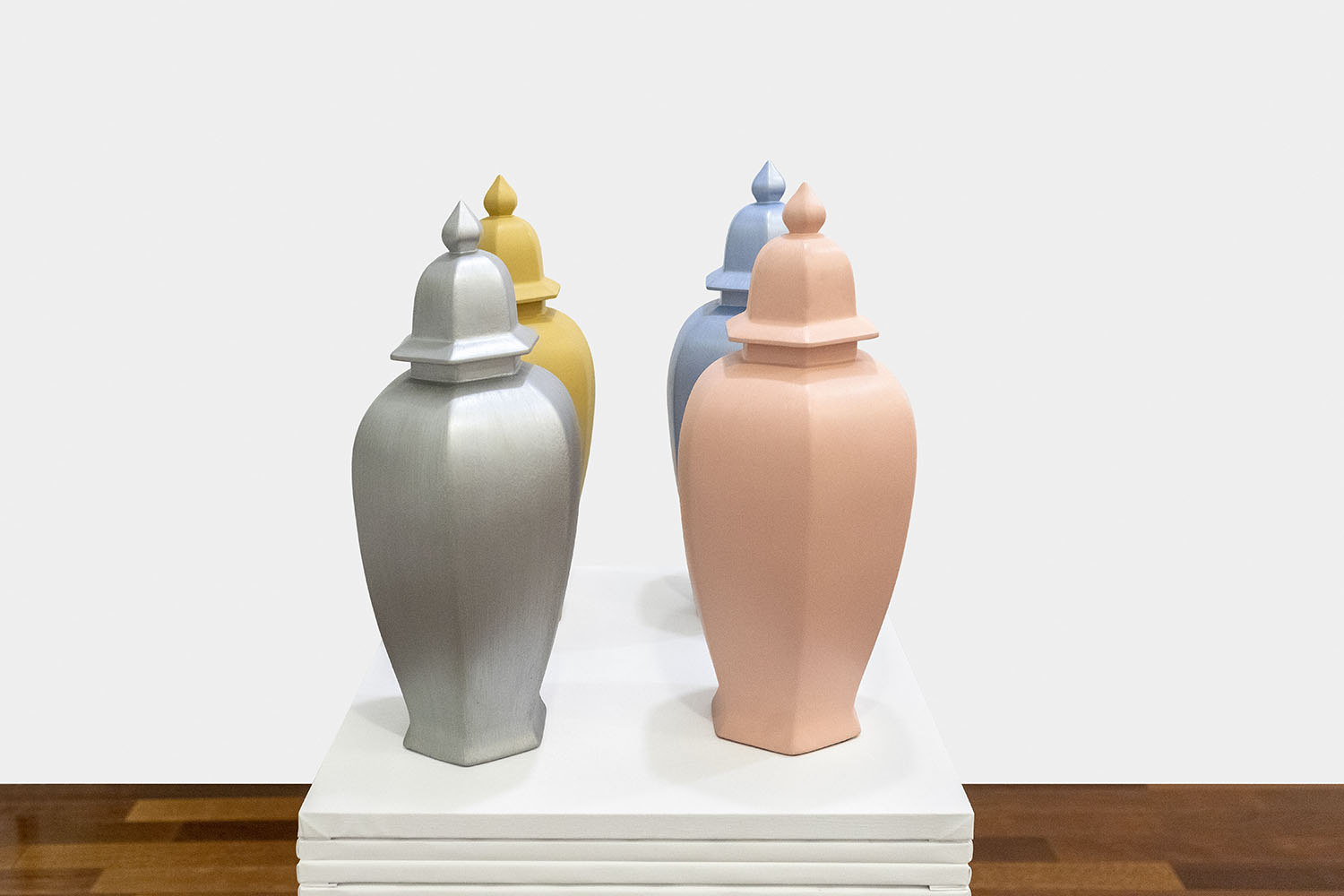
With a piling of 43 prepared canvases by Claude Rutault used as a base for Allan McCollum?s Collection of Four Perfect Vehicles, the two artists jointly attempt to counter time impact on their respective artworks. Through this singular collaboration might hide a comforting strategy: a promise of reactivation for one of them?; the hope of an escape to the danger of uniqueness for the other?
As a Vanity gathering of this world goods, mfc-michèle didier's booth displays its own publications ? books or torn off pages as symbols of knowledge, and paintings, drawings, posters as symbols of vain arts (?!) ? in a perfect Vanitas vanitatum, (Vanity of the vanities).
June 15-18, 2017
Basel, Switzerland
Vanitas vanitatum, omnia vanitas
If the theme seems ancient ? it has been found in the Antiquity and became an autonomous genre circa 1620 in the Netherlands before spreading in Europe during the 17th century ? vanities have not vanished from the 20th and 21st century artistic production. Even though Vanity is now characterised by a large variety of expressions, the artistic interest it inspires is not fading.
Skull and sill life certainly stay indisputable symbols of Vanity ? in this respect, mfc-michèle didier saves them a prominent place in its booth with the poster Heart of Darkness from Fiona Banner's series The Greatest Film Never Made (Fiona Banner and Name Creative) ? though it is far away from being the only subject of representation for this recurrent theme in Art and Human History.
Since the dawn of time, artists have tried to substantiate not only life and death matter but rather the transition between these two and its inscription in time. In this regard, contemporary artists make no exception.
As such, is it not On Kawara's work the most contemporary Vanity ? With the I Got Up, I Went and I Met trilogy ? to which I Read is to be added in 2017 ? the artist pushes his personal archive work towards an extreme point, not only because of the huge amount of information it contains but also for the rigour and discipline he forced himself to obey to. Conscientiously collected, these figures reflect a certain narcissism, particularly displayed by the use of the first person singular. They also are a proper challenge to time, as is evident from the art piece One Million Years which endless litany of numbers sieves years like a hourglass ? another symbolic object of Vanity ? turning them into laborious witnesses of the race of time.
With Mes dessins secrets, Annette Messager allows us to penetrate her most personal life, her private diary-like erotic drawing collection. Starting with the possessive pronoun "?my?", same as On Kawara's use of "?I?", the title suggests the autobiographical nature of these images. Playing with a falsely naive exhibitionism, the artist offers us the contemplation of the illustrated tales of her fantasies and passionate sexual life.
In a very different way, Allan McCollum's The Shapes Project consists of a system generating more than 31 billions different shapes composed from various combinations of 6 standard elements groups. Every shape is intended to one particular individual, each person owning his unique shape as his own genetic map.
The Fountain Archives is a perfect example of the art world Vanity. First, thanks to Saâdane Afif's interest in a special art piece ? the most famous Fontaine by Marcel Duchamp presented as the first ready-made in Art History ? Then, because of the vertiginous amount and variety of its representations collected by the artist.
Still in this critical perspective towards the artistic sphere and its protagonists, Robert Barry's work Art Lovers displays 31 photographs of artists, art collectors and amateurs. These portraits implying their model's Vanity are however purposely covered by a flat black ink layer, opened by the shape of a word that uncovers only a glimpse of the photograph below. Masked identities then create an archetype of the various art world actors.
In a more political matter, the group of feminist artists The Guerrilla Girls produces posters displaying texts, printed in a black bold uppercase font, occupying the entire space and taking a critical and ironical look at the limited position allowed to women by the art world and more generally the whole society. The Advantages Of Being A Woman Artist or Bus Companies Are More Enlightened Than NYC Art Galleries, are social Vanities that reflect contemporary discriminations.
Referring to this particular way of understanding society by the filter of humour and irony, Antoni Muntadas's poster We are Fantastic deals with national expressions and what they imply in terms of identity and representation. The expression, printed in a bold font similar to the one used by The Guerrilla Girls, discusses with the fulfilling background image in a contrasted text/image relation. Uruguay is represented here by the presumptuous statement "?We are Fantastic?", however the background photograph showing the top of an elderly bald man's head is not very flattering. Death is not far away?
Death or at least desappearance. Desappearance of words, forms, images, even of content itself like in the artwork No Image Available published by Fiona Banner's own editorial structure named Vanity Press, which directly refers to self-publishing process. Very common in the 60's and the 70's, self-publishing had promoted the artist book development in times when it was easier for artists to create and edit their books themselves (or amongst them). We keep in mind Ed Rusha's Heavy Industry Publications and Dieter Roth's Forlag.
With a piling of 43 prepared canvases by Claude Rutault used as a base for Allan McCollum?s Collection of Four Perfect Vehicles, the two artists jointly attempt to counter time impact on their respective artworks. Through this singular collaboration might hide a comforting strategy: a promise of reactivation for one of them?; the hope of an escape to the danger of uniqueness for the other?
As a Vanity gathering of this world goods, mfc-michèle didier's booth displays its own publications ? books or torn off pages as symbols of knowledge, and paintings, drawings, posters as symbols of vain arts (?!) ? in a perfect Vanitas vanitatum, (Vanity of the vanities).
Exposed artworks
Digital print on paper
53.54 x 35.04 in ( 136,4 x 89,2 cm )
Black slipcase. Contains 2 volumes, 14.4 cm x 10.5 cm
6.3 x 4.33 x 3.54 in ( 16,2 x 11,5 x 9,2 cm )
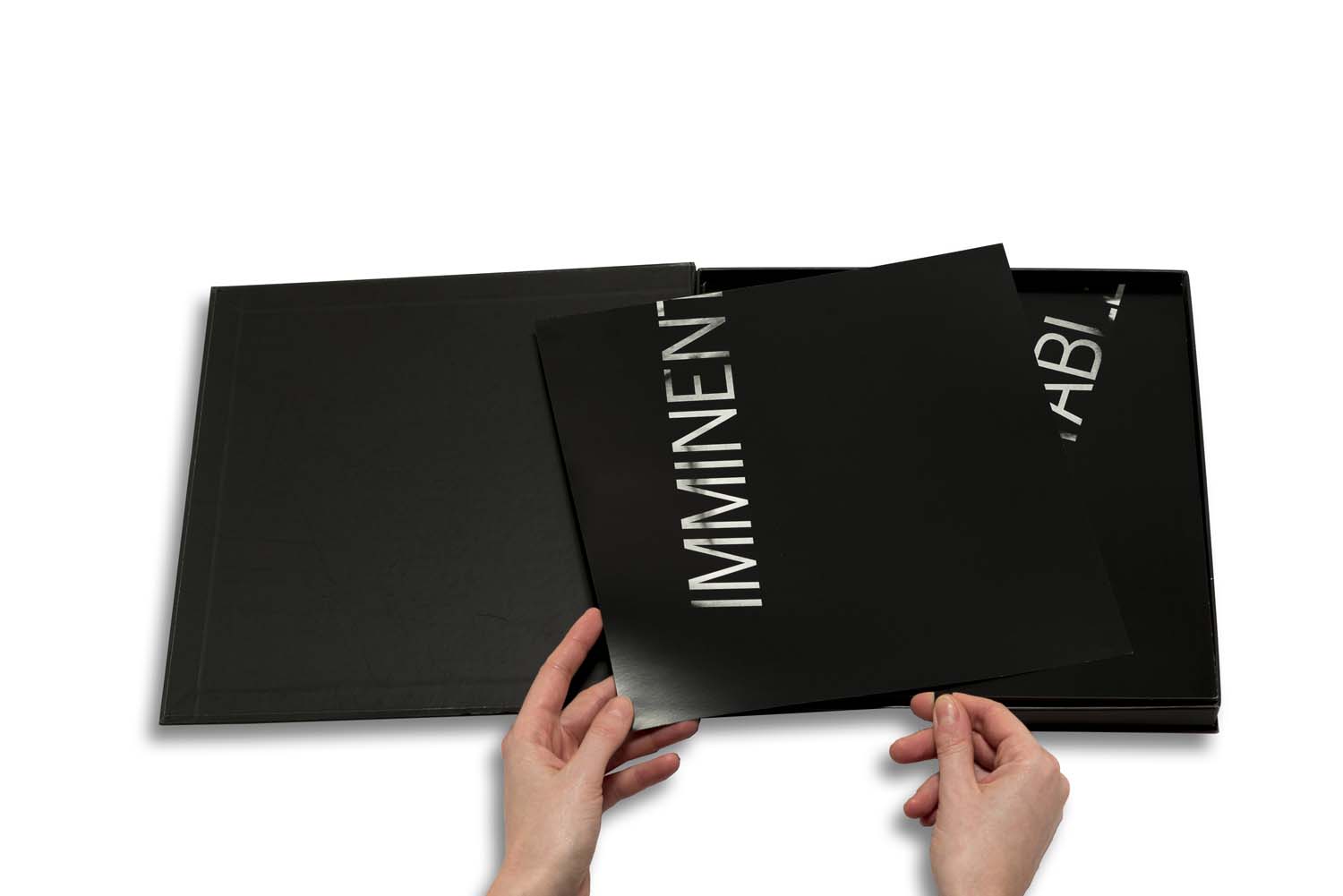
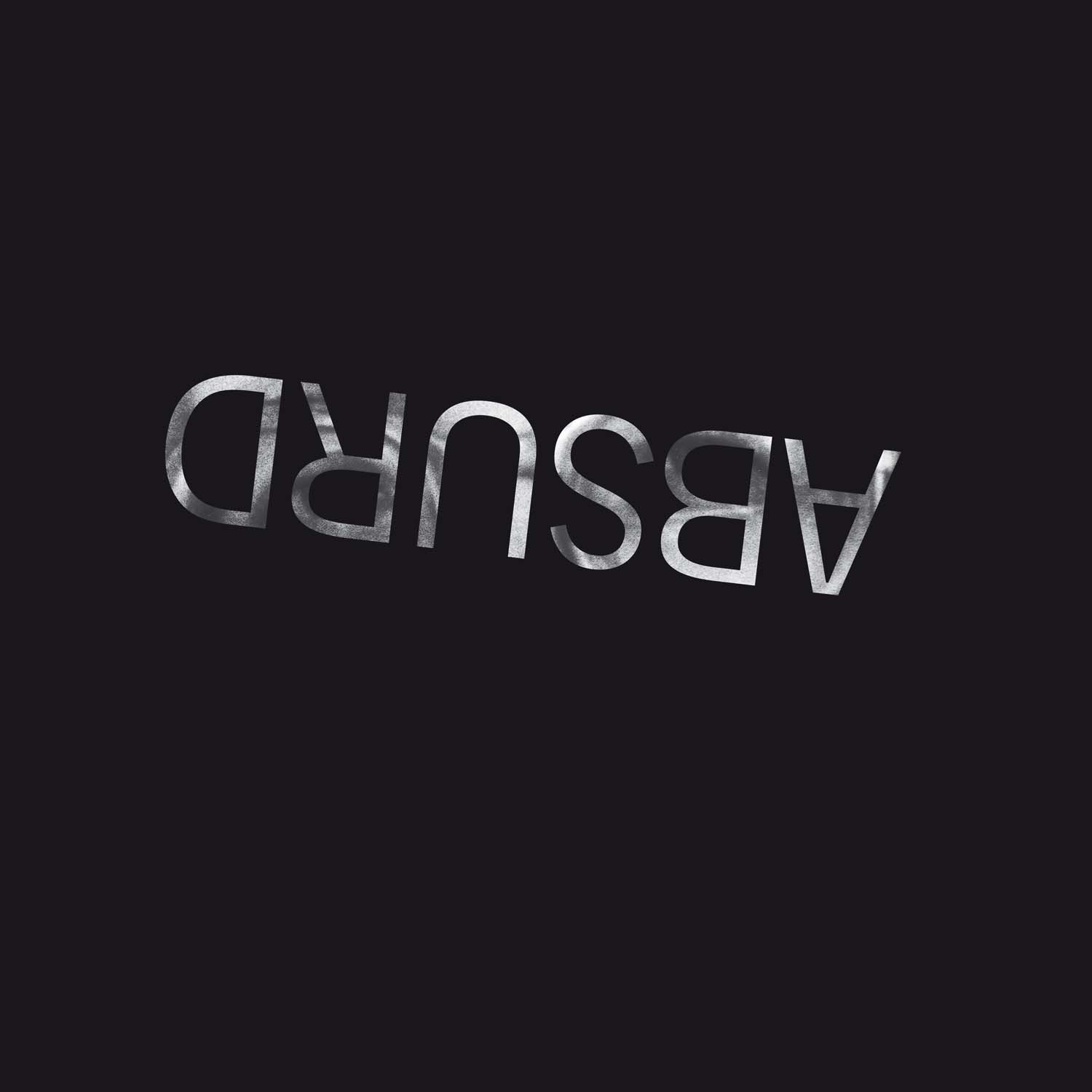
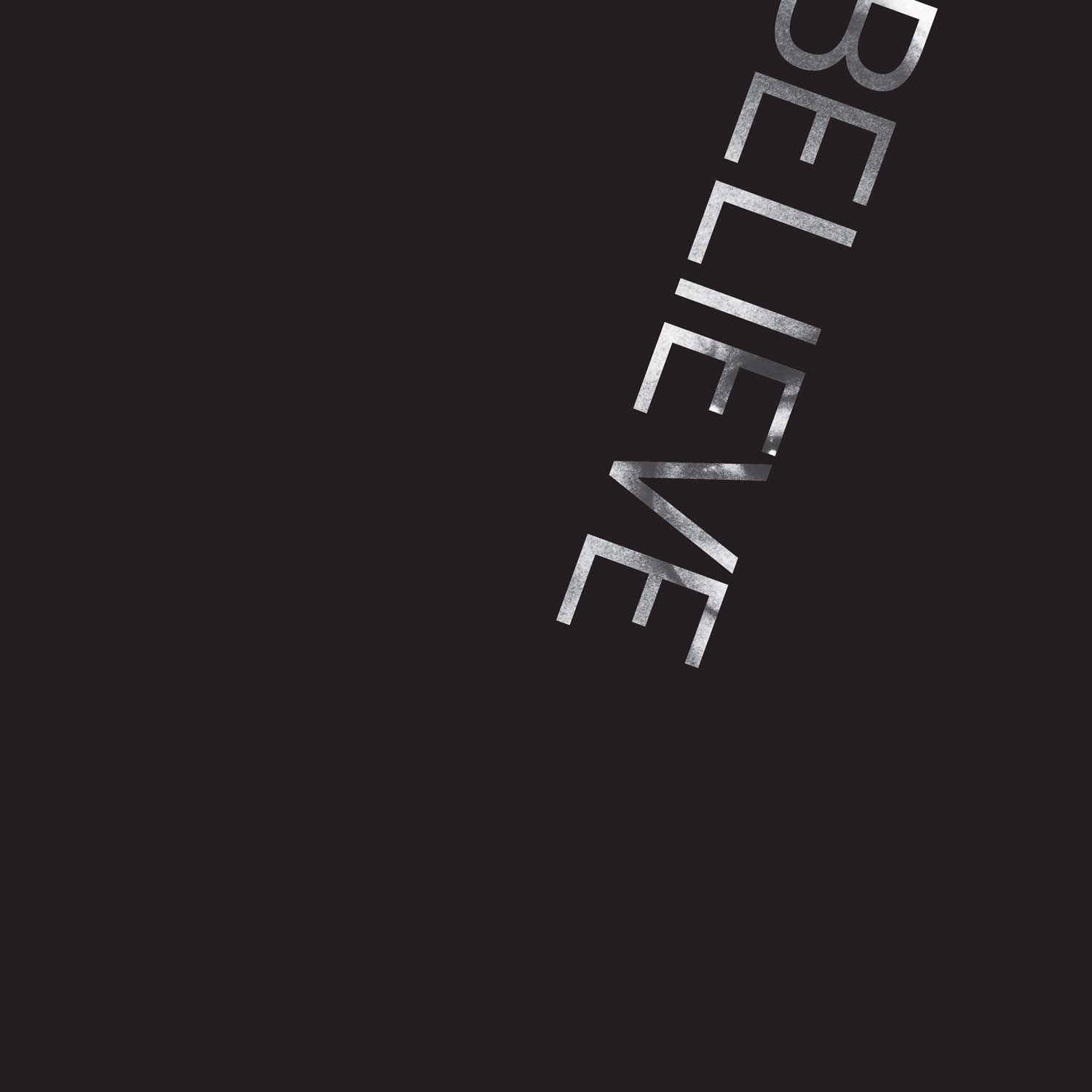
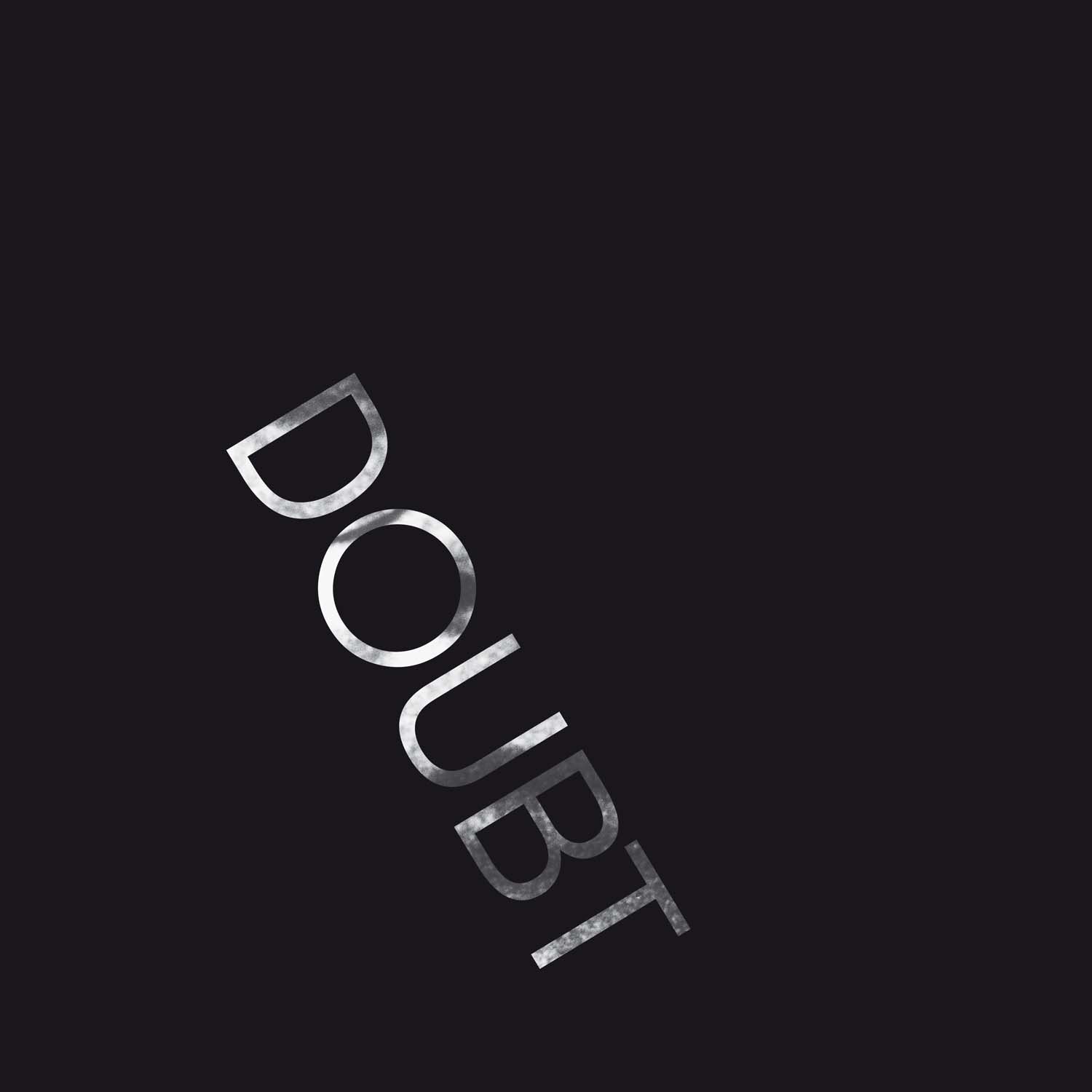
36 sheets in a slipcase
10.63 x 10.63 in ( 27,6 x 27,6 cm )
Silkscreen on rag paper
27.56 x 39.37 in ( 70 x 100 cm )
Edition of 42
Sculpture, Mixed material
57.09 x 22.83 x 22.05 in ( 145 x 58 x 56 cm )
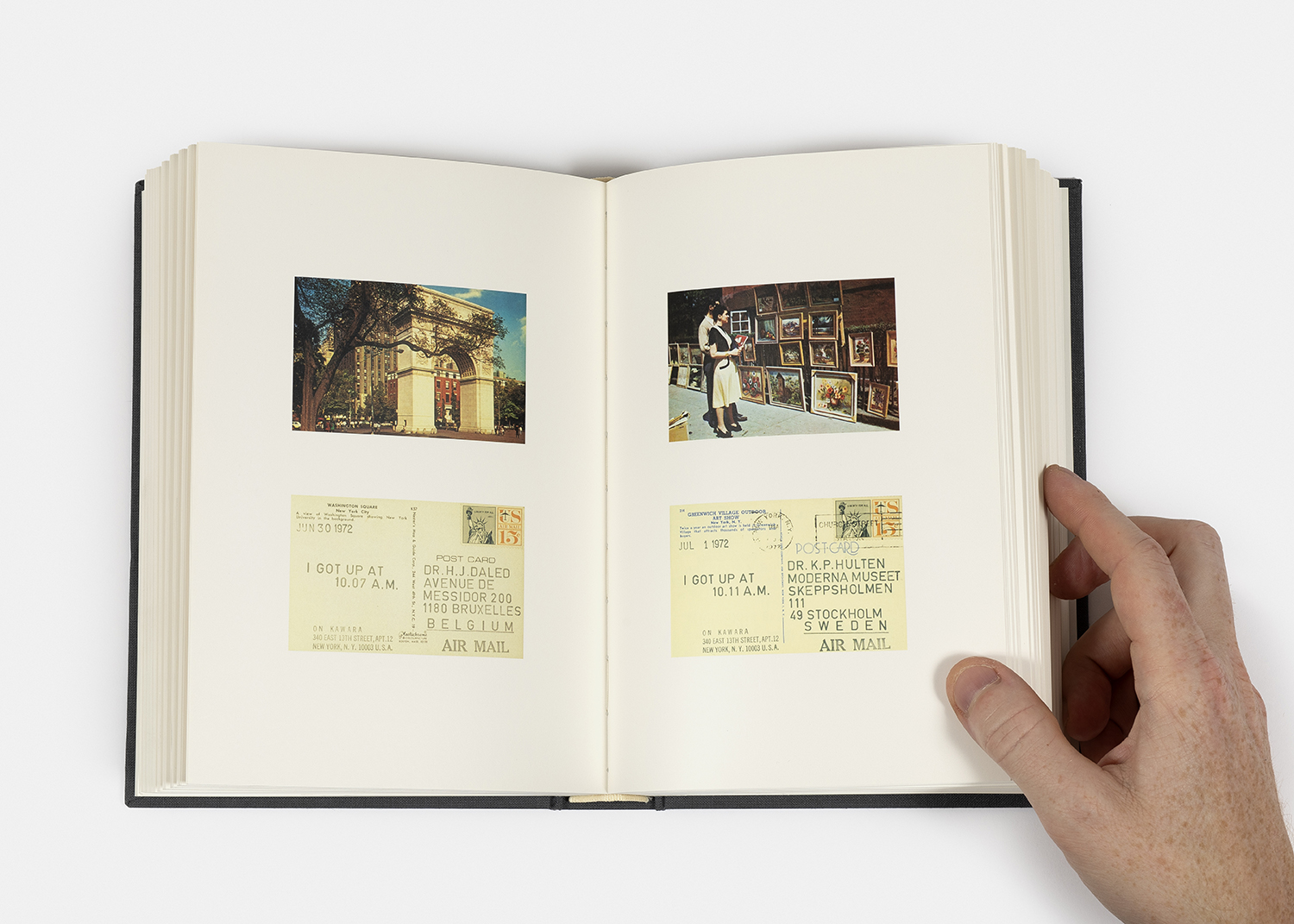
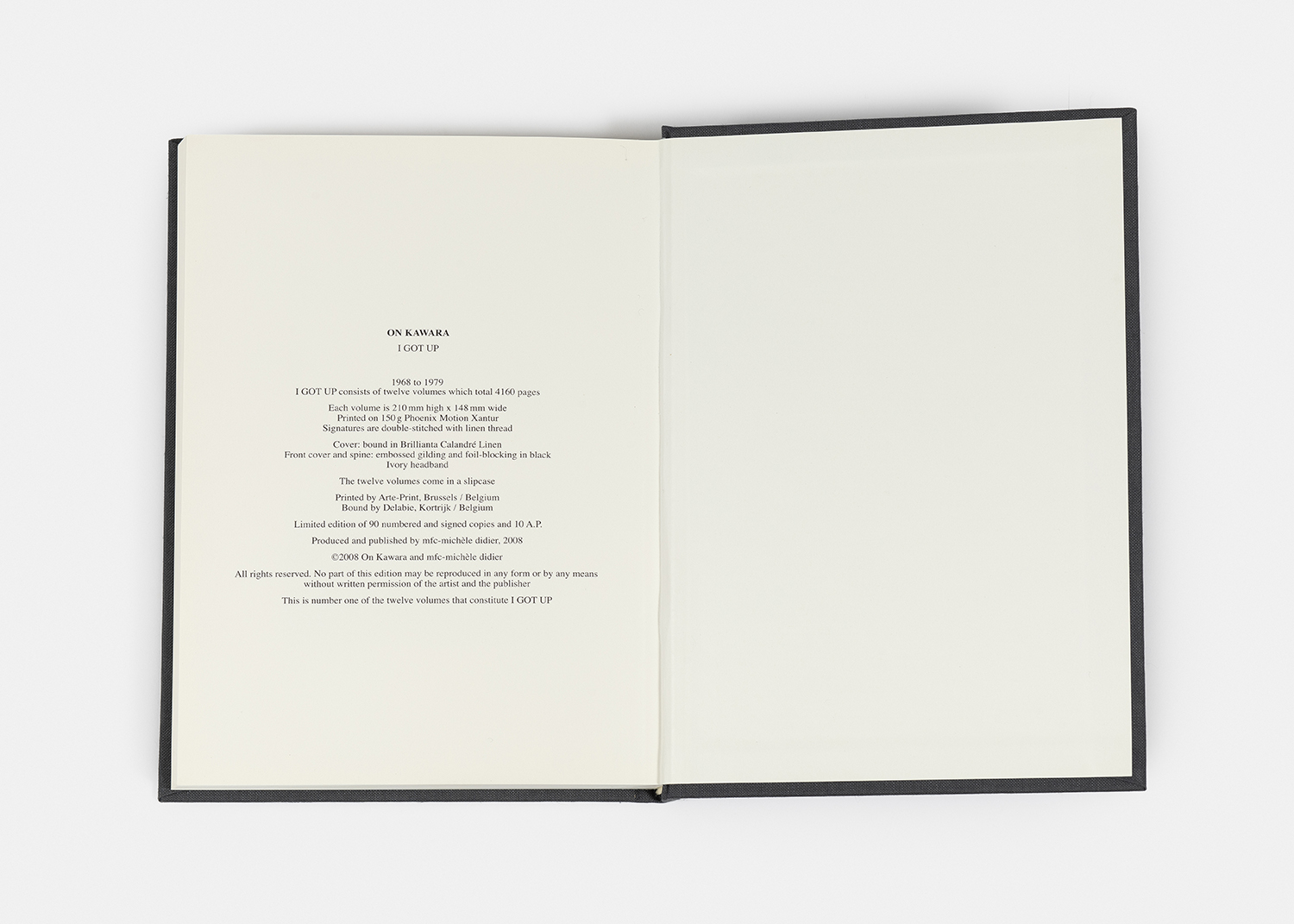
Grey wooden slipcase. Contains 12 volumes, each 21 x 14.8 cm
20.08 x 7.48 x 9.84 in ( 51,2 x 19,2 x 25,8 cm )
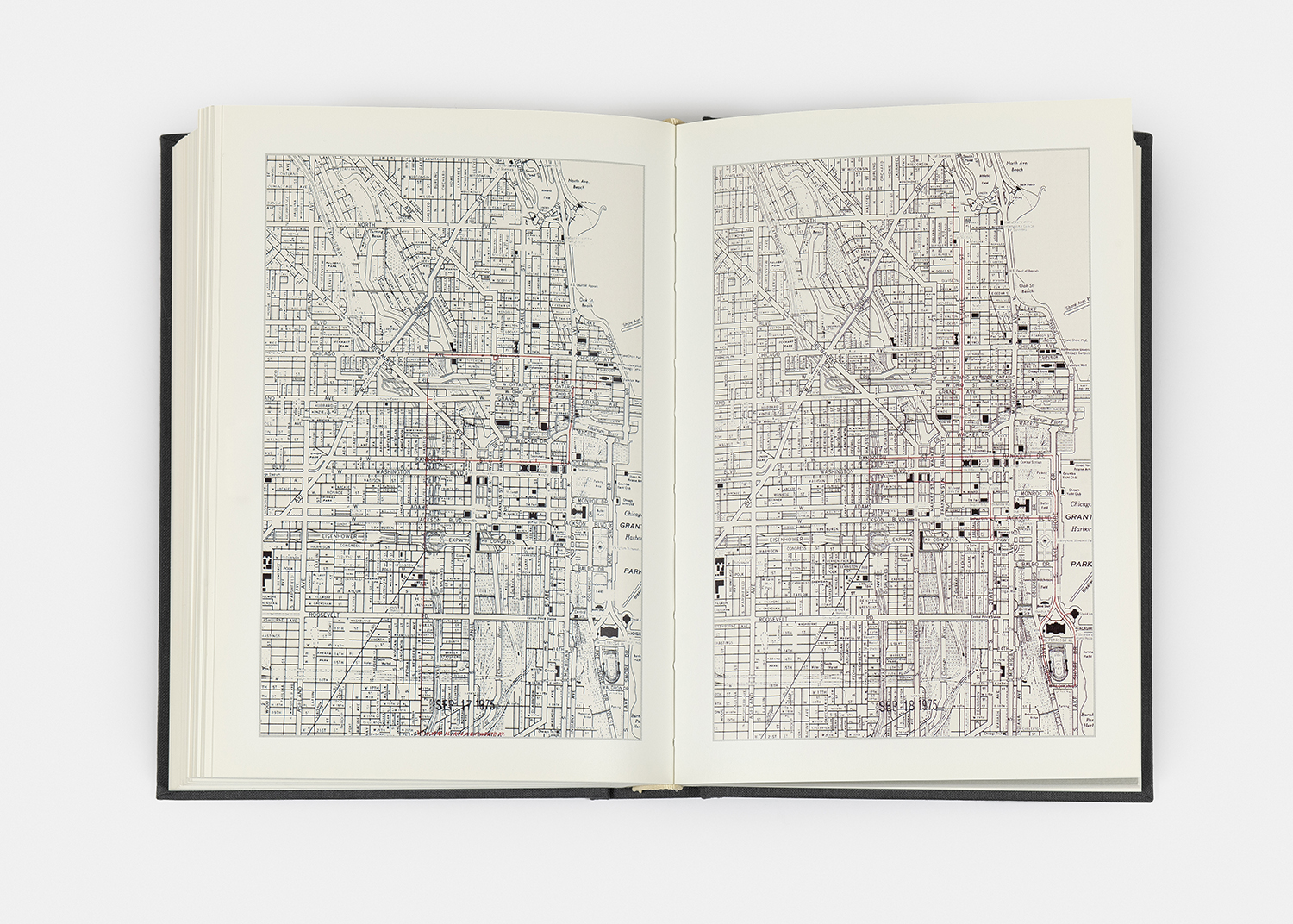
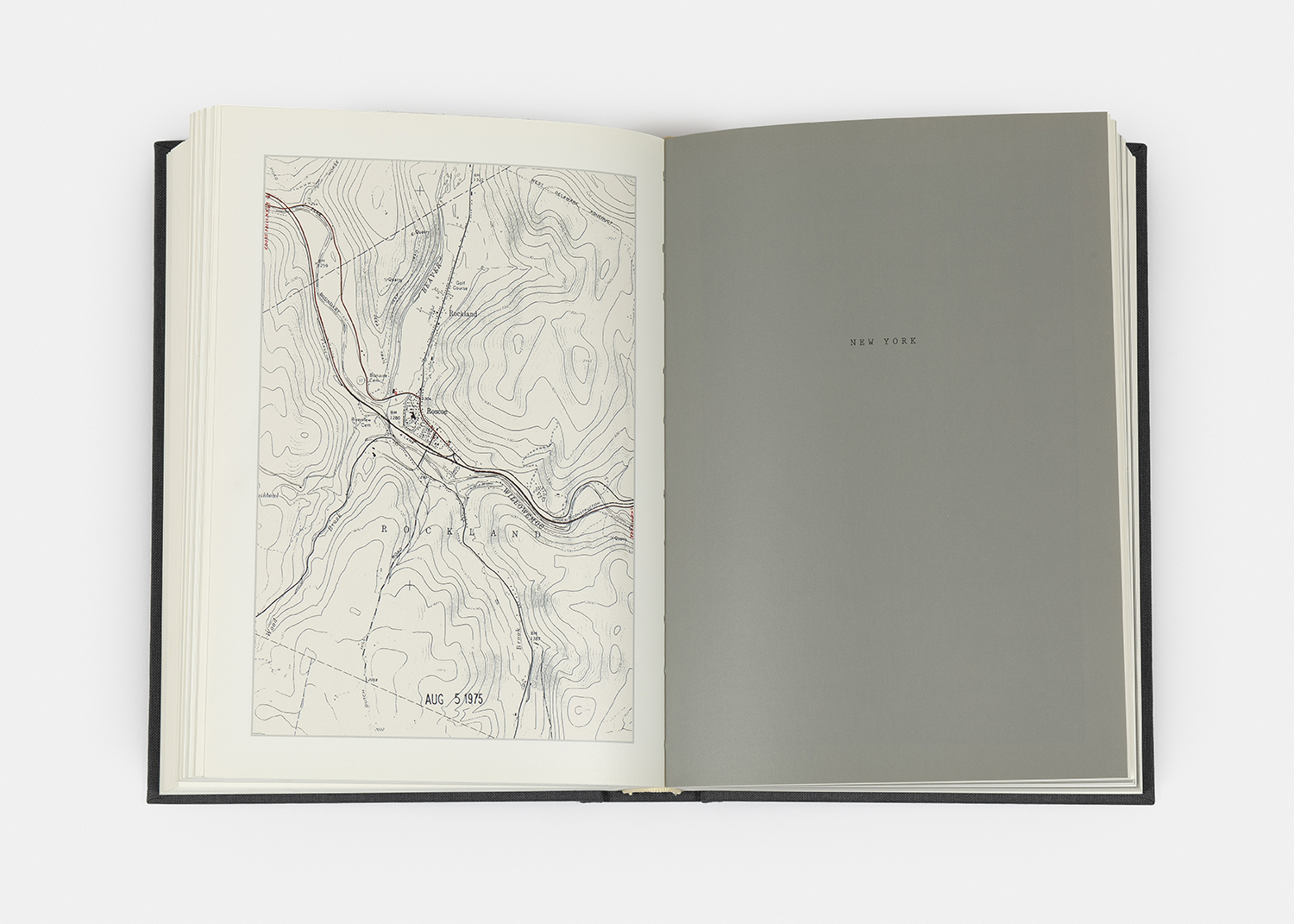
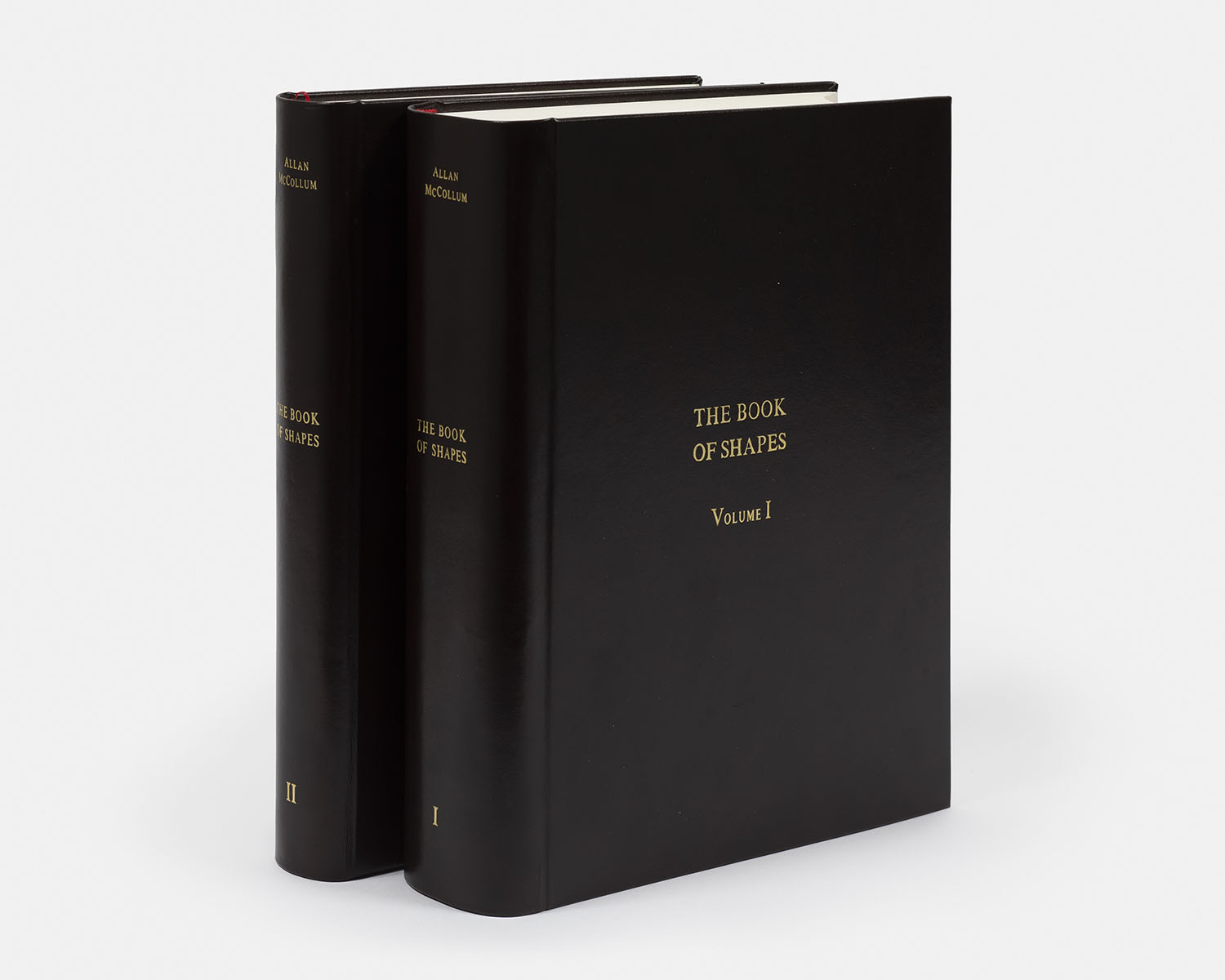
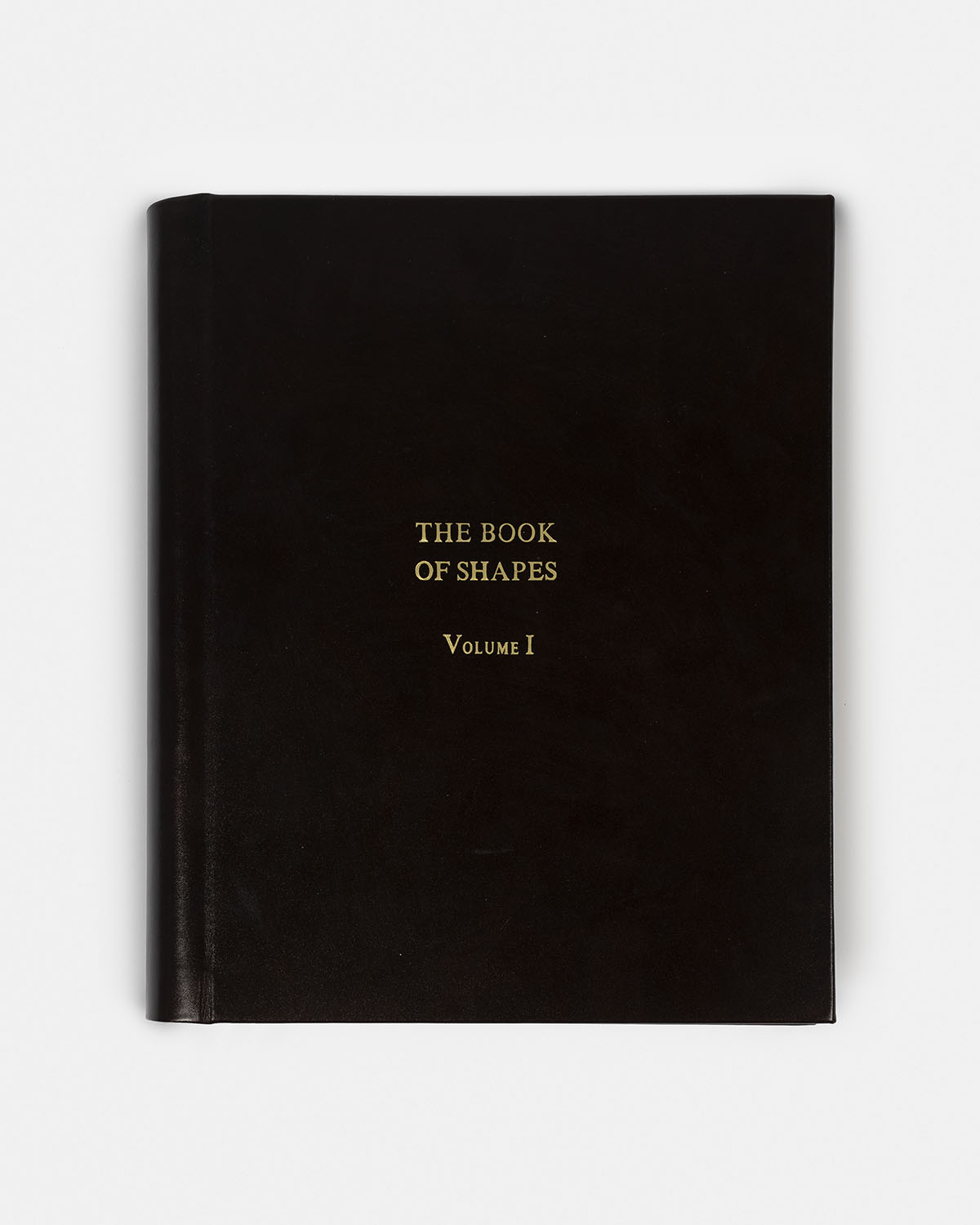
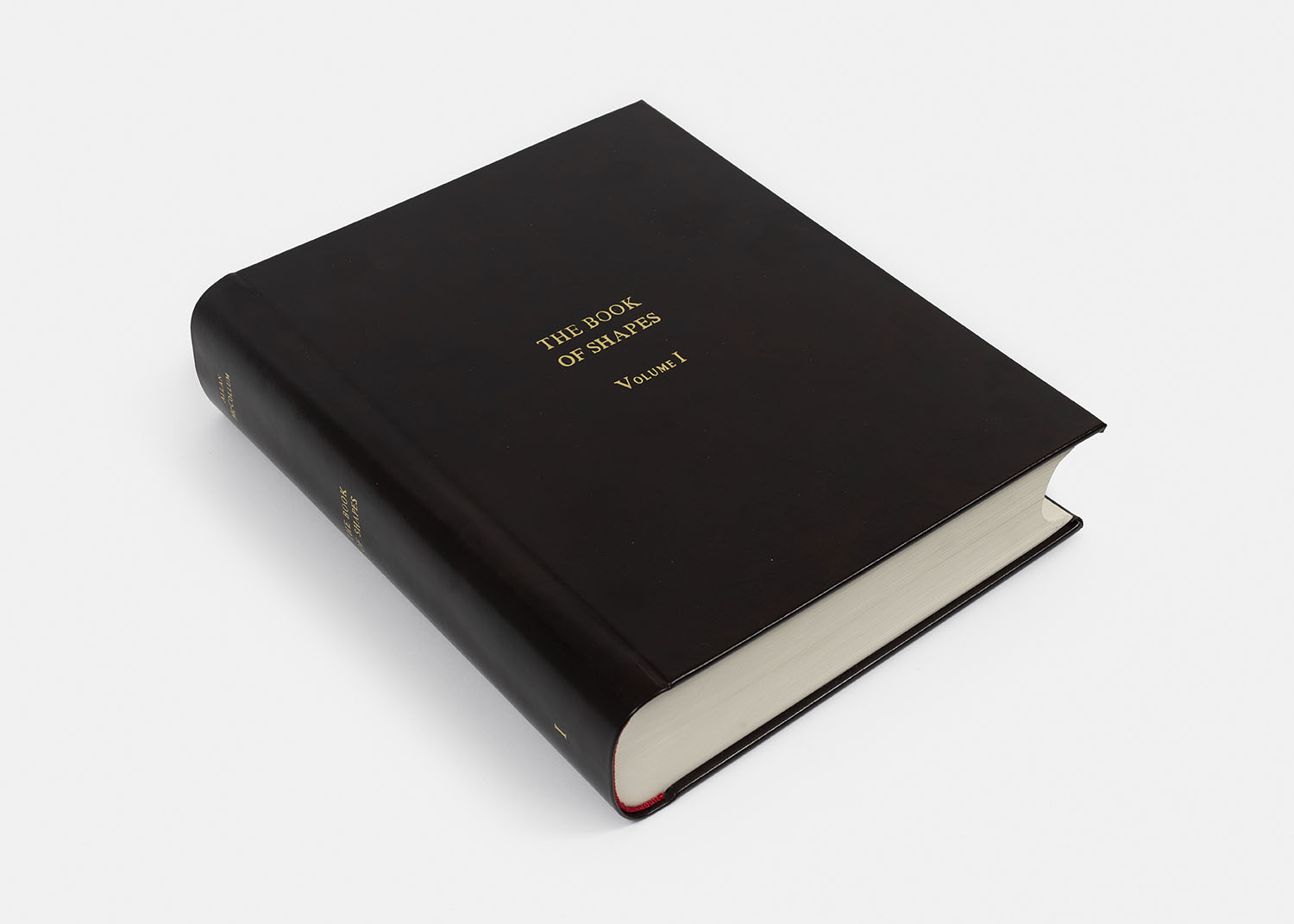
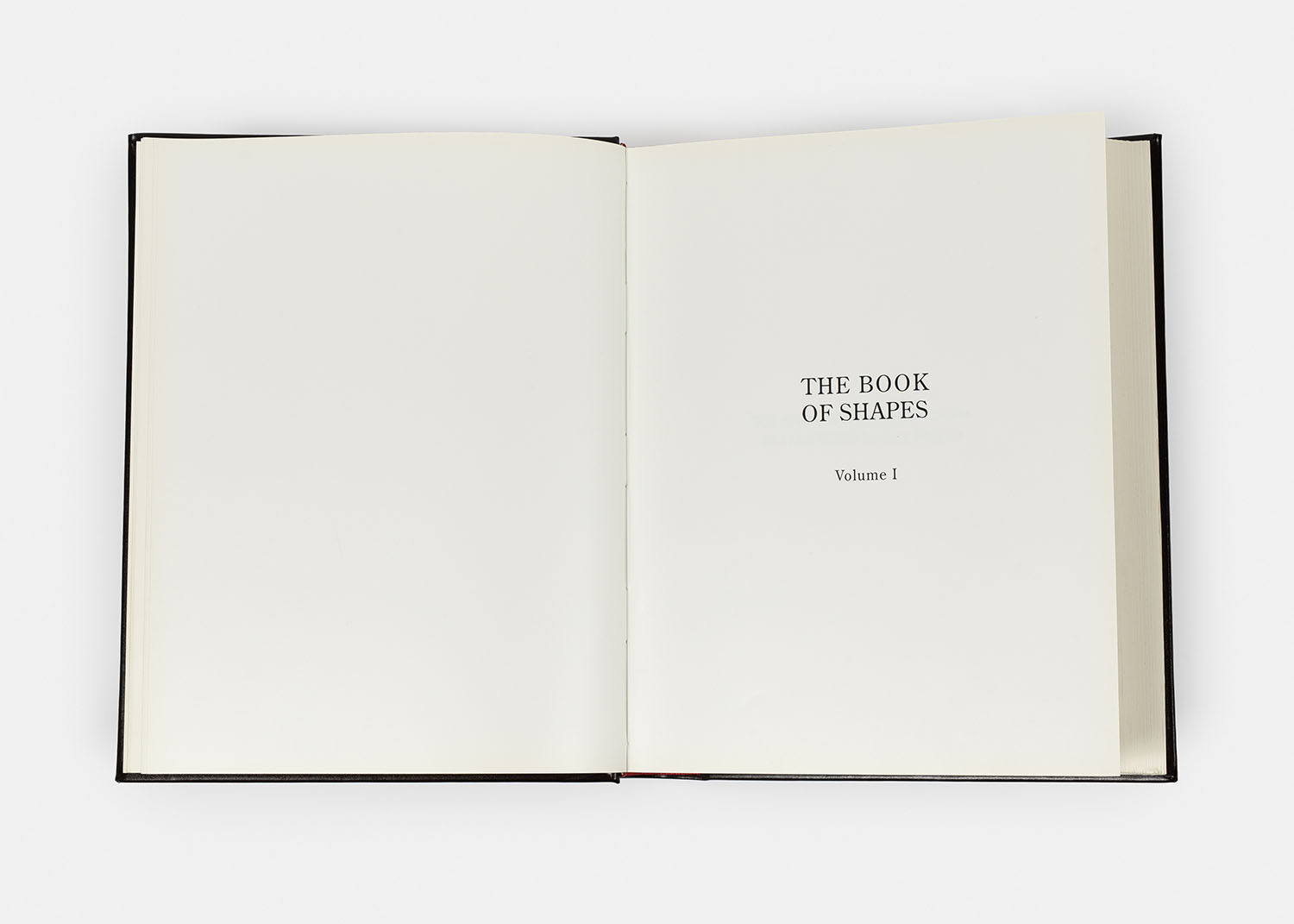
2 volumes, 632 pages and 360 pages
10.63 x 8.27 in ( 27,9 x 21,6 cm )